
Blog
Why Do Global Buyers Choose Professional Tools?
Global buyers choose Professional Tools for more than their polished finish or impressive specifications. They need equipment that performs consistently across long shifts, changing materials, and demanding job sites. A drill’s stated torque matters, but so do its balance, heat control, battery life, and service support. Small details matter.
James Dyson, a British engineer and product designer, has said, “Enjoy failure and learn from it. You can never learn from success.” That idea fits careful tool selection: buyers learn by checking real-world performance, comparing test results, and listening to technicians who use equipment daily. A tool that feels powerful in a showroom may overheat during repeated use. A lower purchase price can also lose its appeal when replacement parts are hard to find.
Professional Tools can help teams work more accurately, reduce avoidable downtime, and maintain dependable results. But no brand or specification guarantees a good fit. Buyers should compare safety features, warranty terms, local service access, and compatibility with existing batteries or accessories. A practical trial can reveal what a catalogue cannot: awkward grip angles, unclear controls, or fatigue after hours of use. That takes time.
Global purchasing decisions are rarely perfect. Budgets, availability, and personal preferences can pull in different directions. The strongest choice is usually the one supported by verifiable performance data and honest feedback—not the boldest claim on the box.
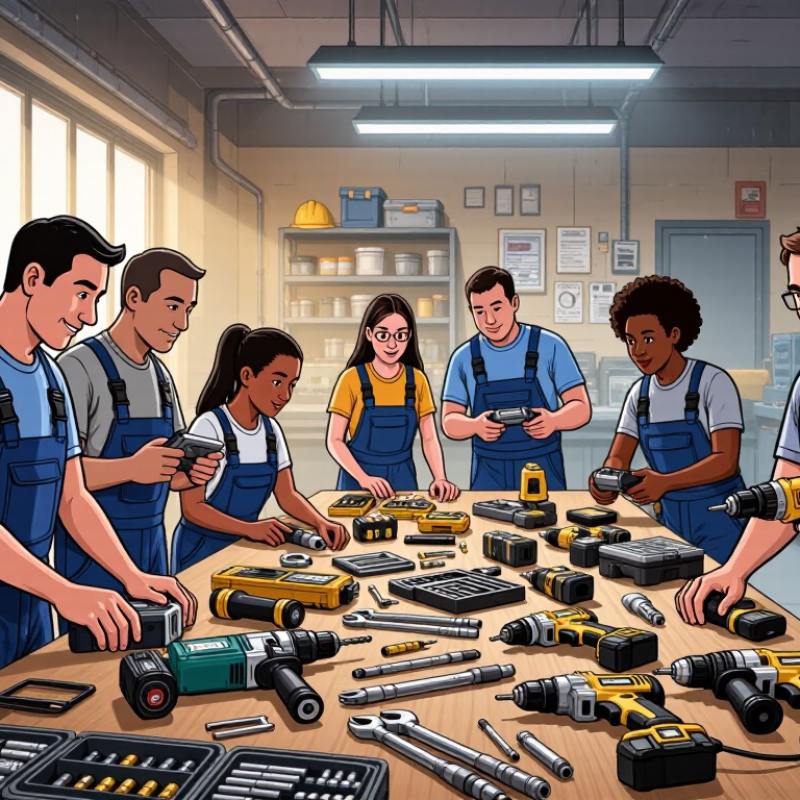
What Defines a Professional Tool? The Quality Framework of ISO 9001:2015
Why Do Global Buyers Choose Professional Tools?
A professional tool is more than a solid handle or a clean finish. Buyers need repeatable performance, traceable materials, and dependable inspection records. ISO 9001:2015 sets a framework for managing these processes; it does not certify an individual tool. Its requirements cover leadership, risk-based planning, operational controls, performance evaluation, and continual improvement. That distinction matters.
The ISO Survey of Management System Standard Certifications reported 1,429,721 valid ISO 9001 certificates worldwide in 2023. This figure reflects broad adoption, not a guarantee that every certified supplier makes superior tools. In practice, buyers can ask how a supplier controls incoming steel, calibrates measuring equipment, and handles a batch that fails inspection. A clear corrective-action record is more useful than a polished claim. Still, paperwork can become routine if workers do not use it to improve production.
Tips: Request a sample inspection report and check whether measurements link to a specific batch. Ask what changed after the last quality issue. Small details count. A system earns trust when records match the tool in your hand.
How Is Precision Verified? ISO 6789-2:2017 Torque-Tool Calibration
Global buyers need torque tools that produce repeatable results, not just convincing specifications. ISO 6789-2:2017 defines requirements for calibrating hand torque tools and determining measurement uncertainty. A calibration should document applied torque values, recorded readings, and the uncertainty of the results. That record helps a buyer judge whether a tool suits a controlled assembly process.
A calibration bench makes the process tangible: an operator mounts the tool, applies torque at specified points, and records repeated measurements. The spread between readings matters. NIST Technical Note 1297 explains that expanded uncertainty is calculated using a coverage factor; k = 2 corresponds to approximately 95% coverage under typical assumptions. This is not a guarantee that every individual reading is correct. Small errors matter. Temperature, mounting, and operator technique can affect results, so a calibration certificate should state its conditions and uncertainty.
A useful certificate identifies the tool, calibration method, measured values, and traceability of the reference equipment. Buyers can compare those details with their required torque range and tolerance instead of relying on a single accuracy claim. One detail is easy to underestimate: a tool can pass calibration today and drift during use. Set sensible recalibration intervals, and review them against workload, handling, and observed performance. ISO procedures improve confidence, but they do not remove the need for judgment.
Why Does Durability Matter? Material Performance Under ISO 898-1:2013
Global buyers choose professional tools for dependable work, but performance often depends on the fasteners holding an assembly together. A bolt may look unremarkable on the bench. Under repeated loading, its material properties matter.
ISO 898-1:2013 specifies mechanical properties for carbon and alloy steel bolts, screws, and studs. It covers characteristics such as tensile strength, proof load, and hardness for defined property classes. These requirements help buyers compare fasteners using consistent test criteria. They do not guarantee durability in every application. Corrosion, vibration, temperature, and installation torque can still affect service life.
In practice, engineers should match the property class to the joint’s load and operating conditions. A fastener that is too weak may stretch or fail; one selected without considering the full assembly can create other risks. Small details matter. Thread condition, tool fit, and tightening method are easy to overlook during procurement. Even a compliant test result cannot replace sound installation and inspection. I have seen specifications treated as a complete answer, when they are only one part of a reliable decision.
Why Do Global Buyers Choose Professional Tools?
Why does durability matter? Material performance under ISO 898-1:2013 offers one useful way to compare the mechanical strength requirements of steel fasteners.
The chart shows minimum tensile strength requirements in MPa for selected property classes; values shown are representative for nominal diameters up to 16 mm where diameter affects the requirement. Tensile strength is one indicator of mechanical performance, not a measure of corrosion resistance or service life. Actual durability also depends on factors such as design, installation, loading, and environment.
How Do Buyers Assess Safety? IEC 62841-1 Requirements for Power Tools
Global buyers should treat IEC 62841-1 as a safety baseline, not a marketing badge. The standard sets general requirements for many hand-held and transportable power tools, including checks related to electrical, mechanical, and thermal hazards. Buyers should also confirm that the relevant tool-specific Part 2 requirements apply. Details matter: a drill and a grinder do not face identical use conditions.
Ask for test documentation that identifies the exact model, configuration, and applicable standard editions. Check labels, user instructions, guards, switches, and protection against unintended starting. The European Commission’s 2023 Safety Gate report recorded 3,412 alerts for dangerous non-food products across all categories; that figure is not specific to power tools, but it underlines why product traceability matters. A certificate alone is not enough. Compare it with the tool in the box, including its plug, accessories, and markings. Then inspect a sample under realistic conditions: grip it with gloves, check the guard adjustment, and read the warnings. Small discrepancies can be easy to miss. They should not be. Even a careful review has limits, so buyers should ask how production changes are controlled and whether follow-up testing is documented.
Why Do Global Buyers Choose Professional Tools? — How Do Buyers Assess Safety? IEC 62841-1 Requirements for Power Tools
| Assessment Area | What IEC 62841-1 Addresses | What Buyers Can Check | Why It Matters in Procurement |
|---|---|---|---|
| Applicable standard and product scope | IEC 62841-1 sets general safety requirements for specified electric motor-operated hand-held tools, transportable tools, and lawn and garden machinery. The applicable product-specific Part 2 or Part 3 provides additional requirements. | Confirm the tool category, intended use, applicable Part 2 or Part 3, and the editions or national adoptions cited in the supplier’s documentation. | A general-part reference alone may not show that the product has been assessed against requirements specific to its tool type. |
| Protection against electric shock | The standard addresses electrical hazards and safeguards intended to reduce the risk of electric shock during normal use and foreseeable conditions covered by the requirements. | Review the relevant test report or conformity documentation, rated electrical information, insulation details, and any required protective measures for the tool design. | Electrical safety is fundamental to safe operation, particularly where tools are used for extended periods or in demanding work environments. |
| Mechanical hazards and moving parts | Requirements address hazards associated with tool construction and moving parts, with additional provisions depending on the specific tool category. | Check that guards and other protective features are present, securely fitted, and described in the instructions; verify that the assessment covers the exact model and configuration. | Appropriate protective design helps reduce exposure to hazards such as contact with moving or working components. |
| Temperature, fire, and abnormal operation | The standard includes requirements and tests relating to heating, fire risks, and specified abnormal operating conditions. | Ask for evidence that relevant tests were performed on the model being purchased, including any configuration differences that could affect results. | These checks help buyers evaluate risks associated with overheating and foreseeable electrical or operational faults. |
| Construction and durability-related safety | IEC 62841-1 includes construction and mechanical-strength provisions. Specific performance and test details depend on the tool type and applicable particular standard. | Review the test scope and construction details, and check whether accessories, attachments, or operating modes are covered by the assessment. | Robust construction can help maintain protective features under the conditions for which the tool is designed and assessed. |
| Markings and rated information | The standard specifies safety-related marking and information requirements, with applicable details depending on the product and market. | Check that the tool and packaging display the required rated information, warnings, and traceability details for the destination market. | Clear, consistent markings support correct selection, installation, and operation throughout the supply chain. |
| Instructions and warnings | Safety information and instructions form part of the standard’s requirements. Product-specific instructions may be specified in the relevant particular standard. | Review the instructions for intended use, foreseeable misuse warnings, safe operating procedures, maintenance guidance, and the languages required in the target market. | Usable instructions help distributors and end users understand the tool’s limits and essential precautions. |
| Test documentation and product identification | Conformity assessment should relate to the applicable requirements and the product configuration evaluated; IEC 62841-1 itself is not a substitute for market-specific approval procedures. | Compare the model number, electrical ratings, accessories, and product description in the report or certificate with the goods offered. Confirm the issuing body and report scope where applicable. | Matching documentation helps buyers identify gaps between a tested sample and the product being supplied. |
| Destination-market requirements | IEC standards may be adopted or supplemented by national or regional rules. The applicable edition, amendments, deviations, and conformity route can vary by market. | Confirm local regulatory requirements and any required national adoption, certification, declaration, labeling, or importer documentation before shipment. | International buyers need to assess both product safety evidence and legal market-access obligations. |
Buyer note: IEC 62841-1 is a general safety standard used together with the relevant tool-specific standard. Requirements and conformity routes depend on the product, its intended use, the applicable edition, and the destination market. Verify current requirements with the relevant authorities or a qualified conformity-assessment provider.
How Does Trade Shape Sourcing? WTO Reports a 1.2% Drop in 2023 Trade Volume
Why Do Global Buyers Choose Professional Tools?
How Does Trade Shape Sourcing? WTO Reports a 1.2% Drop in 2023 Trade Volume
The WTO reported that world merchandise trade volume fell by 1.2% in 2023. That figure matters to buyers, but it does not tell the whole story. Trade conditions vary by product, supplier, and route. A broad decline does not mean every tool category became harder to source.
When shipping schedules shift, professional buyers look beyond the quoted unit price. They compare delivery windows, material specifications, repair options, and the availability of replacement parts. A sturdy case arriving late can still disrupt a job. So can a tool with unclear tolerances. Small details count.
For sourcing teams, a slower trade environment makes careful checks more valuable. Request current specifications, confirm stock status, and ask how suppliers handle delays. Review total landed cost, not just the invoice. It is not a perfect forecast; trade data often arrives after decisions are already underway. Buyers should treat it as context, then verify the details directly. A few extra questions can prevent a rushed substitution, though no checklist removes every risk.
Related Posts
-
Exploring Industry Innovations at the 138th Canton Fair 2025: Spotlight on Home Tools Market Trends
-

Exploring Innovative Home Tools: Transform Your Space with Modern Solutions
-

Exploring Top Tools for Your Home Improvement Projects?
-
How to Choose the Best Tools for Your House Needs?
-

How to Choose the Right Trenching Tools for Your Project?
-

2025 Guide: How to Choose the Best Professional Tools for Your Career