
Blog
How to Choose the Right Trenching Tools for Your Project?
Choosing the right Trenching Tools is not simply a matter of comparing prices or engine power. Soil conditions, trench depth, access width, utility locations, and daily production targets must guide the decision. A compact chain trencher may suit a narrow residential pathway, while a rock wheel or excavator attachment may perform better in dense ground. The wrong tool can leave uneven trench walls, increase fuel use, and slow every following task.
Doug Parker, former Assistant Secretary of Labor for Occupational Safety and Health, stated, “Every worker deserves to go home safe and healthy every day.” That principle should influence every equipment choice. Select tools with practical guarding, clear controls, stable footing, and documented maintenance records. Check whether operators can see the cutting area and respond quickly when conditions change. Small details matter.
Measure the trench before renting or purchasing equipment. Note the required width, depth, spoil placement, and turning space. Review manufacturer capacity charts instead of trusting sales language. Ask an experienced operator to test the machine in similar soil, if possible. Wet clay may cling to a chain. Loose gravel may collapse around a narrow cut. Even expert planning has limits.
That is the uncomfortable part. No single tool works everywhere. A powerful machine can still be inefficient, unsafe, or poorly matched to the site. This guide examines cutting systems, attachments, operating costs, maintenance needs, and site controls, helping project teams choose Trenching Tools with evidence rather than assumption.
Define the Trenching Requirements for Your Project
How to Choose the Right Trenching Tools for Your Project?
Define the Trenching Requirements for Your Project
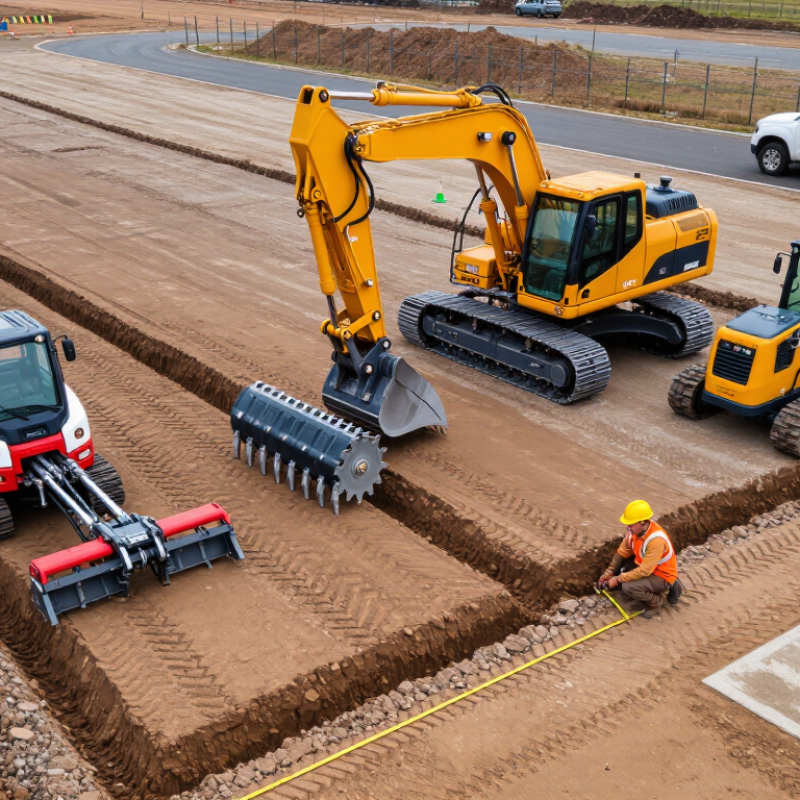
Before choosing a trenching tool, define the ground conditions and the trench’s exact purpose. Measure the required depth, width, length, and total digging volume. A narrow utility trench needs different equipment from a wide drainage trench. Check whether the soil contains clay, loose sand, gravel, or compacted fill. Moisture can change digging resistance quickly. Rocky ground may require cutting attachments or slower operating speeds.
Identify nearby cables, pipes, foundations, and drainage routes before work begins. Use approved locating methods and confirm local safety requirements. Access also matters. A backyard with a narrow gate may limit equipment size, even when the soil is easy to dig. Consider spoil placement, noise, ground pressure, and available power. I once underestimated spoil volume on a small drainage job. The trench was simple, but the soil storage area became the real problem.
Tips: Walk the planned route before selecting equipment. Record soil changes at several points. Allow extra time for hard layers and unexpected water. Match the tool’s cutting depth and width to your measurements, not rough assumptions. Confirm operator training, protective systems, and inspection procedures before excavation. A useful checklist should include production goals, site access, utility clearance, soil stability, and restoration needs. Recheck the plan after the first test section. Field conditions often challenge the original estimate.
Assess Soil Conditions, Site Access, and Underground Utilities
How to Choose the Right Trenching Tools for Your Project?
Assess Soil Conditions, Site Access, and Underground Utilities
The right trenching tool begins with the soil, not the equipment catalog. Clay may cling to cutting teeth, while dry gravel can slow digging and increase vibration. Loose sandy soil may collapse quickly, demanding careful shoring and a controlled digging method. A soil report helps, but it can miss buried fill or wet pockets. That uncertainty deserves respect.
Site access also shapes your choice. Measure gate widths, turning space, overhead clearance, and ground bearing strength. A compact walk-behind trencher may suit a narrow garden path. A compact excavator may work better across firm, open ground. For short service runs, hand tools can offer better control around delicate surfaces. On real sites, I have seen teams choose powerful machines that could not safely reach the work area.
Tips: Review utility maps before mobilizing. Use approved locating services and mark lines clearly. Treat every suspected utility as live until qualified personnel verify it. Keep the excavation area controlled, and follow local requirements for depth, access, and trench protection. Ask an experienced operator to inspect the soil and recommend suitable cutting attachments. Do not rely on appearance alone. Freshly disturbed soil can hide unstable layers. Recheck conditions after rain, especially near slopes, driveways, and drainage routes. Small details matter.
How to Choose the Right Trenching Tools for Your Project? - Assess Soil Conditions, Site Access, and Underground Utilities
| Site Condition | Typical Soil or Ground Indicators | Recommended Trenching Tool | Typical Working Range | Access Requirements | Underground Utility Risk | Recommended Operating Approach |
|---|---|---|---|---|---|---|
| Loose sand or sandy loam | Granular soil, low cohesion, sidewall sloughing, and rapid water movement after rain. | Narrow-track walk-behind trencher with a digging chain | Approximately 100–300 mm trench width and up to 600–900 mm depth for light-duty work. | Usually suitable for narrow gates and residential access routes; confirm the machine width before delivery. | High collapse and utility-exposure risk | Use shorter excavation passes, keep spoil away from the edge, and stop immediately if the trench walls begin to ravel. |
| Firm clay or cohesive soil | Plastic soil that forms lumps, holds vertical faces temporarily, and becomes sticky when wet. | Chain trencher with a cutter selected for cohesive soil | Approximately 100–200 mm trench width and 450–1,200 mm depth, depending on equipment capacity. | Requires a reasonably level route and enough turning space to avoid damaging finished surfaces. | Moderate risk; buried lines may be difficult to expose cleanly | Work when the soil is moist but not saturated. Clean the cutting system regularly to limit clay buildup. |
| Dry, compacted clay | Hard, dense soil with visible cracking and high resistance to hand excavation. | Heavy-duty trencher or compact excavator with a narrow bucket | Approximately 150–300 mm trench width and 600–1,500 mm depth. | Needs greater machine clearance, stable ground, and adequate space for spoil placement. | Moderate risk; excessive force can disturb nearby utilities | Reduce travel speed, avoid forcing the cutter, and use controlled bucket movements near marked utility corridors. |
| Gravel, cobbles, or mixed fill | Loose aggregate, variable particle sizes, construction debris, or inconsistent resistance across the trench line. | Compact excavator with a reinforced narrow bucket | Approximately 150–450 mm trench width and 600–1,800 mm depth. | Requires stable access, sufficient counterweight clearance, and room for displaced aggregate. | High risk of deflection, impact, and line damage | Use slow, shallow passes. Remove large rocks individually and do not use impact tools next to a suspected utility. |
| Rocky ground or fractured bedrock | Visible rock, refusal during probing, high vibration, or repeated damage to standard cutting teeth. | Compact excavator with hydraulic breaker or rock trencher | Approximately 200–600 mm trench width; depth depends on rock profile and breaker capacity. | Needs firm bearing capacity, increased working clearance, and protection from flying fragments. | Very high risk of vibration-related utility damage | Confirm utility locations before breaking. Use vibration controls, exclusion zones, and hand excavation near known lines. |
| Wet soil or high groundwater | Standing water, pumping water, soft subgrade, rutting, or soil that loses strength when disturbed. | Compact excavator with dewatering equipment and trench-support accessories | Depth should be limited by soil stability, water inflow, and the selected protective system. | Requires an all-weather access route, water-discharge plan, and sufficient space for pumps or collection areas. | High collapse, flooding, and equipment-sinking risk | Control water before extending the trench. Never allow workers to enter an unsupported, water-filled, or unstable excavation. |
| Landscaped residential area | Finished lawns, planting beds, irrigation systems, paving, and limited room for spoil storage. | Low-ground-pressure walk-behind trencher or compact mini-excavator | Approximately 75–150 mm trench width and 300–900 mm depth for common service runs. | Prioritize low machine width, low ground pressure, and minimal turning requirements. | High risk from shallow irrigation, lighting, and communication lines | Use surface protection, confirm the route with utility records and locating equipment, and hand-dig at crossings. |
| Restricted side yard or narrow corridor | Access width below approximately 1.2 m, walls or fences on both sides, and limited spoil placement. | Walk-behind trencher, vacuum excavator, or manual digging tools | Typically 75–150 mm trench width and 300–750 mm depth, subject to local requirements. | Measure the narrowest point, gate opening, overhead clearance, and turning locations before selecting equipment. | High risk because utilities and structures may be close to the trench | Use small excavation stages and remove spoil frequently. Maintain clearance from foundations, walls, and utility marks. |
| Open commercial or roadside work area | More room for equipment, but possible traffic, public access, and multiple buried services. | Ride-on trencher or compact excavator with a narrow bucket | Approximately 150–450 mm trench width and 600–1,800 mm depth, subject to ground conditions. | Requires a planned equipment route, traffic controls, safe spoil storage, and a defined exclusion zone. | High risk due to dense utility networks and public exposure | Complete utility locating and potholing before production excavation. Use barriers, spotters, and documented access controls. |
| Known or suspected utility crossing | Utility markings, record drawings, service boxes, valves, poles, meters, or inconsistent ground indications. | Hand tools, insulated non-conductive digging tools where appropriate, or vacuum excavation | Expose the utility by controlled excavation before using powered trenching equipment nearby. | Requires clear working room for a spotter, safe spoil placement, and unobstructed emergency access. | Critical risk of service interruption, electrocution, explosion, or flooding | Contact the applicable utility-locating service, verify marks, pothole to confirm depth and alignment, and maintain the legally required tolerance zone. |
| Deep trench requiring worker entry | Planned excavation may exceed the depth at which protective measures are required by local regulations. | Excavator combined with an engineered shoring, shielding, or sloping system | Tool selection must be based on the designed trench dimensions, soil classification, and protective system. | Requires equipment setback, stable access, ladder or ramp provisions, and a designated competent person. | Critical collapse and engulfment risk | Follow applicable excavation regulations. Inspect the trench before each shift and after rain, vibration, or other changing conditions. |
| Shallow cable or irrigation installation | Short service route, limited depth, finished landscaping, and a high priority on surface restoration. | Manual trenching tools or lightweight walk-behind trencher | Approximately 50–100 mm trench width and 150–450 mm depth, according to the cable or pipe requirements. | Suitable for tight residential access when the machine can pass without contacting structures or landscaping. | Moderate risk from unrecorded shallow services | Locate existing services first, make careful test holes, and keep the trench as narrow as practical. |
Match Trenching Tool Types to Depth, Width, and Ground Conditions
Choose the trenching tool after defining target depth, trench width, soil behavior, and access limits. That sequence matters because a fast cut can still produce unstable walls. OSHA recorded 39 trench-collapse deaths in the United States during 2022. Its excavation guidance treats cave-ins as the primary trenching hazard.
For shallow, narrow utility runs, a chain trencher can produce consistent walls with limited spoil. It suits firm, uniform soil and repeated passes. A wheel trencher can work better in compacted ground, pavement, or mixed layers. Its cutting action handles resistance more steadily. Use an excavator bucket when depth changes, the trench widens, or buried obstructions are likely. It offers control, but usually leaves a less precise profile.
Match the attachment to ground conditions, not only machine availability. Cohesive clay may stand briefly, while saturated sand can flow into the cut without warning. The U.S. Geological Survey reports that water strongly changes soil strength and slope stability. That detail is easy to underestimate. Width matters too. An oversized bucket wastes spoil space and may disturb trench edges. A narrow attachment can reduce backfilling, but it may struggle in gravel or fractured rock. Check the soil assessment, spoil placement, and planned protective system before cutting. A tidy production plan can still miss groundwater. Recheck conditions during the shift.
Compare Power Sources, Capacity, Maneuverability, and Operating Costs
Choosing the right trenching tool starts with the power source, not the price tag. Electric models suit sites with dependable power and low noise requirements. Fuel-powered units work better in remote areas, but they need ventilation, refueling, and regular engine care. Hydraulic tools can deliver strong digging force when a compatible carrier is already available. That existing equipment can reduce transport costs.
Capacity must match the trench design and ground conditions. Check maximum depth, cutting width, soil resistance, and spoil volume. A narrow trench may save backfill material, yet it can slow installation if the tool lacks sufficient reach. Wet clay behaves differently from loose sand. Manufacturer specifications help, but a small site trial is often more honest.
Maneuverability matters around fences, foundations, trees, and uneven ground. Measure access width before choosing a machine. Turning radius, track or wheel design, operator visibility, and transport weight affect daily productivity. A powerful tool becomes expensive when two workers must reposition it constantly. Labor, fuel or electricity, maintenance, cutting-chain wear, and downtime all belong in the operating-cost calculation. Noise matters. So does cleanup.
One common mistake is choosing maximum capacity for a small project. I have seen oversized equipment increase surface damage and handling time. A lighter tool may appear less impressive, but it can produce better results in restricted spaces. Allow room for mistakes, because real soil rarely matches the survey perfectly.
Verify Safety Features, Maintenance Needs, and Equipment Compliance
Choosing trenching tools starts with risk, not digging speed. OSHA recorded 39 worker deaths from trenching and excavation incidents in 2022, more than double the previous year. That number is uncomfortable. Verify protective guards, emergency stops, reverse alarms, and stable operating controls before delivery. Check whether the tool matches soil conditions, trench depth, access limits, and the required protective system. A powerful machine is not automatically a suitable machine.
Maintenance is not paperwork theater. Inspect hydraulic lines, cutting teeth, tracks, batteries, and attachment pins before every shift. Look for fresh leaks, loose fasteners, cracked welds, and unusual vibration. Follow documented service intervals and keep inspection records beside the equipment. A worn tooth can increase digging force and reduce operator control. NIOSH FACE investigations repeatedly connect excavation incidents with weak planning, poor inspections, and inadequate protective systems. A clean checklist can still hide a poor decision.
Compliance needs evidence, not assumptions. In the United States, review OSHA 29 CFR 1926 Subpart P, applicable equipment rules, and the manufacturer’s operating limits. Confirm operator training, competent-person inspections, load ratings, and emergency procedures. BLS reported 1,069 fatal work injuries among construction and extraction workers in 2023, showing why broader site controls matter. Local requirements may differ. Recheck them. I would rather delay a rental than discover a missing certificate beside an open trench.
Related Posts
-
Comprehensive Insights on Selecting the Best Trenching Tools for Global Procurement
-
Unlocking Efficiency: The Advantages of Using the Best Trenching Tools in Your Projects
-
Top Tools Suppliers You Should Know About?
-

Top Professional Tools for Global Buyers
-

Unlocking Efficiency with Best Steel Tools for Global Procurement Success
-
Empowering Global Buyers with Top Quality Professional Tools from Leading Export Factories