Blog
Top 10 Quality Hand Tools Brands for Global Buyers
For global buyers, choosing Quality Hand Tools is not simply a matter of comparing prices or polished catalogs. A wrench should sit firmly in the hand. A screwdriver tip should meet the fastener cleanly. These small details matter on a busy workbench, where poor fit can waste time and strain the user. Craft scholar Richard Sennett describes craftsmanship as “the desire to do a job well for its own sake.” That idea offers a useful lens for evaluating tool brands, even though no single quote can certify a product.
This guide introduces ten brands that buyers may encounter across professional and everyday markets. It considers practical factors such as material quality, finish, ergonomics, product range, availability, and warranty support. A bright chrome surface may look reassuring, but appearance alone tells little about durability. Check specifications, compare independent reviews, and consider how a tool performs in the work you actually do. Details can be overlooked.
The list is a starting point, not a universal verdict. Brand strengths differ by product line, region, and price tier; a respected name can still offer tools that do not suit every task. Buyers should verify current specifications and local service options before placing large orders. A careful comparison takes effort. But it can prevent a drawer full of tools that feel right in the catalog and wrong in the hand.
What Defines a Quality Hand Tool Brand
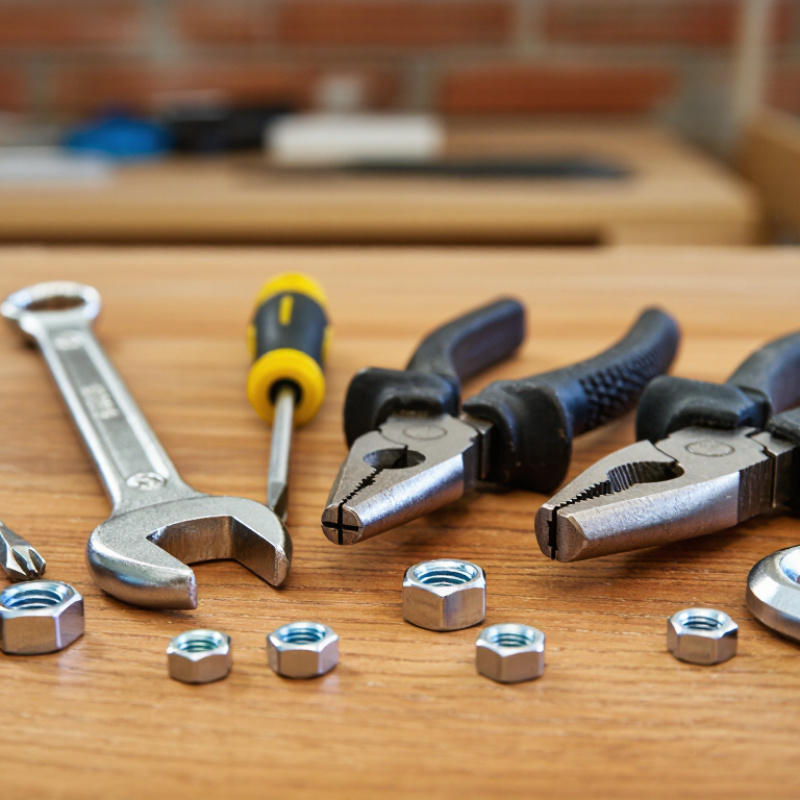
A quality hand tool brand is defined by performance that remains dependable after repeated use. In real workshops, a wrench should fit a fastener without excessive play. A screwdriver should keep its tip shape after turning stubborn screws. These details reveal more than a polished package. They show whether the maker understands daily work.
Material choice matters, but heat treatment matters just as much. Properly treated steel can resist wear, bending, and surface damage. Handles should offer a secure grip, even with oily or tired hands. Clear size markings also save time at a crowded workbench. Small features matter. A strong warranty helps, but reliable quality control matters more. Buyers should look for inspection records, material information, and consistent manufacturing tolerances.
Experience teaches a less comfortable lesson: no tool is perfect for every task. A heavier design may feel durable but cause fatigue during long repairs. A compact tool may reach narrow spaces but sacrifice leverage. I once trusted a bright finish too quickly. It looked professional, yet the edge wore sooner than expected. That mistake changed my buying habits. I now compare field performance, user feedback, repair support, and replacement availability. A credible hand tool brand accepts criticism, explains its testing methods, and improves products when evidence exposes weaknesses.
Torque Tool Accuracy Limits in ISO 6789-1:2017
A measurable quality benchmark is how closely a torque tool must meet its stated value. The chart compares the standard’s headline maximum permissible relative deviations for Type I and Type II torque tools. These are standard limits, not test results for any particular product.
Source: ISO 6789-1:2017. Requirements can vary by tool class and measurement point; consult the standard for the applicable test conditions.
How Global Buyers Can Evaluate Hand Tool Brands
Global buyers should evaluate hand tool brands through evidence, not polished catalogs. The IMARC Group estimated the global hand tools market at about USD 22 billion in 2023. That scale creates many suppliers, but quality remains uneven. Request production samples before approving any large order. Inspect jaw alignment, surface finish, handle grip, and edge consistency under bright workshop lighting.
Ask for material specifications and independent test records. For torque tools, verify calibration procedures against ISO 6789. For interchangeable sockets, check dimensional compatibility with ISO 1174. A supplier claiming ISO 9001 certification should provide a valid certificate and issuing body.
Test several batches, not one perfect sample. One tool can hide a weak process.
Reliability also depends on traceability and service. Review defect rates, corrective-action reports, replacement policies, and spare-part availability. The 2023 World Bank Logistics Performance Index shows major differences in customs, tracking, and delivery reliability across markets. Those differences can affect landed cost more than a small unit-price discount. I would also compare packaging strength, carton labeling, and moisture protection after a simulated sea shipment. A low price may look efficient. It may not survive real distribution. Buyers should record every result in a supplier scorecard, while leaving room for uncomfortable findings: an attractive audit can still miss inconsistent heat treatment.
Ten Leading Hand Tool Brands and Their Specialties
Global buyers are comparing ten leading hand-tool manufacturers by specialty, not by logo alone. One focuses on professional pliers, with hardened jaws and precise alignment. Another is known for adjustable wrenches and corrosion-resistant finishes. A third concentrates on socket systems, offering clear size markings and dependable ratchets. The fourth serves electricians with insulated screwdrivers and tested voltage protection. A fifth develops torque tools for controlled fastening. A sixth produces striking tools with balanced handles and replaceable heads. A seventh targets automotive workshops with deep sockets and impact accessories. An eighth supplies compact tools for maintenance crews. A ninth emphasizes ergonomic designs for long shifts. The tenth combines broad catalog coverage with regional distribution support.
Market evidence supports this specialization. Grand View Research’s 2024 hand tools assessment valued the global market at more than USD 20 billion in 2023 and forecast continued growth through 2030. Product choice should follow working conditions. For example, ISO 6789 is relevant when buyers evaluate hand torque tools, while ASME B107 standards help compare several wrench and socket categories. These references do not replace practical inspection.
Small details reveal quality. A ratchet should reverse smoothly, without excessive play. Pliers should close evenly at the tips. Handles must remain secure after repeated cleaning. Yet rankings can mislead. A premium finish may impress buyers but add little value in dry indoor work. Independent testing, warranty terms, spare-part access, and local user feedback deserve equal attention. Field experience often exposes weaknesses that catalog photographs hide.
Comparing Product Range, Standards, and Global Availability
Global buyers should compare hand-tool suppliers by range, standards, and regional availability—not catalog size alone. A useful range covers everyday spanners, sockets, pliers, cutters, and measuring tools, with clear material and size specifications. Grand View Research estimated the global hand tools market at USD 17.25 billion in 2023, with projected annual growth of 4.2% from 2024 to 2030. That growth makes supplier selection more competitive, but it does not prove consistent quality. Details matter.
Standards help buyers check whether products suit their intended use. For torque tools, ISO 6789-2:2017 addresses design conformance and calibration requirements. Ask for relevant test records, calibration details, and batch traceability rather than relying on a general quality claim. A supplier may offer many sizes yet provide limited evidence for a specific tool. That gap deserves scrutiny.
Global availability also means more than shipping to many countries. Check regional stock, replenishment times, spare-part access, and clear product documentation. A socket set needed for maintenance next week is not useful if its replacement pieces take months to arrive. Compare delivery estimates against actual service commitments where possible. I would still treat published availability with caution; stock figures can change quickly.
Choosing a Brand for Professional or Home Use
Choosing among the top ten quality hand tool brands depends on the user, not only the logo. Professional tradespeople need consistent tolerances, strong warranty support, and replacement availability. Home users often need comfortable grips, sensible prices, and compact storage. Grand View Research estimated the global hand tools market at about USD 23.55 billion in 2022, with steady growth expected through 2030. That expansion reflects demand from construction, maintenance, and household repair.
For professional use, examine measurable evidence. Look for torque tools tested under ISO 6789, clear load ratings, corrosion-resistant finishes, and documented quality-control procedures. A tool that feels solid in a showroom may still fail after repeated exposure to dust, oil, or high force. The U.S. Bureau of Labor Statistics reported millions of maintenance and repair jobs in the United States, showing why durability and ergonomic design matter in daily work. Still, specifications do not replace field experience.
For home use, avoid buying the largest set automatically. A smaller kit with common sizes may reduce clutter and misuse. Check whether handles remain secure, jaws close evenly, and markings stay readable under poor lighting. Consumer Reports has repeatedly emphasized testing performance, ease of use, and safety rather than relying on advertising claims. That method is not perfect. Reviews can miss long-term wear, while personal comfort differs greatly. I would inspect the return policy, warranty terms, and local service access before paying more for features I may never use.
Top 10 Quality Hand Tools Brands for Global Buyers - Choosing a Brand for Professional or Home Use
| Tool Type | Typical Uses | Quality Checks | Professional Use | Home Use | Buying Consideration |
|---|---|---|---|---|---|
| Combination Wrenches | Turning hexagonal nuts and bolts in mechanical and maintenance work. | Check that the open end fits cleanly and the ring end engages the fastener without excessive play. | Useful for frequent assembly and repair across a range of fastener sizes. | A compact metric or inch set covers many household repairs. | Choose the measurement system and size range that match the fasteners you encounter. |
| Socket Sets | Fastening work where a ratchet can reach around a nut or bolt head. | Inspect socket fit, clear size markings, ratchet operation, and included drive-size compatibility. | A broad size range and durable ratchet suit repeated workshop use. | A smaller set is easier to store and can handle common repair tasks. | Six-point sockets generally provide more contact on hex fasteners; twelve-point sockets allow more engagement positions. |
| Screwdrivers | Driving and removing screws with matching head profiles. | Look for correctly formed tips, secure handles, and clear identification of tip type and size. | A varied selection helps prevent tip mismatch and damage during frequent use. | A basic set of common sizes is suitable for furniture and household repairs. | Match the tip to the screw; Phillips, slotted, Torx, and other profiles are not interchangeable. |
| Pliers | Gripping, bending, and holding materials or small components. | Check jaw alignment, hinge movement, grip comfort, and whether the jaw shape suits the intended task. | Different designs, such as combination, long-nose, and locking pliers, support varied jobs. | A combination pair handles many general household tasks. | Use purpose-designed cutters for cutting; ordinary gripping pliers are not a substitute. |
| Adjustable Wrenches | Turning different fastener sizes with one adjustable tool. | Test jaw movement for smooth adjustment and minimal looseness; check the stated maximum jaw opening. | Convenient for varied jobs, but fixed-size wrenches may provide a closer fit for repeated work. | A versatile option for occasional repairs and plumbing tasks. | Seat the jaws fully on the fastener and apply force in the direction that minimizes jaw spreading. |
| Hammers | Driving nails, light striking, or shaping materials with a task-appropriate head. | Check that the head is securely attached and the handle has no cracks, splits, or loose fit. | Select head type and weight for the materials and work rate involved. | A general-purpose claw hammer is useful for basic household jobs. | Choose a weight that can be controlled comfortably; wear eye protection when striking materials. |
| Hex Key Sets | Turning fasteners with internal hexagonal sockets, common in furniture and machinery. | Check that the keys have consistent dimensions, clean ends, and clearly marked sizes. | A complete set in the required measurement system supports equipment maintenance. | A compact set is practical for flat-pack furniture and bicycle adjustments. | Metric and inch sizes differ; use the exact size to reduce the risk of rounding the socket. |
| Torque Wrenches | Applying a specified tightening torque to fasteners. | Check the torque range, units, readability, operating instructions, and calibration guidance. | Important where the equipment or fastener manufacturer specifies a torque value. | Useful for occasional tasks that require controlled tightening, such as certain vehicle work. | Follow the tool maker’s storage and calibration instructions; do not use it as a general breaker bar. |
| Measuring Tapes | Measuring lengths and checking dimensions in construction, fitting, and repair. | Inspect the blade markings, locking mechanism, hook movement, and case condition. | A suitable blade length and readable scale support frequent site measurements. | A compact tape is adequate for furniture, rooms, and routine home projects. | Choose a scale and length that fit the work; verify measurements when precision is critical. |
| Hand Files | Removing small amounts of material and smoothing edges by hand. | Select an appropriate cut and shape; ensure the file has a properly fitted handle. | A range of shapes and coarseness levels suits varied metalworking and maintenance tasks. | A general-purpose file can help with simple deburring and fitting work. | Use a file card to clean teeth when needed, and never use an unhandled tang without a suitable handle. |
Related Posts
-
Elevating Quality with Chinese Made Home Hand Tools for Global Buyers
-
How to Choose the Best Hand Tools for Global Sourcing?
-
7 Essential Reasons Why Home Hand Tools Are a Must for Every DIY Enthusiast
-
The Ultimate Guide to Choosing the Right Hand Tools for Every DIY Project
-
Ultimate Guide to Selecting the Right Hand Tools for Every DIY Project Based on Expert Industry Insights
-

What Are the 2026 Best Hand Tools for Global Buyers?