How to Choose the Best Hand Tools for Global Sourcing?
Choosing the best Hand Tools for global sourcing requires more than comparing prices in a supplier catalogue. Buyers must examine performance, safety, durability, and supplier reliability together. A polished product photo can hide weak steel, uneven heat treatment, or uncomfortable grips. Small details matter. A wrench that slips during testing may create returns, delays, and damaged trust.
Experienced sourcing teams begin with the intended use. They define torque needs, working environments, size ranges, and expected service life. Material specifications should be clear, including alloy type, hardness, coating, and corrosion resistance. Sample testing can reveal jaw alignment, handle strength, surface defects, and packaging weaknesses. Factory audits also help verify equipment, quality controls, traceability, and production capacity. However, an audit is only a snapshot. It cannot replace continuous inspection.
Reliable suppliers should provide consistent technical documents, test records, and transparent communication. Buyers should also confirm applicable regional standards, labeling rules, warranty expectations, and import requirements before placing orders. Requirements differ across markets. Do not assume one certificate satisfies every destination.
Price still matters, but the lowest quotation may conceal higher total costs. Freight damage, replacement claims, and inconsistent batches can quickly change the calculation. A practical comparison should include landed cost, defect rates, lead time, and after-sales support. There is no perfect sourcing decision. Even careful teams may overlook a minor design weakness or underestimate seasonal demand. That is why pilot orders, documented feedback, and periodic supplier reviews remain valuable. The best choice is not simply the cheapest Hand Tools shipment. It is a dependable balance of safety, function, compliance, and long-term value.
Define Tool Requirements Using ANSI/ASME B107 and ISO 6789 Standards
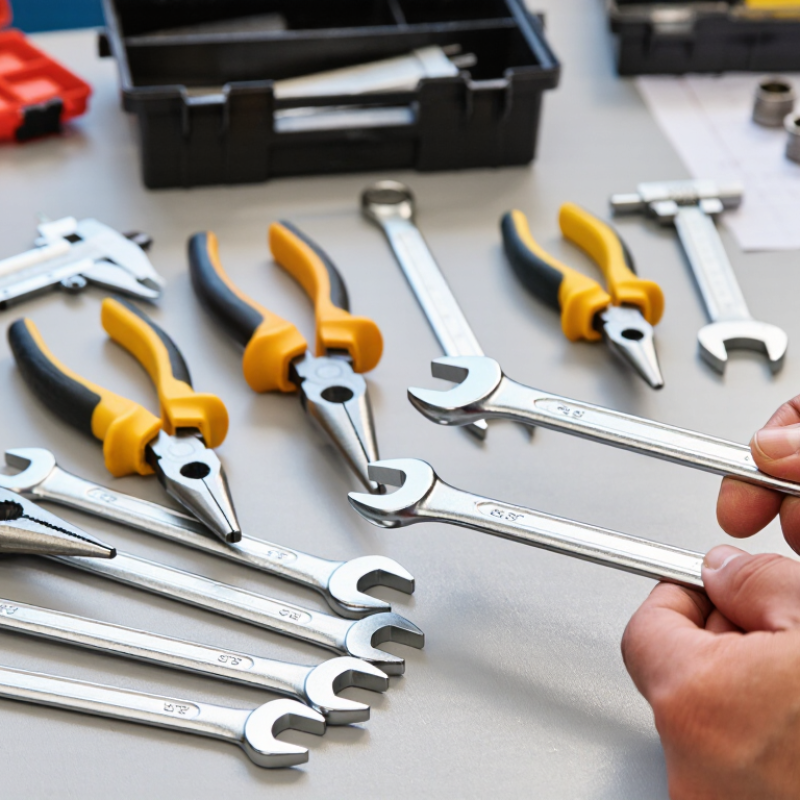
When sourcing hand tools globally, define requirements before comparing prices. ANSI/ASME B107 provides structured requirements for many hand tools, including dimensions, materials, performance, and safety testing. Use its applicable section as a purchasing checklist, not as decorative language in a specification. Record jaw opening, handle size, load capacity, corrosion resistance, and test methods.
Torque tools require tighter control.
ISO 6789:2017 distinguishes indicating tools from setting tools and defines calibration and test procedures. Ask suppliers for calibration results, measurement uncertainty, and traceable equipment records. “Calibrated” alone is too vague. The 2024 hand tools market assessment by Mordor Intelligence estimated the global market at about US$24.6 billion, with continued growth expected through 2029. More suppliers do not automatically mean better control.
Safety data also deserves attention.
The U.S. Bureau of Labor Statistics recorded 888,220 private-industry cases involving days away from work in 2023. That figure covers many injury types, not hand tools specifically, but it reinforces the cost of weak ergonomic decisions. Check grip diameter, force requirements, edge finishing, and access angles through practical samples. A factory may pass a laboratory test yet provide uncomfortable tools during repeated use. Standards reduce uncertainty, but they cannot replace field trials.
My own sourcing view is imperfect: I once treated a certificate as sufficient evidence. That was too optimistic.
Compare Materials, Ergonomics, Torque, Hardness, and Load-Rating Data
When sourcing hand tools across global markets, I start with material data, not polished photographs. Chrome-vanadium steel may resist wear, while stainless steel can offer better corrosion resistance in damp storage. Ask for composition reports, heat-treatment records, and sample measurements. A bright finish proves little. It can hide uneven hardness.
In actual trials, I grip tools with dry and lightly oily hands. Handle diameter, edge comfort, and balance affect control after repeated use. Torque figures need context: Is the value continuous, peak, or tested on a new tool? Compare the drive size, test method, and failure point. Hardness should be measured at working surfaces, not only on a factory test coupon. A harder tool is not automatically safer; excessive hardness may reduce toughness. That distinction is easy to miss.
For load ratings, request the rated load, safety factor, test direction, and number of cycles. Check whether the rating applies to the complete tool or one component. I also compare batch samples, packaging protection, and calibration dates. A supplier may provide excellent documents but inconsistent production. I once trusted a clean report too quickly; later, small dimensional differences changed the fit. That mistake made me add incoming inspections and torque checks. Paperwork matters. Physical evidence matters more. Leave room for uncertainty, because field conditions rarely match the laboratory.
Screen Suppliers by ISO 9001 Certification, Defect PPM, and Audit Results
How to Choose the Best Hand Tools for Global Sourcing?
Choosing hand tool suppliers requires more than comparing prices and catalogs. In my sourcing experience, ISO 9001 certification is a useful starting point, not a final decision. Check the certificate’s validity, production scope, and issuing organization. Then request recent internal and external audit reports. Look for repeated findings, overdue corrective actions, and weak traceability. Paperwork can look perfect. Factory evidence matters more.
Defect PPM should be studied with careful questions. Confirm the calculation period, inspection quantity, product range, and defect definition. A supplier reporting 300 PPM may exclude returns or use limited sampling. Compare incoming inspection data with customer complaints and rework records. During an audit, inspect calibration labels, torque checks, operator instructions, and final inspection stations. I have trusted a clean quality report too quickly before. That was a costly lesson. Good suppliers should explain failures clearly, without hiding behind averages.
Tips: Request twelve months of PPM data and sample inspection records. Ask suppliers to show closed corrective-action reports. Compare audit results with production-floor conditions. Speak with quality staff, not only sales representatives. Leave room for doubt; one audit cannot reveal every weakness.
Calculate Landed Cost from MOQ, Lead Time, Freight, Duties, and FX Risk
A low factory price does not guarantee a low landed cost. Compare each hand-tool quote using a shipment-level model: landed cost equals product value, origin fees, freight, insurance, duties, financing, and foreign-exchange protection. Divide the total by sellable units, not ordered units.
For example, 10,000 tools at $4.20 cost $42,000. Freight adds $2,400, while an 8% duty on the customs value adds about $3,552. Insurance at 0.3% adds roughly $133. A 75-day lead time also ties up cash. At a 12% annual carrying rate, inventory financing costs about $1,037. Add a cautious 3% FX reserve on product value, or $1,260. The estimated landed cost becomes approximately $5.04 per tool. The math is clear. The assumptions are not.
MOQ changes the result sharply. With only 3,000 units, the same freight costs $0.80 per tool, compared with $0.24 at 10,000 units. However, excess stock can become more expensive than freight savings. Check forecast accuracy, carton dimensions, defect allowances, and remaining shelf life for coatings or packaging.
UNCTAD’s Review of Maritime Transport 2024 highlights continuing disruption and volatility in maritime routes. Freight budgets need a buffer.
The WTO’s April 2024 trade forecast also projected merchandise trade growth of 2.7% in 2024, reminding buyers that demand assumptions can shift.
Exchange rates remain easy to underestimate. Record the quotation currency, payment dates, duty basis, and validity period in writing. Then test a 5% currency move and a two-week delay. That uncomfortable scenario may reveal the better supplier.
Verify CE, REACH, RoHS, ASTM, and Country-Specific Compliance Requirements
How to Choose the Best Hand Tools for Global Sourcing?
Compliance should guide tool selection from the first quotation.
CE marking is not a universal quality certificate. It shows that applicable European Union requirements were assessed. Request the EU Declaration of Conformity, technical file references, and recent test reports. REACH also deserves close attention. The European Chemicals Agency’s Candidate List contained 247 substances in June 2024. Ask for material declarations covering handles, coatings, lubricants, and packaging.
RoHS applies mainly to electrical and electronic equipment, not every manual hand tool.
However, powered tools may require controls for restricted substances, including lead, mercury, and cadmium. ASTM requirements are different. They are usually voluntary, unless a contract, regulation, or purchasing specification makes them mandatory. Match the exact ASTM method to the tool’s intended use. A report saying “ASTM compliant” is too vague.
Country-specific checks prevent expensive surprises.
The European Commission’s Safety Gate 2023 report recorded 3,412 product alerts. This shows how quickly weak documentation can become a market problem. For each destination, verify labeling, importer details, language, traceability, electrical safety, and packaging rules. Keep batch numbers and supplier declarations together. Request independent laboratory evidence when risk is high.
Still, paperwork can be incomplete or outdated. I have seen suppliers reuse old reports for changed materials. That shortcut needs challenging. A small sample audit, including a coating scrape and dimensional check, often reveals more than a polished certificate.