Blog

Top 10 Hand Drill Manufacturers for Global Buyers

Choosing a Hand Drill manufacturer is not just a matter of comparing prices. Global buyers also need to assess product consistency, available models, technical documentation, and the support offered after purchase. A drill may look capable in a catalog, yet its weight, grip, chuck design, and speed control matter when someone uses it for hours. Small details count.

This guide introduces ten manufacturers for buyers exploring hand drills across different markets and applications. It considers practical purchasing questions, including product range, manufacturing experience, customization options, quality controls, and communication with international customers. These factors can help narrow a supplier list, but they do not replace direct checks. Request current specifications, confirm order requirements, and ask how the manufacturer handles service or replacement parts.

A shortlist is only a starting point. Not every brand will suit every workshop, budget, or production schedule. Company information and product lines can change, and a strong reputation does not guarantee that each model fits a particular job. Buyers should compare the actual drill, not just the logo. A careful sample review can reveal things a brochure misses, such as balance in the hand or how smoothly the chuck tightens. This overview is intended to make that comparison easier and more grounded, while leaving room for questions that only a supplier can answer.
Top 10 Hand Drill Manufacturers for Global Buyers

Hand Drills: Types, Applications, and Global Market Overview

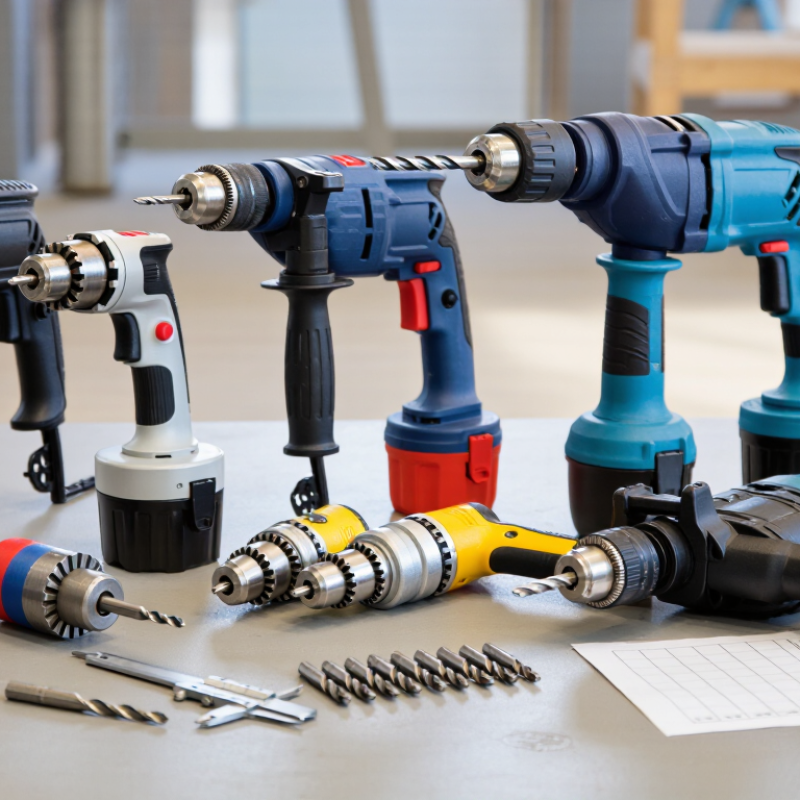
Hand drills range from compact manual models to corded and cordless power tools. Pistol-grip drills suit general repair work, while right-angle designs reach narrow spaces. Hammer drills add a pulsing action for masonry, though they are not ideal for every material. Choose the tool for the task. A small pilot hole in timber needs different control from fastening into brick. In workshops, adjustable speed and a secure chuck help operators manage varied bits and materials. On building sites, battery capacity, grip comfort, and dust exposure can matter just as much as rated power.

Applications span furniture assembly, maintenance, cabinetry, light construction, and equipment repair. Global buyers often compare voltage, chuck size, torque settings, battery platform availability, and service support. Shipping distance and regional power standards also affect sourcing decisions. Specifications tell only part of the story. A drill that looks powerful on paper may feel heavy during overhead work. Market demand varies with construction activity, repair needs, and access to replacement batteries. Buyers should check product testing details and warranty terms rather than rely on broad claims. One trade-off remains: a lower purchase price can mean fewer service options later. That deserves a closer look.

How to Evaluate Hand Drill Manufacturers for Global Purchasing

Evaluating hand drill manufacturers for global purchasing requires more than comparing catalog prices. Buyers should request samples from the production line, not only polished display units. Test the chuck with several bit sizes, then check for wobble during drilling. Notice how the motor sounds under load and whether the housing becomes uncomfortably warm. Small differences matter. A drill that performs well once may not perform consistently across a full shipment.

Ask for documented torque, speed, and endurance test results, and confirm how often production units are inspected. Request material specifications and traceability records for key components. Check that operating instructions, packaging, and spare-part lists match the intended market and order requirements. Paperwork helps, but it cannot replace a practical test. No checklist catches everything.

Discuss minimum order quantities, lead times, payment terms, and how defects are handled before placing an order. Ask for realistic production schedules and written acceptance criteria, such as acceptable chuck runout or battery performance, if applicable. Compare responses for clarity, not just speed. A cautious buyer should also arrange an independent pre-shipment inspection for larger orders. It adds cost and can slow delivery, but discovering a recurring fault after distribution is usually worse. Even a strong sample has limits; repeatability is the real test.

Top 10 Hand Drill Manufacturers for Global Buyers - How to Evaluate Hand Drill Manufacturers for Global Purchasing

Use these ten evaluation dimensions to compare suppliers. Requirements depend on the drill type, destination market, and applicable regulations; verify documents for the specific model being purchased.

No. Evaluation dimension What to assess Evidence to request Global buyer note
1 Product range and application fit Check whether the supplier offers the required corded or cordless drills, operating modes, chuck types, and accessories for the intended tasks. Current product catalogue, model-specific datasheets, and samples for the models under consideration. Compare equivalent configurations; model names alone do not establish equivalent performance.
2 Safety and market compliance Confirm applicable electrical, machinery, and product-safety requirements for the destination market and product type. Declarations of conformity, test reports, and the standards and model numbers they cover. IEC 62841-1 and IEC 62841-2-1 may be relevant to applicable hand-held electric drills. A standard or marking should not be treated as proof of compliance in every country. Check current local requirements and document scope.
3 Electrical specifications Verify rated voltage, frequency where relevant, input power or battery voltage, speed range, and plug configuration against the purchase specification. Model datasheet, nameplate image, and confirmation of the exact electrical configuration for the order. Do not assume a tool is suitable for a destination’s power supply based on appearance or a generic catalogue listing.
4 Performance claims Review stated speed, torque where applicable, drilling capacity, and operating modes, and check that the claims match the intended material and use. Datasheets with defined test conditions, test results, and a sample evaluation using agreed acceptance criteria. Performance figures are meaningful only when measurement methods and test conditions are clear.
5 Build quality and durability Inspect housing, chuck, switch, cable or battery connection, heat management, and consistency between production samples. Sample inspection, documented reliability or endurance test methods, and quality records for the relevant product line. Ask how defects are recorded and addressed; a single sample cannot establish ongoing batch consistency.
6 Battery and charger documentation For cordless models, check battery and charger compatibility, ratings, protection features, and the documentation needed for transport. Battery and charger datasheets, applicable safety documents, and UN 38.3 test summary for lithium batteries when required for transport. Transport rules depend on shipment details and route; confirm requirements with the carrier or a qualified dangerous-goods specialist.
7 Quality management and production control Assess inspection procedures for incoming components, production stages, and finished goods, including control of changes to parts or processes. Quality procedures, inspection records, corrective-action process, and any current ISO 9001 certificate with its scope and issuing body. ISO 9001 concerns a quality management system; a certificate by itself does not certify a particular drill’s performance or safety.
8 Customization and configuration control Determine whether the supplier can support agreed packaging, language, plug, accessory, or other configuration requirements while keeping specifications controlled. Written specification, approved artwork or samples, change-control procedure, and confirmation of order-specific configurations. Agree which changes require approval and how the final production version will be identified.
9 Export readiness and order terms Evaluate export documentation, packaging suitability, quoted production lead time, order quantity terms, and agreed delivery responsibilities. Written quotation, packing details, sample shipping documents where available, and a production and inspection schedule. Minimum order quantities, lead times, and shipping terms vary by supplier and order; confirm them in writing for each purchase.
10 Warranty, spare parts, and after-sales support Check warranty terms, fault-reporting process, availability of service parts, and the process for handling repairs or replacement claims. Written warranty policy, spare-parts list, service instructions, and defined claim-response process. Compare coverage, exclusions, claim procedures, and support arrangements for the destination market before placing an order.

Profiles of Ten Hand Drill Manufacturers

The ten manufacturer profiles reflect different priorities in hand-drill production. One compact-tool specialist focuses on light bodies and quick bit changes for household repairs. An industrial producer tends to emphasize durable housings and serviceable components for repeated workshop use. A cordless-focused manufacturer designs around battery balance, grip comfort, and charging compatibility. Its trade-off may be higher tool weight.

A corded-tool maker prioritizes steady power for longer tasks near an outlet. A precision-oriented producer pays close attention to chuck runout and speed control, useful when drilling small pilot holes. A value-focused manufacturer keeps controls simple and pricing accessible, though buyers should inspect warranty terms and replacement-part access. Details matter. An ergonomics-led maker may use narrower handles and textured grips to reduce slipping during extended work.

A regional contract manufacturer can offer flexible production runs, but buyers should verify quality checks with sample testing. A resource-conscious producer may reduce packaging or use recycled materials; request clear documentation before treating this as a verified benefit. Finally, a diversified tool manufacturer can draw on broad engineering experience, although its hand-drill range may be less specialized. No single profile guarantees quality. Compare chuck capacity, speed range, measured weight, safety instructions, and after-sales support against the actual job. Some specifications look impressive on paper. Hands-on evaluation can reveal what a catalog misses.

Comparing Product Range, Quality, and Manufacturing Capabilities

Top 10 Hand Drill Manufacturers for Global Buyers

Comparing hand drill manufacturers means looking beyond headline torque and advertised speed. A useful product range should cover compact drills for tight spaces, heavier models for demanding work, and options with different chuck sizes. Buyers should also check whether batteries, chargers, and replacement parts remain available across the range. Small details matter. A comfortable grip, clear controls, and a balanced tool can reduce fatigue during repeated drilling.

Quality claims need practical evidence. Ask for sample test records, details on motor and gearbox inspection, and consistency checks across production batches. A tool that drills cleanly in a brief demonstration may behave differently after sustained use. If possible, test it in representative materials and note heat, vibration, chuck runout, and battery performance. No factory is perfect; a supplier’s response to defects can be as revealing as its inspection process. A polished report may still leave unanswered questions.

Manufacturing capability is more than a large production floor. Buyers can compare monthly capacity, lead times, customization limits, and how the factory handles changes in specifications. Clear documentation helps prevent mismatched voltage, plug, packaging, or labeling requirements. Request a sample before approving a large order, then compare its markings and components with the agreed specification. These checks take time, and they may expose trade-offs between low pricing, short lead times, and consistent quality.

Sourcing Factors: Compliance, Pricing, Shipping, and After-Sales Service

Top 10 Hand Drill Manufacturers for Global Buyers

For global buyers, compare compliance documents before comparing quotations. Ask for test reports against the applicable hand-tool safety standard, such as IEC 62841-2-1, and confirm that documentation matches the exact drill model. Check plug type, voltage, battery details, and required market-specific conformity records. A polished certificate is not enough if its model number differs. Small details matter.

Compare like-for-like specifications: rated power, chuck capacity, included accessories, warranty terms, and spare-parts availability. Then calculate landed cost, including packaging, freight, insurance, duties, and possible inspection fees. UNCTAD’s Review of Maritime Transport 2024 reported that maritime trade grew 2.4% in 2023 and highlighted continuing route and capacity pressures. This does not predict a specific shipment delay, but it supports requesting realistic lead times and written shipping terms. One uncomfortable point: the cheapest offer can become expensive when replacement parts take weeks.

Tips: Request a sample and inspect chuck runout, trigger response, and cable strain relief. Ask for the after-sales contact, response-time target, warranty exclusions, and parts list in writing. Test the process before a large order. A good supplier should answer clearly, though no checklist removes every sourcing risk.

Top 10 Hand Drill Manufacturers for Global Buyers — Sourcing Factors: Compliance, Pricing, Shipping, and After-Sales Service

Nominal mains voltage is a practical sourcing check for corded drills and battery chargers. The chart shows standard supply voltages by market, not manufacturer data or a supplier ranking.

Confirm local electrical requirements, plug type, and product certification before ordering. Supply conditions can vary by location; Japan’s mains frequency is 50 Hz in eastern regions and 60 Hz in western regions.