Blog

What Are the Top 10 Tools For Homeowners?

Choosing the right Tools For Homeowners can turn a frustrating repair into a controlled, rewarding project. A loose cabinet hinge, dripping faucet, or uneven shelf often needs only a few dependable tools. Yet buying everything at once can waste money and crowd a small garage.

Industry data shows why this topic matters. The Harvard Joint Center for Housing Studies reported that American homeowners spent about $472 billion on improvements and maintenance in 2022. The 2024 U.S. Houzz & Home Study also found that more than half of homeowners completed renovation projects during the previous year. These figures suggest a strong demand for practical equipment, not just professional services. However, spending more does not guarantee better results. That assumption deserves reflection.

Veteran contractor Mike Holmes is known for a straightforward standard: “Make it right.” His principle fits tool selection perfectly. A reliable drill, sharp utility knife, accurate tape measure, and sturdy level can prevent small errors from becoming expensive repairs. Safety glasses matter, too. They are easy to forget.

This guide examines ten tools that combine usefulness, durability, and reasonable value. It considers real household tasks, storage limits, learning curves, and maintenance needs. Some homeowners may prefer advanced cordless systems. Others may need only a compact hand-tool kit. The best choice depends on the home, the owner’s confidence, and the work ahead. No list can predict every repair. That is the honest limitation.
What Are the Top 10 Tools For Homeowners?

Ranking Criteria: Cost, Frequency of Use, Durability, and Industry Data

What Are the Top 10 Tools For Homeowners?

This ranking weighs purchase cost, frequency of use, durability, and repair value. Industry data rarely measures household tool use directly, so this list uses practical maintenance patterns and professional reports. The Joint Center for Housing Studies’ 2024 LIRA forecast projected homeowner improvement spending to decline 1.2% through early 2025. That pressure makes versatile, durable tools more valuable than oversized collections.

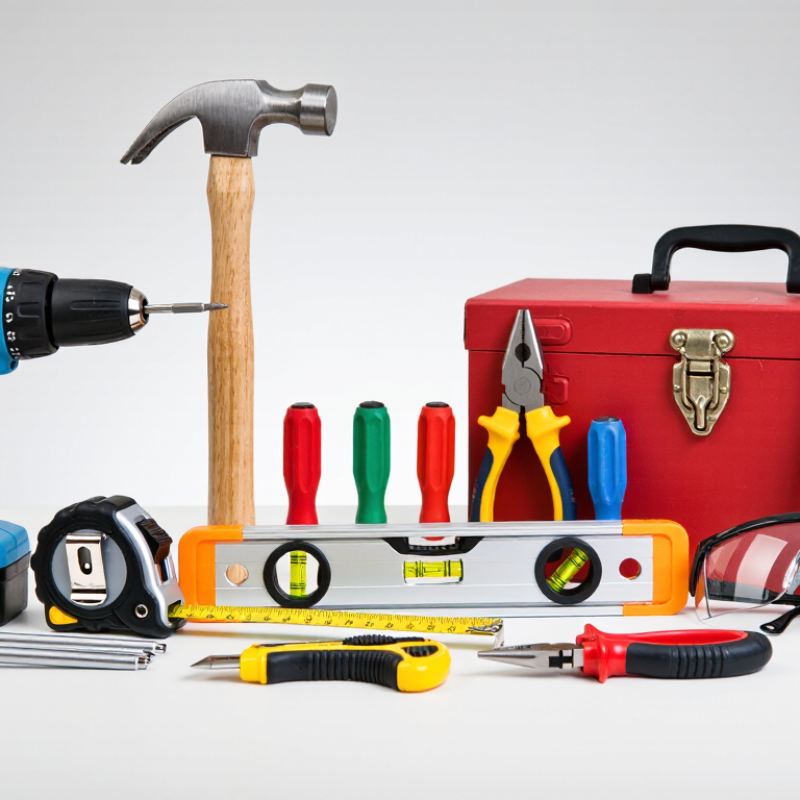
  1. Claw hammer: inexpensive, durable, and useful for frames, nails, and light demolition.
  2. Tape measure: frequent during furniture placement, repairs, and material estimates.
  3. Screwdriver set: low cost and essential for hardware, covers, and appliances.
  4. Adjustable wrench: useful for plumbing connections and household fasteners.
  5. Pliers: gripping, bending, and pulling tasks justify their small cost.
  6. Utility knife: compact, affordable, and regularly used for packaging and flooring work.
  1. Cordless drill-driver: higher cost, but it saves time across repeated projects.
  2. Spirit level: less frequent, yet valuable for shelves, pictures, and cabinets.
  3. Hex key set: inexpensive and common in furniture maintenance.
  4. Stud finder: helpful for safer wall mounting, though many homeowners use it rarely. I rank it lower because accuracy can vary with wall thickness and wiring.

Durability depends on storage, cleaning, and misuse. My ranking is imperfect. Frequency also changes with age, property type, and repair confidence. The National Association of Home Builders’ remodeling research shows continuing renovation activity, but it does not prove every homeowner needs professional-grade equipment. Buy fewer tools, then observe what your home repeatedly demands.

The Five Essential Hand Tools: Industry Standards for Size, Strength, and Grip

A homeowner’s ten-tool kit should begin with five dependable hand tools. A claw hammer should feel balanced, with a firm handle and a head suited to ordinary nails. Choose screwdrivers with hardened tips and several common sizes. One mismatched tip can damage a screw quickly. A pair of combination pliers should have strong jaws and textured, comfortable grips. An adjustable wrench needs smooth movement and minimal jaw looseness. Add a utility knife with a secure blade-locking mechanism and a handle that stays steady during careful cutting.

Tips: Hold each tool before buying it. Your fingers should not slide when your hands are slightly sweaty. Check the weight, handle shape, and moving parts. A tool that feels impressive may become tiring after ten minutes. Clean metal surfaces after use, and store sharp edges safely.

Size matters more than many beginners expect. A small hammer offers control for picture frames, while a heavier one suits tougher repairs. Screwdrivers should match the fastener head, not merely appear close. Pliers need enough jaw width for household fittings without crushing them. I once chose a wrench that was too large for a tight space; the job became slower and less precise. That mistake still influences my recommendations. Strong tools help, but careful fit and comfortable grip usually prevent more problems than extra force.

What Are the Top 10 Tools For Homeowners? - The Five Essential Hand Tools: Industry Standards for Size, Strength, and Grip

A practical reference table for selecting durable, comfortable, and appropriately sized tools for common household repairs.

Rank Tool Essential Category Typical Homeowner Size Recommended Material / Strength Grip and Safety Features Best Household Uses
1 Claw Hammer Essential hand tool 450–570 g head; 330–400 mm handle Forged steel head; handle securely fixed to resist loosening Textured non-slip handle; balanced head; smooth striking face Driving and removing nails, light framing, basic repairs
2 Screwdriver Set Essential hand tool Phillips sizes 1–3; slotted blades 3–6 mm Hardened alloy-steel shafts with corrosion-resistant finish Large contoured handle; hexagonal bolster is useful for extra torque Furniture, switch plates, hinges, appliances, and general fastening
3 Combination Pliers Essential hand tool 180–220 mm overall length Drop-forged steel; induction-hardened jaws and cutting edges Insulated comfort grips; serrated jaws; guarded pivot area Gripping, bending, twisting, and cutting light-gauge wire
4 Adjustable Wrench Essential hand tool 200–250 mm length; jaw opening up to about 25–30 mm Chrome-vanadium or comparable forged alloy steel Wide smooth jaw; knurled adjustment wheel; slim head for access Nuts, bolts, plumbing fittings, and general mechanical adjustments
5 Utility Knife Essential hand tool Retractable blade; 150–200 mm body Replaceable hardened-steel blade; rigid impact-resistant body Locking slider, finger guard, and textured grip; blade retracts fully Cardboard, packaging, carpet, drywall paper, and thin plastic
6 Tape Measure Measuring tool 5–8 m blade; 25 mm blade width is common Tempered steel blade with durable printed graduations Positive blade lock, standout blade, belt clip, and impact-resistant case Room dimensions, furniture placement, shelving, and material cutting
7 Spirit Level Alignment tool 400–600 mm length; horizontal and vertical vials Rigid aluminum or reinforced composite frame; shock-resistant vials Easy-to-read bubble vials; continuous measuring edges; end caps Hanging shelves, aligning cabinets, leveling appliances, and pictures
8 Hex Key Set Fastening tool Metric 1.5–10 mm; inch sizes may be added separately Hardened steel; precisely formed hexagonal ends Chamfered ends for easier insertion; organized holder for safe storage Flat-pack furniture, bicycles, door hardware, and machine screws
9 Hand Saw Cutting tool 400–500 mm blade; approximately 7–10 teeth per 25 mm Hardened or impulse-hardened steel teeth; stiff blade Angled ergonomic handle; knuckle clearance; secure blade spine Cutting softwood, trim, battens, small boards, and repair materials
10 Cordless Drill/Driver Power tool 10–13 mm chuck; compact 12–18 V class is common Keyless chuck; variable-speed motor; adjustable clutch Rubberized handle, trigger lock, LED work light, and battery protection Drilling pilot holes, driving screws, assembling furniture, and light installation work
Selection note: Size, grip comfort, and material quality should match the task. Wear suitable eye protection, keep cutting edges controlled, and never use a tool for a purpose it was not designed to perform.

The Five Most Useful Power Tools: Voltage, Torque, Speed, and Battery Metrics

A reliable home toolbox begins with five power tools: a drill-driver, impact driver, circular saw, oscillating tool, and angle grinder. Each solves a different problem. The drill-driver handles pilot holes, furniture assembly, and light fastening. Choose adjustable torque and two speed ranges. Low speed protects screws and delicate materials. High speed suits drilling wood or metal.

The impact driver delivers stronger fastening force through short rotational impacts. Torque matters more than headline speed. Excess torque can split timber or damage screw heads. I learned this after overtightening a cabinet hinge. It was avoidable. A circular saw needs steady speed and sufficient voltage for thick boards. Higher voltage usually supports heavier work, but it also adds weight. For occasional repairs, balance may matter more than maximum power.

An oscillating tool reaches corners and removes grout, trim, or damaged flooring. Its speed control improves accuracy. An angle grinder cuts, sands, and removes rust, but it demands careful handling and proper protection. Battery capacity, measured in amp-hours, affects working time. Larger batteries last longer, yet they can make tools tiring. Check charge time, battery compatibility, and heat management before buying. I once chose runtime over comfort and stopped using the tool halfway through a repair. Metrics help, but real use exposes weaknesses.

Safety and Measurement Tools: ANSI Ratings, Accuracy, and Protective Features

For a homeowner’s top ten tools, safety and measurement deserve equal attention. A tape measure, spirit level, laser measure, stud finder, multimeter, and infrared thermometer can prevent costly mistakes. However, accuracy depends on technique, lighting, surface condition, and battery strength. A laser reading may shift on a dusty wall. A tape’s sliding hook may also feel loose.

Look for eye protection marked ANSI Z87.1, especially during drilling, cutting, or demolition. Protective headgear should meet ANSI Z89.1 requirements when overhead hazards exist. Gloves should improve grip without reducing finger control. Electrical testers need clear voltage-category markings and intact insulation. Never trust a cheap screen alone. The U.S. Consumer Product Safety Commission reported approximately 164,000 ladder-related emergency-department injuries in 2020, showing why stable setup matters. Keep three points of contact.

Measurement tools need verification, not blind confidence. Compare a tape measure against a known reference, and check a level on the same surface after reversing it. NIST guidance emphasizes traceability and stated measurement uncertainty, even though most home projects use simpler procedures. Record readings when cutting expensive materials. Recheck corners and wall thicknesses. I still make occasional errors when rushing. That is the uncomfortable part. ANSI labels indicate tested performance, not perfect judgment. Replace cracked lenses, damaged cords, and tools with unreadable markings. Small safeguards matter.

Comparing the Top 10 Tools by Price, Lifespan, Maintenance, and Homeowner Value

What Are the Top 10 Tools For Homeowners?

Comparing the Top 10 Tools by Price, Lifespan, Maintenance, and Homeowner Value

A claw hammer usually costs $15 to $35 and can last decades with dry storage. A tape measure costs $8 to $25, but its spring and blade may wear sooner. Screwdriver sets range from $15 to $50. Replace damaged tips before they slip and strip screws. These tools need little maintenance, making them strong values for routine repairs.

An adjustable wrench costs about $12 to $30 and lasts many years when kept clean. Pliers cost $10 to $35 and need occasional oil at the joint. A utility knife is inexpensive, often under $20, but its blades require frequent replacement. A spirit level costs $15 to $45 and can serve reliably for decades if stored carefully. Accuracy matters more than appearance.

A cordless drill may cost $60 to $180, with battery life shaping its real value. Keep batteries cool and avoid storing them fully drained. A handsaw costs $20 to $50 and needs dry storage plus light rust prevention. A bright flashlight costs $15 to $60 and may outlive cheaper models if its switch and seals remain sound. In my repair experience, these ten tools handle most basic household jobs. Still, buying the most expensive option is not always sensible. I once overpaid for features I rarely used. A modest tool, maintained consistently, often performs better than neglected premium equipment.

What Are the Top 10 Tools for Homeowners?

Comparison by purchase affordability, expected lifespan, maintenance requirements, and overall homeowner value.

Scores are based on typical non-commercial tool prices, expected service life under occasional homeowner use, and routine maintenance needs. Each category is indexed from 0 to 100, with a higher score indicating a better result. The homeowner value score balances usefulness, versatility, durability, and cost.