Why Are Turf Rakes Essential for Lawn Maintenance?
A healthy lawn is not created by mowing alone. It also depends on what happens between the grass blades, where leaves, clippings, moss, and loose thatch collect. Turf Rakes give maintenance teams a practical way to lift this material without relying immediately on powered equipment. The work is visible: a fan rake moves across the surface, exposing soil, clearing shaded patches, and improving airflow around the crown of each plant.
The U.S. Environmental Protection Agency reports that outdoor residential water use represents nearly 30% of household water consumption. It also estimates that up to 50% of landscape irrigation can be lost through evaporation or runoff. These figures make surface maintenance more important, especially when compacted debris blocks water from reaching roots. The Sports Turf Managers Association’s best-practice guidance also emphasizes regular inspection, debris removal, and careful thatch management. The USGA Green Section’s turf reports similarly connect surface conditions with drainage, playability, and plant health.
Turfgrass scientist Dr. Karl Danneberger has stated, “Thatch is not necessarily bad; it is a natural component of a turfgrass ecosystem.” That point matters. Removing every organic layer can damage a lawn, while ignoring excessive buildup can create a spongy, drought-prone surface. Turf Rakes support a measured approach. They help workers see the problem before choosing aggressive treatment. Still, rake selection and pressure require judgment. A stiff metal rake may scar tender turf, while a soft plastic model may leave compacted debris behind. Good maintenance is not perfectly uniform. It responds to the lawn’s texture, season, moisture, and use.
What Is a Turf Rake and How Does It Work?
A turf rake is a lawn-maintenance tool designed to lift thatch, loosen surface debris, and refresh grass growth. Thatch is a dense layer of dead stems, roots, and clippings between the soil and green blades. A small amount protects the soil. Too much can block water, air, and nutrients.
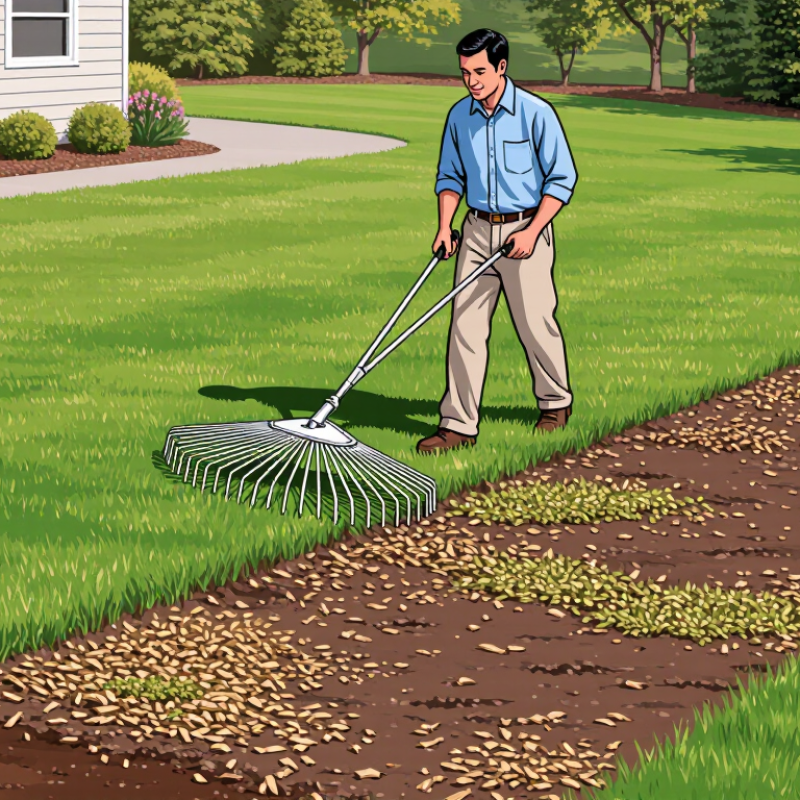
The rake uses firm metal or spring tines to comb through the turf. As you pull it across the lawn, the tines scratch the surface and collect moss, dry grass, and compacted clippings. On a healthy lawn, the movement should feel steady, not aggressive. I have found that damp soil makes raking easier, but wet ground can tear living grass. The tool’s angle also matters. Holding it too upright may remove very little; pressing too hard can damage crowns and exposed roots. That mistake is easy to make.
Tips: Test a small area first. Rake in one direction, then change direction lightly. Remove the loosened material before it mats again. Wear gloves and sturdy shoes, especially on uneven ground. Afterward, water only if the soil is dry, and avoid heavy foot traffic for a short period. A turf rake is not a cure for every weak lawn. Poor drainage, compacted soil, or unsuitable mowing habits may still need attention.
Why Are Turf Rakes Essential for Lawn Maintenance?
What Is a Turf Rake and How Does It Work?
A turf rake uses closely spaced tines to lift loose thatch, dead grass, leaves, and surface debris without removing healthy soil. The chart below presents commonly used thatch-depth reference points for deciding when a lawn needs closer inspection or dethatching.
Thatch below about 0.25 inches is generally considered light. At approximately 0.25 to 0.50 inches, monitor the lawn and rake gently when loose material builds up. When the thatch layer exceeds 0.50 inches, dethatching may be needed because water, air, and nutrients can have more difficulty reaching the soil. Exact requirements vary by grass type, soil condition, and climate.
Key Benefits of Using a Turf Rake for Lawn Maintenance
Why Are Turf Rakes Essential for Lawn Maintenance?
A turf rake removes leaves, dead stems, and loose thatch from the grass surface. It also lifts flattened blades after rain, foot traffic, or heavy mowing. This improves airflow around the crown, where new growth begins. The University of Minnesota Extension recommends dethatching when the thatch layer exceeds about 0.5 inches. A turf rake helps identify that problem before the lawn feels spongy underfoot. It is simple. The timing matters.
Regular raking can improve seed-to-soil contact during overseeding and expose damp areas that encourage fungal problems. EPA WaterSense guidance reports that outdoor use represents nearly 30% of household water consumption, while inefficient watering can waste much of it. A cleaner, more open turf surface helps irrigation reach soil instead of wet debris. That benefit is practical, though it should not be exaggerated. A rake cannot correct compacted soil or poor drainage.
In my experience, a light pass after mowing often reveals hidden clippings and small stones near the soil line. Use less pressure on thin turf. Hard scraping can tear crowns and remove healthy stolons, especially during dry weather. Penn State Extension guidance also warns that dethatching should match grass type, growth stage, and thatch depth. Not every brown layer is harmful. Some organic material protects soil, and removing it too aggressively can leave exposed roots, uneven patches, and a lawn needing more water.
When and Where to Use a Turf Rake
A turf rake is most useful when grass needs gentle cleaning rather than aggressive digging. Use it in early spring after the lawn dries, when dead stems and winter debris sit between living blades. A few light passes can lift thatch, loosen flattened grass, and improve airflow near the soil surface. Avoid raking wet ground. It can smear soil and pull out healthy roots.
Use the rake across open lawn areas, under thin leaf cover, and around garden edges where a mower cannot reach. It also works well after mowing, especially when clippings form small mats. Move in one direction, then change angles lightly. This exposes hidden debris without scraping bare patches. On dense turf, check the thatch layer first. A layer thicker than about half an inch may need deeper renovation, not endless raking.
In my experience, the best timing depends on grass growth, not the calendar alone. Warm-season turf usually handles active raking during vigorous growth. Cool-season turf often responds better in early fall or mild spring. I once raked too firmly on dry, stressed grass and created thin brown strips. That mistake changed my routine. Now I test a small corner first, inspect the soil, and stop when the rake begins tearing living crowns. The tool should move debris, not punish the lawn.
How to Use a Turf Rake Correctly
A turf rake is essential for removing thatch, loose moss, and dead grass from a lawn. However, using it correctly matters more than simply raking harder. Choose a dry day when the soil feels firm but not dusty. Cut the grass slightly shorter than usual, then inspect the surface for stones or hidden branches. Hold the rake with both hands and keep the tines lightly touching the turf. Avoid forcing them deep into the soil.
Work in small sections with steady, overlapping strokes. Pull the rake toward you, then lift it rather than twisting it across the grass. Several gentle passes are safer than one aggressive pass. If the lawn shows bare soil, stop and reassess. You may be removing healthy roots instead of thatch. Rake in different directions only when the buildup is heavy. Even then, leave time between passes for the turf to recover. I sometimes expect a cleaner result too quickly, which can lead to unnecessary damage.
Tips: Test a small area first. Watch the grass response. Remove collected debris after each section. Do not use a turf rake on waterlogged ground, because the tines can smear and compact the soil. Afterward, water lightly if the lawn looks stressed, but avoid flooding it. A short inspection the next day can reveal missed patches and overly thin areas.
How to Choose and Maintain the Right Turf Rake
Choosing the right turf rake starts with identifying the material on your lawn. A flexible fan rake suits dry leaves and light grass clippings. A dethatching rake uses stronger tines for removing compacted thatch. University of Minnesota Extension recommends dethatching when thatch exceeds about 1/2 inch. Measure the layer near the soil surface before disturbing healthy roots. My common mistake was using a stiff rake too aggressively. It scraped crowns and left thin, brown patches.
Handle comfort matters during long maintenance sessions. Choose a length that keeps your back fairly straight. Select a wider head for open lawns, but use a narrow head around beds and tree trunks. Metal tines provide stronger thatch removal, while plastic tines reduce the risk of tearing delicate turf. The U.S. Environmental Protection Agency reports that outdoor water use represents nearly 30% of household water use in the United States. Careful raking can reduce debris buildup without creating extra lawn stress.
Maintenance should happen after every use. Shake off soil, rinse sticky residue, and dry the rake before storage. Inspect bent tines and loose connections weekly during peak growth. Disinfect the head after working on diseased turf, especially before moving to another lawn. Store it under cover. Small details matter. I still sometimes rake damp thatch too early, which creates clumps and wastes effort. Waiting for the surface to dry usually gives cleaner passes and less soil disturbance.
Why Are Turf Rakes Essential for Lawn Maintenance? - How to Choose and Maintain the Right Turf Rake
Practical comparison of turf rake types, specifications, uses, and maintenance requirements
| Turf Rake Type | Typical Construction | Typical Working Width | Best Use | Recommended Working Conditions | Maintenance Priority |
| Flexible-leaf turf rake | Spring-steel or durable polymer tines with a fan-shaped head | Approximately 45–65 cm | Removing leaves, grass clippings, and light surface debris without heavily disturbing turf | Dry or slightly firm soil; use gentle strokes on delicate or newly established grass | Check for bent or missing tines and clean debris from the tine joints |
| Thatch or scarifying rake | Rigid metal tines, often with one or two working edges | Approximately 30–40 cm | Loosening excess thatch, removing dead stems, and opening the surface for overseeding | During suitable seasonal renovation periods when turf is actively growing; avoid drought-stressed soil | Remove packed thatch after use, dry the head, and inspect metal tines for corrosion |
| Bow rake | Straight, rigid steel tines mounted on a reinforced crossbar | Approximately 35–40 cm | Breaking small soil clumps, leveling light surface irregularities, and spreading loose material | Firm soil and controlled pressure; it is more aggressive than a flexible-leaf rake | Tighten the head-to-handle connection and straighten only slightly bent tines |
| Leveling or lute rake | Flat aluminum or steel head with a smooth edge and/or straight teeth | Approximately 45–75 cm | Distributing topdressing, smoothing seedbeds, and improving surface uniformity | Use with a thin, evenly spread layer of dry topdressing; avoid burying grass crowns | Rinse off soil and sand, dry thoroughly, and check the flat edge for dents |
| Hand turf rake | Compact flexible or rigid head with a short handle | Approximately 15–25 cm | Cleaning narrow borders, small lawn sections, steps, and areas around plants | Useful where a full-size rake is difficult to control or may damage nearby plants | Keep the short handle dry and inspect the grip for cracks or loosening |
How to choose
Match the rake to the task, turf sensitivity, working width, handle length, and the amount of force required. Flexible tines are generally better for surface debris, while rigid tines are better for thatch and soil preparation.
Avoid turf damage
Do not use aggressive scarifying action on drought-stressed, waterlogged, frozen, or newly seeded lawns. Work only when the grass can recover and the soil is stable enough to avoid excessive compaction.
Basic maintenance
Remove grass and soil after every use, wash the head when necessary, dry metal parts completely, store the rake under cover, and replace a head or handle when it becomes cracked, loose, or structurally unsafe.
Note: Working-width figures are typical ranges for manual lawn rakes. Actual dimensions, tine spacing, materials, and recommended uses vary by design.