
Blog

Why Do Global Buyers Choose PVC Sheet?

Across industries, global buyers choose a Pvc Sheet for its adaptable performance and practical fabrication options. It may suit sign panels, protective linings, partitions, or components exposed to moisture. The right choice depends on the grade, thickness, surface, and intended use. That range matters. A rigid sheet and a lightweight foam sheet can behave quite differently during cutting, mounting, and daily service. Buyers should check product specifications rather than rely on a material name alone.

Procurement also involves details beyond the sheet itself. A sample can reveal surface finish, color consistency, and how cleanly the material cuts. Technical data sheets and relevant test reports help teams compare products on the same basis. Ask suppliers how they control thickness and batch variation, and confirm that packaging protects edges during transport. Small checks help. Yet documentation is not a substitute for testing the sheet in its actual application.

Price remains important, but the lowest quote may not represent the best value. Freight, lead time, minimum order quantities, and replacement availability can change the total cost. Specifications and quality practices may also differ between suppliers, so buyers should clarify requirements before placing an order. There are trade-offs. PVC can be a useful choice, but it is not ideal for every environment or design. Careful selection starts with the job, not the brochure.
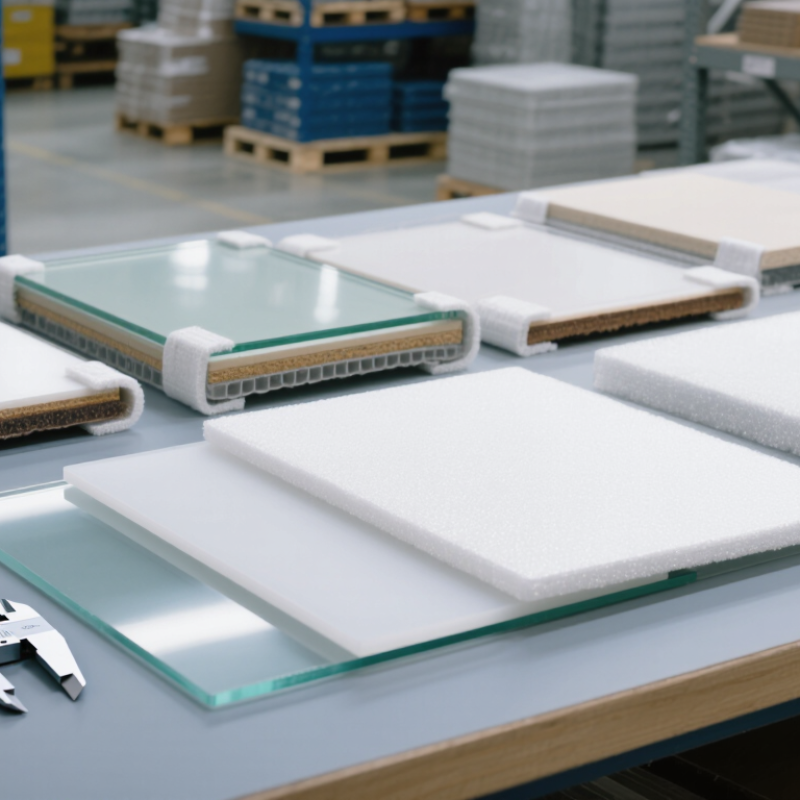
Why Do Global Buyers Choose PVC Sheet?

PVC Sheet Fundamentals: Typical Rigid-PVC Density Is About 1.3–1.45 g/cm³

Why Do Global Buyers Choose PVC Sheet?

PVC Sheet Fundamentals: Typical Rigid-PVC Density Is About 1.3–1.45 g/cm³

Rigid PVC sheet typically has a density of about 1.3–1.45 g/cm³, though the exact figure depends on its formulation. Fillers, pigments, and processing can shift the measured value. For buyers, density helps estimate weight before ordering or planning installation. A one-square-metre sheet, 10 millimetres thick, would weigh roughly 13–14.5 kilograms at this range. Check the product data sheet for the actual specification. Small differences matter when many sheets are stacked or shipped.

Not featherlight. Yet rigid PVC is generally much lighter than steel, which can simplify handling and reduce support demands in some applications. Density alone does not indicate strength, impact resistance, or service life. Two sheets with similar density may perform differently because their formulations and manufacturing quality differ. A practical comparison should include thickness, flatness, surface finish, and the intended environment. Ask suppliers for a stated density and test method, especially when weight limits are tight. Handling matters. I would not choose a sheet by density alone; it is a useful starting point, not a verdict. A quick weight estimate can still help catch an unexpected shipment before it reaches the workbench.

Mechanical Performance: Typical Rigid-PVC Tensile Strength Is 40–60 MPa

Rigid PVC sheet is chosen for more than its smooth surface and easy fabrication. Its tensile strength typically ranges from 40–60 MPa, depending on formulation, thickness, and test conditions. That range is useful, but not a guarantee. Numbers need context.

In practical terms, tensile strength describes resistance to being pulled apart. It does not tell buyers everything about bending, impact, or long-term loading. A sheet supporting a light equipment cover may perform well, while a narrow strip under constant tension could deform or crack. Edges and drilled holes deserve attention. Stress often concentrates there.

Good purchasing decisions start with the intended use. Ask for a technical data sheet that identifies the test method and material grade, then compare like with like. Check the expected temperature, panel span, and fastening method too. A 40–60 MPa figure should not replace design checks for a load-bearing part. This is easy to overlook when comparing product tables. I would also inspect a sample: cut edges, surface finish, and machining behavior can reveal practical issues that one strength value cannot.

Fabrication Advantages: Assess Forming and Machining Against Sheet Thickness

Why Do Global Buyers Choose PVC Sheet?

Fabrication Advantages: Assess Forming and Machining Against Sheet Thickness

Thickness changes how PVC sheet behaves in the workshop. Thin sheet heats and bends quickly, but it can wrinkle or sag if heating is uneven. Thick sheet holds its shape better, yet needs more time and controlled heat to form without stress. A practical test is to warm a small offcut first, then check the bend for whitening, bubbles, or spring-back. Small details matter.

Machining brings a different trade-off. Thin panels can vibrate or lift under a cutter, so use firm support, sharp tooling, and moderate feed rates. Thick stock is usually more stable, but deep cuts can trap heat and leave a rough edge. ASTM D1784 classifies rigid PVC by properties including tensile strength and flexural modulus; engineering tables for common 12454-class material list values around 7,000 psi and 400,000 psi, respectively. These figures describe material classification, not a guarantee of finished-part performance. Tool condition, temperature, and sheet grade still count.

For a clean cut, secure the sheet close to the cutting line and remove chips often. For formed parts, allow cooling in a simple jig rather than forcing the piece flat by hand. I would not assume that a thicker sheet is automatically easier to fabricate; the right choice depends on bend radius, cut depth, and the equipment available. A quick prototype can expose problems before production.

Why Do Global Buyers Choose PVC Sheet?

Fabrication advantages: forming and machining considerations across sheet thickness

The bars show estimated mass per square metre, calculated using a nominal rigid-PVC density of 1.40 g/cm³; actual values vary by grade. Thinner sheets are generally easier to heat and form, while thicker sheets provide more material for machining and tend to be more rigid. Choose forming temperatures, tooling, and machining parameters for the specific sheet grade and thickness.

Safety and Compliance: Compare Material Grades Using ASTM D1784 Classifications

Global buyers often choose PVC sheet for its balance of durability, workability, and cost. But “PVC” alone does not identify a material’s performance. ASTM D1784 classifies rigid PVC and CPVC compounds through a coded system, with digits representing properties such as impact strength, tensile strength, modulus, and heat-deflection temperature.

Read the classification as a starting point, not a complete safety approval. Two sheets with similar classifications may still behave differently in a real installation. A cool warehouse, a warm equipment enclosure, and a panel exposed to repeated knocks place different demands on the material.

Check the supplier’s test data and confirm that the grade matches the expected temperature, load, and fabrication method. Details matter.

A classification does not, by itself, establish suitability for every chemical, food-contact use, or building application. Ask for the exact compound designation, relevant test reports, and batch traceability. Also verify requirements specific to the destination market and end use. ASTM D1784 helps buyers compare material properties, but the finished sheet and its intended application still need careful review. Paperwork can look reassuring. It is not the whole picture. One overlooked detail—such as a solvent used during cleaning—may change the choice.

Global Procurement: Match Sheet Grade, Dimensions, and Application Requirements

Global procurement starts with service conditions, not a price-per-sheet comparison. Rigid PVC, chlorinated PVC, and flexible PVC serve different temperature, chemical, and forming needs. A sheet near a process tank may face splashes, heat, and repeated cleaning; a sign panel may need easier cutting and a consistent surface. Small details matter. ASTM D1784 classifies rigid PVC compounds by properties such as tensile strength and impact resistance, offering buyers a clearer basis for comparing grades than generic “PVC” labels.

Dimensions need the same attention. Specify thickness, length, width, tolerance, flatness, and whether measurements refer to the finished sheet or the supplied blank. Add machining allowance for drilled holes or routed edges. PlasticsEurope’s Plastics – the Fast Facts 2023 reports 400.3 million tonnes of global plastics production in 2022. That scale does not guarantee that a particular sheet grade or cut size is available from every supplier. Confirm stock status, batch consistency, and packaging before scheduling production.

Application checks should be specific. Ask for a technical data sheet, chemical-resistance guidance, and test conditions that match the intended service. ASTM D1784 is useful for rigid PVC material classification, but it does not replace confirmation of the finished sheet’s dimensions or suitability for a particular chemical exposure. It is easy to overlook this distinction. For outdoor panels, also ask about UV exposure and color stability; for fabrication, check cutting behavior and edge quality. I would still request a sample when tolerances are tight. A paper specification cannot reveal every surface or handling issue.