What Is a Veterinary Plastic Steel Syringe?
A Veterinary Plastic Steel Syringe usually combines a lightweight plastic barrel with a stainless-steel needle or reinforced metal tip. It supports accurate medication delivery in livestock, companion animals, and clinical research settings. The term is practical, but not fully standardized. Product descriptions may refer to disposable plastic syringes, reusable metal syringes, or plastic syringes fitted with steel needles. That difference matters.
Industry data shows why these tools deserve closer attention. Grand View Research reported continued growth in the global veterinary healthcare market, supported by rising pet ownership, preventive care, and livestock disease management. Fortune Business Insights also identified animal health products as a growing market, although estimates vary by region and product category. These reports do not measure Veterinary Plastic Steel Syringe sales directly. Still, they indicate expanding demand for reliable administration equipment.
In practice, a technician checks the barrel markings, plunger movement, needle attachment, and package seal before use. A clear 5 mL barrel can help confirm dosage visually. A firm grip matters when an animal moves suddenly. ISO 7886-1 provides relevant performance guidance for manually operated, sterile, single-use syringes. Reusable equipment requires validated cleaning and sterilization procedures. Not every product can be safely reused.
Small details matter. A loose needle is unacceptable. Users should also confirm compatibility with the prescribed medicine and animal species. Veterinary professionals remain responsible for clinical decisions, documentation, and disposal. The product looks simple. Its safe performance is not.
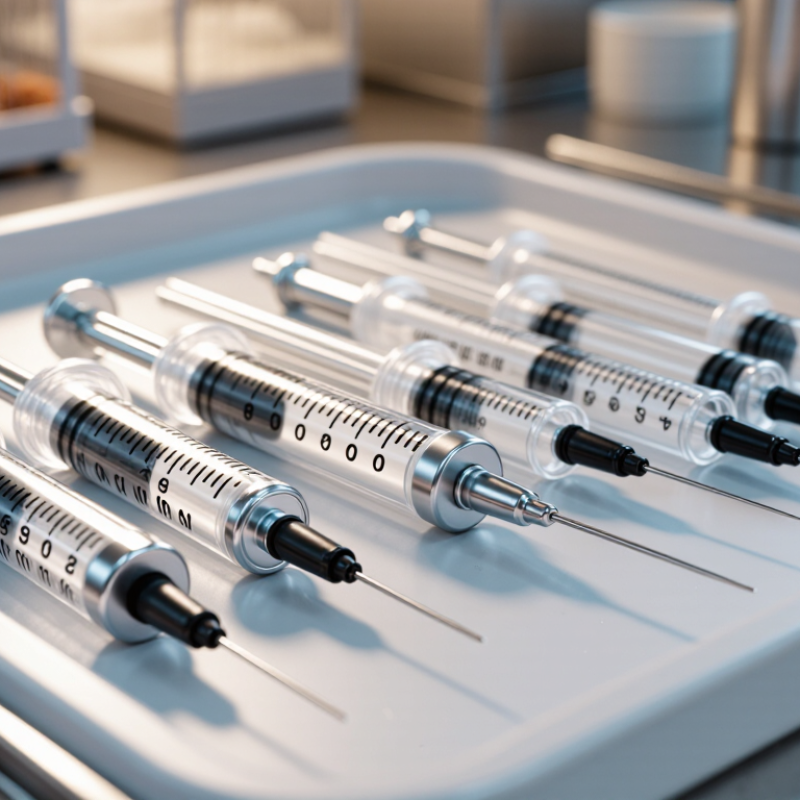
Definition: Plastic Barrels, Stainless-Steel Components, and Core Functions
A veterinary plastic steel syringe combines a transparent plastic barrel with stainless-steel components. The barrel usually holds a measured dose. The plunger creates pressure for controlled delivery. Stainless steel commonly forms the needle, hub, or internal rod, depending on the design. Not every model uses metal in the same places.
Its core functions are simple but demanding: accurate dosing, smooth injection, clear volume reading, and reliable fluid control. In clinical work, the plastic barrel offers low weight and visibility. Stainless steel adds rigidity at high-stress points. This matters when drawing viscous medication or handling a nervous animal. WHO’s injection-safety guidance reports about 16 billion injections worldwide each year, showing why consistency and safe handling remain important. Veterinary figures are less complete. That gap deserves attention.
Tips: Check the barrel markings before use. Confirm the needle connection is secure. Choose a size matching the animal and fluid viscosity. Never assume a sterile package is undamaged. AAHA vaccination guidance supports careful product handling and proper administration technique. A clean setup reduces avoidable errors, but it cannot replace clinical judgment. Plastic can crack. Steel can bend. Real equipment is not perfect. Inspect the syringe, compare the dose twice, and discard questionable units according to facility procedures.
Sizes from 1–60 mL: Capacity, Graduations, and Measurement Accuracy
What Is a Veterinary Plastic Steel Syringe?
A veterinary plastic steel syringe usually combines a transparent polymer barrel with a stainless-steel needle or metal connection. Its useful range is broad, from 1 to 60 mL. Capacity affects control. A 1 mL syringe can support small-volume dosing, while a 60 mL barrel suits larger animals and fluid delivery. Bigger is not always better.
Graduations determine how clearly volume can be read. A 1 mL syringe may show 0.01 or 0.1 mL divisions, depending on its design. Larger syringes commonly use 1 mL or 2 mL divisions. This difference matters when the plunger stops between marks. ISO 7886-1:2017 evaluates syringe graduation quality, leakage, dead space, and delivery performance. USP General Chapter <698> also addresses deliverable volume testing. These standards do not make every syringe equally accurate.
A practical check is simple. Draw water to the 10 mL mark, remove visible bubbles, and compare the delivered volume with a calibrated cylinder or balance. Repeat the test. Small errors become significant with concentrated medicines. Research reported through the National Institute of Standards and Technology emphasizes traceable measurement and uncertainty, not just the printed scale. That is easy to overlook. Barrel markings can look precise while handling, temperature, and trapped air change the result. For dependable work, select the smallest syringe that safely contains the intended dose, and inspect graduations under good light. Calibration may still be worth questioning.
ISO 7886-1:2020 Requirements for Syringe Design and Performance
What Is a Veterinary Plastic Steel Syringe?
ISO 7886-1:2020 Requirements for Syringe Design and Performance
A veterinary plastic steel syringe usually combines a transparent plastic barrel with a stainless-steel needle or internal metal component. “Plastic steel” is a practical description, not a formal category in ISO 7886-1:2020. The standard mainly addresses sterile, single-use syringes operated manually. Its scope should be checked before applying it to specialized veterinary devices.
The standard focuses on measurable performance. The barrel should show clear, durable graduations for accurate dose reading. The plunger must move smoothly without excessive force or sudden sticking. Connections should resist separation, while the syringe should remain free from leakage during testing. Dead space also matters because trapped liquid can affect dose accuracy, especially with small-volume injections.
In practice, inspectors examine the seal, nozzle, barrel clarity, and plunger fit. They may also check dimensions, graduation accuracy, and resistance to leakage under controlled conditions. A clean, readable scale matters more than appearance alone. That sounds obvious, but it is often missed.
Material compatibility deserves attention. Some veterinary medicines may interact with plastics, elastomers, or metal surfaces. ISO 7886-1:2020 does not replace product-specific compatibility studies or clinical judgment. A syringe can pass mechanical checks and still perform poorly with a particular formulation. That is an uncomfortable limitation, but a useful one to remember.
What Is a Veterinary Plastic–Steel Syringe?
A veterinary plastic–steel syringe typically combines a transparent plastic barrel and plunger with a stainless-steel needle or needle connection. ISO 7886-1:2020 defines design and performance requirements for sterile, single-use syringes intended for manual use, including readable graduations, smooth operation, leakage resistance, and dimensional consistency.
The chart compares commonly used nominal syringe capacities. Percentages are calculated against a 60 mL reference syringe and are shown only to visualize relative capacity. Capacity selection should match the required dose, while ISO 7886-1:2020 conformity requires evaluation of the syringe’s design and performance rather than capacity alone.