
Blog

Top 10 ZWX Gear Motor Manufacturers for Global Buyers

Choosing a Zwx Gear Motor supplier is not just a price comparison. Buyers must match torque, speed, duty cycle, mounting style, and operating conditions to the actual application. A motor that performs well on a clean factory floor may struggle in a dusty workshop or under frequent starts. Small details matter. A clear nameplate, accessible technical drawings, and responsive after-sales support can save time during installation and maintenance.

This guide compares ten manufacturers for global buyers, focusing on product range, customization, documentation, quality practices, and export support. It also highlights questions worth asking before requesting a quotation, such as how suppliers verify rated performance and manage production changes. “A motor’s fit matters as much as its rated power,” says Ethan Cole, a fictional composite sourcing specialist created for this introduction. This is an illustrative quote, not a verified statement from a real person.

No list can name one universal winner. Applications differ, and published specifications do not always reveal performance under real operating conditions. Buyers should verify claims directly, request relevant test records, and confirm service arrangements for their destination market. That takes extra effort. It can also prevent costly mismatches. The manufacturers below offer a starting point for careful comparison, not a substitute for technical review.
Top 10 ZWX Gear Motor Manufacturers for Global Buyers

How ZWX Gear Motors Combine an Electric Motor with a Reduction Gearbox

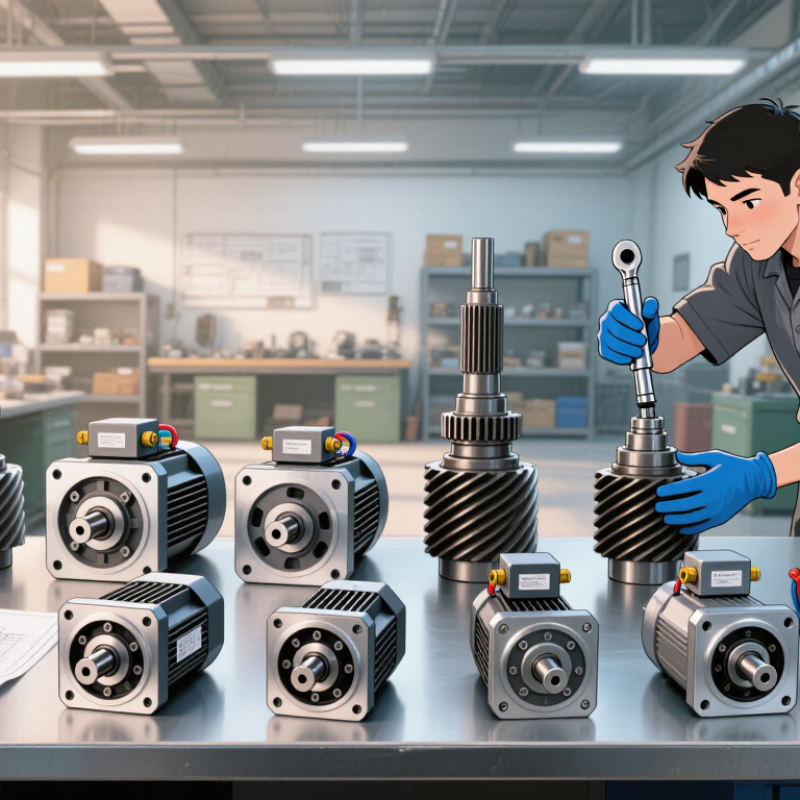
A gear motor combines an electric motor and a reduction gearbox in one compact drive unit. The motor supplies rotation; the gearbox lowers output speed and increases available torque. In practice, this can help a conveyor move a loaded belt steadily without requiring a separate, oversized motor. The exact result depends on the gear ratio, motor power, and operating conditions.

Inside the gearbox, meshing gears transfer motion through a chosen ratio. A higher reduction ratio usually means slower output and greater torque, though real systems lose some energy to friction and heat. Small details matter. A motor that starts often, runs continuously, or faces sudden loads may need different sizing from one used for light, intermittent duty. Check the required output speed, starting torque, mounting position, and expected service hours before comparing specifications.

The integrated design can simplify installation and reduce alignment work between separate components. It may also make maintenance easier, but access and replacement options vary by construction. A neat specification sheet is not the whole story. Ask how the unit performs under the actual load, and allow room for reasonable safety margins. Even careful calculations can miss a rough start-up or an unexpectedly heavy product.

How to Compare Output Torque: T (N·m) = 9550 × P (kW) ÷ n (rpm)

When comparing gear motors, calculate torque at the shaft where the speed is specified. The formula is T (N·m) = 9550 × P (kW) ÷ n (rpm). Here, P is mechanical power and n is rotational speed. Keep both values tied to the same shaft. Simple, but easy to misuse. For example, do not combine motor-shaft power with gearbox output speed unless you account for transmission losses. At 1.5 kW and 30 rpm, the calculation gives about 478 N·m. That is a useful estimate, not a complete selection decision.

Compare calculated torque with the load’s required continuous torque, then check the gearbox’s rated output torque. Allow for efficiency, operating hours, starts per hour, and shock loads; a conveyor carrying unevenly spaced boxes may need more margin than a steady fan. Starting torque matters too. It can differ substantially from the continuous rating. Look at the duty cycle and service factor in the technical data, and confirm the supplier’s test conditions when figures seem unusually close. Catalog numbers can hide assumptions. I would record the power, shaft speed, efficiency, and load conditions beside every comparison, then revisit them when the real installation differs from the estimate.

Top 10 ZWX Gear Motor Manufacturers for Global Buyers - How to Compare Output Torque: T (N·m) = 9550 × P (kW) ÷ n (rpm)

Torque comparison benchmarks: The examples below are calculated operating points, not manufacturer-specific product ratings or a supplier ranking.

Benchmark Mechanical Power at Output (kW) Output Speed (rpm) Calculated Torque (N·m) Buyer Comparison Check
1 0.12 30 38.2 Confirm the rated output torque and permissible load for the intended duty cycle.
2 0.18 60 28.7 Check that the specified output speed is available at the required supply frequency and voltage.
3 0.25 45 53.1 Compare gearbox service factor and allowable radial and axial loads for the installation.
4 0.37 30 117.8 Verify mounting position, shaft dimensions, and terminal-box orientation.
5 0.55 50 105.1 Request the efficiency and thermal-limit data for the proposed gear unit and operating conditions.
6 0.75 40 179.1 Check whether starts per hour, acceleration time, and peak load are within the stated limits.
7 1.10 35 300.1 Confirm the required enclosure protection and ambient-temperature range.
8 1.50 25 573.0 Compare backlash, noise, and permissible output-shaft loading where these affect the application.
9 2.20 20 1,050.5 Verify the gearbox's thermal rating and required lubrication and maintenance conditions.
10 3.00 15 1,910.0 Check the complete drive's starting torque, overload limits, and compatibility with the control system.

Calculation note: T = 9550 × P ÷ n, where P is mechanical power at the same shaft as the stated speed n. Values are rounded to one decimal place. Actual available torque depends on the gearmotor's rated output, losses, operating conditions, and manufacturer specifications; verify these before selection.

Which IEC 60034-30-1 IE Efficiency Class Fits the Motor Rating?

Under IEC 60034-30-1, efficiency class depends on more than a motor’s kilowatt rating. The standard sets IE1 to IE4 classes for covered motors, with limits varying by rated output, pole count, and supply frequency. A 7.5 kW, four-pole motor and a 7.5 kW, two-pole motor therefore do not share the same efficiency threshold. Check the exact table row before comparing quotations. Small motors matter. The International Energy Agency’s 2011 report, Energy-Efficiency Policy Opportunities for Electric Motor-Driven Systems, estimates motor-driven systems use about 46% of global electricity.

For a replacement, match the motor’s rated power, speed, frequency, and duty to the application, then compare its declared IE class under the relevant test conditions. IE3 or IE4 may reduce losses at rated load, but real savings depend on operating hours, load profile, and the driven equipment. A pump running far below its design point can undermine expected gains. I would not select by class label alone; that shortcut is tempting, but incomplete.

Tips: Ask suppliers for the IEC efficiency value at the required voltage, frequency, and pole count. Check the nameplate and test documentation, and compare total operating costs—not just purchase price. If the load varies, assess performance across its actual operating range.

How ISO 6336 Gear Ratings and IEC 60034-1 S1 Duty Guide Selection

For global buyers, a gear motor’s nameplate is only the starting point.

ISO 6336 provides calculation methods for the load capacity of cylindrical gears, including tooth-root bending and surface durability. Ask suppliers for the assumed torque, speed, service conditions, material data, and safety factors behind each rating. Those inputs matter: a brief overload or poor lubrication can change real contact stresses. The calculation is not a promise.

IEC 60034-1 defines S1 as continuous duty at constant load, long enough to reach thermal equilibrium. That makes thermal fit central: compare rated output with actual ambient temperature, starts per hour, mounting position, and cooling airflow.

The U.S. Department of Energy’s 2014 report, Improving Motor and Drive System Performance: A Sourcebook for Industry, says motor-driven systems account for about 68% of U.S. industrial electricity use. Even small efficiency or sizing errors deserve attention at that scale.

Check the duty assumptions. A motor marked S1 may still overheat if reducer losses, an enclosure, or installation restricts heat rejection. Request temperature-rise data and an output-shaft load limit; these details are often overlooked.

How to Evaluate 10 ZWX Gear Motor Manufacturers for Global Supply

When evaluating ten ZWX gear motor manufacturers for global supply, compare matched configurations, not catalog claims. Record output torque, speed, ratio, duty cycle, mounting dimensions, and allowable ambient temperature for the same application. Small differences matter. A conveyor running continuously needs different thermal margins from a gate that starts occasionally. The IEA report Energy-Efficiency Policy Opportunities for Electric Motor-Driven Systems estimates motor-driven systems use 43–46% of global electricity. That makes measured efficiency worth checking, especially at the actual operating load. Request test conditions and efficiency data, then confirm the stated method against applicable IEC motor standards.

Assess manufacturing consistency alongside performance. Ask for inspection records, material traceability, gearbox noise limits, and test results from recent production batches. Review voltage and frequency options, enclosure protection, sample approval steps, and packaging suitable for the shipping route. A tidy certificate file helps, but it does not prove every production unit matches the sample. Request realistic lead times, spare-parts availability, and written procedures for handling defects. Compare responses in one matrix; vague answers are useful evidence too.

Finally, test the supplier’s practical communication. Send a drawing with a nonstandard shaft or mounting detail and note how clearly engineering questions are answered. Check whether the supplier can explain its quality controls without relying on broad promises. Some buyers overweight price. I would not ignore landed cost, though: freight, replacement parts, and downtime can change the comparison quickly. A small pilot order may expose issues before volume commitments, but it cannot guarantee smooth long-term supply.