
Blog
Top Sheet Stock Stained Glass Suppliers Worldwide?
Choosing reliable Sheet Stock Stained Glass suppliers requires more than comparing catalog prices. Glass color, thickness, surface texture, and batch consistency can change the final result. A deep cobalt sheet may look uniform online, yet reveal subtle streaks under workshop lighting. These details matter to artists, fabricators, restoration teams, and architectural buyers.
This guide examines leading suppliers across major glass-producing regions. It considers product range, technical documentation, minimum order quantities, packaging, shipping practices, and customer support. Supplier experience also matters. Established companies often understand kiln behavior, cutting tolerances, and safe handling requirements. Still, reputation alone is not enough. Current certifications, sample availability, and clear material specifications deserve careful review.
Quality varies.
The best supplier depends on the project, not simply its location. A studio making small lamps may value mixed color packs and flexible ordering. A commercial fabricator may need repeatable thickness, pallet protection, and dependable delivery schedules. We will compare these practical differences using manufacturer information, industry knowledge, and buyer-focused criteria. Where evidence is limited, that limitation should be acknowledged rather than hidden. No supplier performs perfectly in every market. Packaging can fail, colors can shift, and international freight can create unexpected delays. This article therefore aims to provide a balanced starting point, helping buyers verify claims, request samples, and select Sheet Stock Stained Glass with greater confidence.
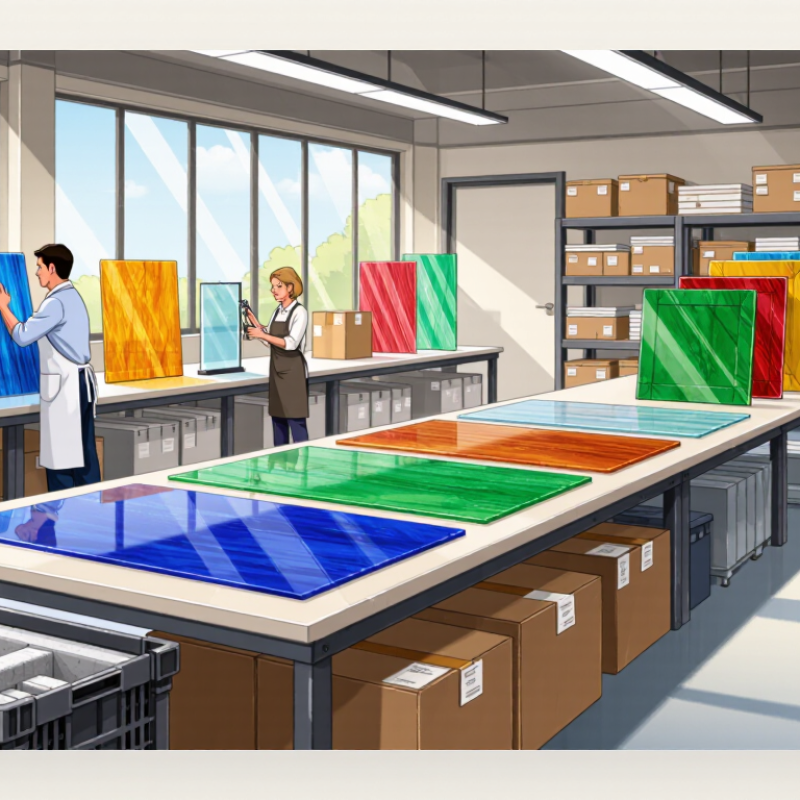
What Is Sheet Stock Stained Glass?
Top Sheet Stock Stained Glass Suppliers Worldwide?
What Is Sheet Stock Stained Glass?
Sheet stock stained glass is colored or textured glass sold in flat sheets. It is not a finished window or decorative panel. Artists cut each sheet, then join the pieces with copper foil, lead came, or another approved assembly method. Common surfaces include transparent, translucent, opalescent, and hammered finishes. Thickness often ranges from 2 to 4 millimeters, but production standards vary.
Color comes from mineral oxides added during melting. The glass is then formed, slowly annealed, and inspected for defects. Melting temperatures can exceed 1,400°C. The U.S. Geological Survey’s Mineral Commodity Summaries 2024 reported roughly 100 million metric tons of industrial sand and gravel production in the United States during 2023. That figure shows the scale of a key raw material, not stained-glass output. ASTM C1036 also provides useful quality guidance for flat glass.
For worldwide sourcing, examine light transmission, thickness tolerance, edge condition, and batch consistency. A professional supplier should provide technical specifications and safe packaging details. Perfect color matching is unrealistic. I still make that mistake when comparing sheets under different lighting.
Tips: Request small samples first. Check them beside daylight and warm indoor light. Inspect bubbles, seeds, scratches, and warping. For kiln work, confirm compatible expansion behavior before combining sheets. Record the batch number, because the next shipment may look noticeably different.
How to Evaluate Stained Glass Sheet Suppliers
Choosing a stained glass sheet supplier requires more than comparing catalog prices. The sheet must perform consistently during cutting, grinding, and kiln work. Ask for samples from different production batches. Check thickness with a digital caliper at several points. Small variations can affect foil alignment and panel strength. Examine the surface under angled light. Bubbles, scratches, devitrification, and uneven texture may become obvious after installation. Color matters too. A printed image cannot show how light changes through translucent glass.
A dependable supplier explains composition, compatibility, and recommended working temperatures in clear technical documents. Request test data for thermal expansion when combining sheet types. Confirm whether colors remain stable after firing. Good suppliers provide lot numbers, safety information, and traceable production records. They should also answer practical questions without vague promises. Ask about minimum orders, replacement procedures, packing methods, and delivery schedules. Inspect a trial shipment. Edge protection and layered cushioning often reveal real quality standards. Do not judge reliability from fast replies alone.
Cost needs a wider calculation. Include waste rates, breakage, freight, and rejected pieces. A low quotation can become expensive after cutting losses. I would record sample results in a simple comparison table. It exposes differences that memory hides. Samples can disagree. Lighting, firing equipment, and cutting habits influence results. Recheck the supplier with a second order before committing to larger volumes. Ask for references from studios using similar techniques. Honest feedback may be less polished, but usually more useful. The best choice is the supplier whose evidence matches your process, not merely the one with the largest selection.
Leading Sheet Stock Stained Glass Suppliers Worldwide
Leading sheet stock stained glass suppliers worldwide support studios, restoration teams, and educational workshops with varied glass materials. Reliable suppliers usually provide clear specifications for thickness, sheet size, texture, opacity, and light transmission. These details help buyers match glass to windows, lamps, cabinet panels, and decorative pieces.
From practical purchasing experience, consistency matters more than a large catalog. A supplier may offer hundreds of colors, yet uneven sheets can create cutting waste. Batch information is useful. It allows makers to reorder a similar shade months later. Samples also deserve attention, because online images often change under different lighting. Some colors look cooler in a warehouse and warmer beside daylight.
Packaging shows professional care. Strong corner protection, moisture control, and flat storage reduce chips and surface scratches during international transport. Suppliers with documented quality checks appear more dependable. Clear invoices, responsive technical support, and traceable production information also build trust. However, no supplier is perfect. Small bubbles, slight texture shifts, or color variation may still occur in handmade or kiln-formed stock. Buyers should inspect every sheet before cutting.
Responsible sourcing deserves equal weight. Manufacturers should explain material composition, safe handling guidance, and applicable shipping requirements. Independent reviews from experienced studios can reveal delays that polished product pages omit. I would request a small trial order before committing to a large shipment, especially when a project needs matching panels. That extra step costs time, but it can prevent expensive rework.
| Supplier Region | Common Sheet Categories | Typical Sheet Thickness | Common Sheet Sizes | Surface and Visual Options | Processing Capabilities | Typical Minimum Order Approach | Typical Export Advantages |
|---|---|---|---|---|---|---|---|
| North America | Handcrafted art glass, opalescent glass, cathedral glass, textured glass, and restoration glass | Approximately 2–4 mm for many decorative sheets; thicker specialty pieces are also available | Small project sheets, quarter sheets, half sheets, and full sheets; dimensions vary by manufacturer | Transparent, translucent, opaque, streaked, wispy, mottled, iridescent, and heavily textured finishes | Cut-to-size services, sample orders, custom color matching, edge finishing, and protective packing | Often suitable for both sample quantities and individual-sheet purchases, depending on the distributor | Strong availability of craft-oriented colors, detailed product descriptions, and domestic distribution networks |
| Western Europe | Float-based decorative glass, cathedral glass, antique-style glass, laminated art glass, and architectural sheet glass | Common decorative ranges include approximately 2–6 mm, with architectural products available in greater thicknesses | Standard industrial sheets, cut panels, and project-specific sizes | Clear, satin, acid-etched, patterned, reeded, printed, colored, and low-iron options | Cutting, drilling, edge polishing, tempering, laminating, screen printing, and insulating-glass fabrication | Project quotations and pallet-based orders are common for architectural applications | Access to established European safety standards, precision fabrication, and architectural customization |
| Central and Eastern Europe | Rolled decorative glass, textured sheet glass, colored glass, and restoration-oriented products | Generally available from approximately 2–5 mm, subject to the product type | Standard sheets and customized cut panels for craft, restoration, and interior projects | Hammered, ribbed, floral, water, bubble, satin, translucent, and antique-inspired patterns | Cutting, edge treatment, drilling, beveling, and packing for regional transport | Minimum quantities vary; distributors may support single-sheet purchases while factories often require larger orders | Competitive access to patterned and restoration-style materials across European markets |
| East Asia | Rolled glass, kiln-forming glass, fused-glass sheets, colored glass, and decorative architectural glass | Commonly approximately 2–6 mm, with thicker laminated or processed panels available | Small craft sheets, standard industrial sheets, large-format panels, and made-to-order sizes | Transparent, opaque, translucent, gradient, printed, embossed, textured, and laminated designs | Color development, screen printing, digital printing, laminating, tempering, cutting, and custom packaging | Factory orders commonly use carton, crate, or pallet quantities; sample production is frequently available | Broad decorative range, scalable production, and strong private-label or custom-development capability |
| South Asia | Handmade decorative glass, colored sheet glass, textured glass, recycled glass, and craft-focused products | Often approximately 2–5 mm for decorative sheets; handmade thickness can vary across one sheet | Craft sheets, cut panels, and customized sizes for interior and artistic applications | Hand-rolled texture, irregular surface, translucent color, mottled effects, and recycled-glass variation | Manual cutting, polishing, simple shaping, custom color production, and protective export packing | Custom production is often available, while handmade products may have variation and longer sampling cycles | Distinctive handmade appearance and flexible customization for decorative and artistic projects |
| Middle East and North Africa | Decorative architectural glass, colored panels, patterned glass, and glass for interior partitions | Common project ranges include approximately 4–10 mm, depending on safety and architectural requirements | Cut-to-size panels, partition panels, door inserts, and project-specific sheet dimensions | Tinted, acid-etched, sandblasted, geometric, printed, mirrored, and translucent finishes | Cutting, edging, drilling, tempering, laminating, printing, and installation-oriented fabrication | Architectural orders are generally quotation-based and linked to project drawings or panel schedules | Regional access to customized architectural fabrication and shorter delivery routes within nearby markets |
| Oceania | Art glass, kiln-forming sheets, leadlight glass, textured decorative glass, and restoration materials | Common craft and decorative thicknesses are approximately 2–4 mm | Sample pieces, small sheets, half sheets, full sheets, and custom-cut panels | Opalescent, cathedral, streaked, ripple, clear textured, translucent, and iridescent finishes | Cut-to-size supply, sample fulfillment, basic edgework, custom orders, and project packaging | Retail and trade channels commonly support small quantities; larger orders may be consolidated for freight | Good access to specialist craft distribution and products suited to leadlight and stained-glass work |
| Latin America | Decorative float glass, colored glass, textured glass, printed glass, and architectural glazing products | Typical architectural ranges include approximately 4–10 mm; craft availability depends on the local distributor | Standard industrial sheets, cut-to-size panels, and project-specific formats | Tinted, clear, patterned, satin, printed, laminated, and solar-control options | Cutting, polishing, drilling, tempering, laminating, printing, and insulating-glass assembly | Commercial orders are commonly based on full sheets, crates, or project quantities | Growing regional processing capacity and practical supply for construction and interior applications |
How Suppliers Differ in Glass Types and Services
Top Sheet Stock Stained Glass Suppliers Worldwide?
Sheet-stock suppliers differ sharply in glass types, consistency, and support. Some focus on cathedral glass, with transparent texture and strong light transmission. Others specialize in opalescent sheets, where milky layers soften sunlight. Iridescent, streaky, and mouth-blown options create different visual effects. Thickness also matters. A 3 mm sheet cuts differently from a thicker restoration panel. Grand View Research estimated the global flat glass market at over USD 120 billion in 2023, with continued growth through 2030. That wider market does not measure stained glass directly, but it shows why sourcing standards are becoming more important.
Service separates a practical supplier from a simple online seller. Reliable suppliers provide accurate sheet dimensions, batch photographs, safety packaging, and technical data. Some offer color samples before larger purchases. Others support custom cutting, kiln-forming compatibility, or restoration matching. The Glass and Glazing Federation highlights quality control, handling, and traceability as important factors in glass supply. My experience suggests color names are not enough. Two sheets labeled “amber” may look completely different beside a window. That is easy to underestimate.
Tips: Request a small sample first. Check thickness with a caliper. Ask whether colors vary by batch. Confirm breakage policies and export packaging. A supplier may look affordable until damaged sheets, long transit times, and replacement delays appear. Keep the original batch label for future repairs. It can save hours later.
How Stained Glass Suppliers Differ in Glass Types and Services
This indicative industry comparison shows how supplier roles commonly differ. Scores represent typical availability breadth on a 0–5 scale, not market share or company performance.
How to Choose the Right Global Supplier for Your Needs
Choosing a global sheet-stock supplier starts with the glass, not the catalog. Ask for sample panels showing color, opacity, texture, and thickness variation. In my sourcing checks, a beautiful sample often hides inconsistent edges. Measure at least three sheets from one production lot. That small test matters. Request batch records, annealing details, and a written tolerance range. A supplier claiming ISO 9001 certification deserves credit, but certification alone proves little.
The ISO Survey 2022 recorded more than 1.2 million ISO 9001 certificates worldwide, showing how common the label has become. Check audit scope and certificate validity. For cross-border delivery, compare landed cost, not unit price. UNCTAD’s Review of Maritime Transport 2023 states that ships carry over 80% of global merchandise trade by volume. The World Bank’s 2023 Logistics Performance Index evaluates customs, infrastructure, international shipments, and timeliness. Use those categories when assessing an export route. Can the supplier provide damage photos, replacement terms, and tracking evidence?
For workshops, packaging is a technical feature. Ask how corners are protected and how pallets resist moisture. Confirm minimum order quantities, replenishment timing, and color continuity. A low price can become expensive after breakage, duties, and rework. I would score quality, communication, documentation, and recovery speed separately. My own weak point is overvaluing polished sales replies. Slow, precise answers are often more useful. Still, no checklist replaces a trial shipment.