
Blog
What Are the Top Rubber Pad Types in 2026?
Rubber Pad selection in 2026 is about more than choosing a thick piece of rubber. A pad beneath a vibrating pump, a machine foot, or a walkway faces different loads, temperatures, and wear. The wrong compound can harden, creep, or lose grip. Small details matter.
Grand View Research estimated the global rubber market at USD 46.8 billion in 2023 and projected 5.3% annual growth from 2024 to 2030. This figure covers rubber broadly, not rubber pads alone. Still, it reflects the scale of the material supply behind industrial and commercial products. It does not tell buyers which pad will perform best. That depends on the application.
Rubber technologist John S. Dick’s published work on compounding and testing offers a useful engineering perspective: evaluate rubber against its intended service conditions. A verified, verbatim quote from him specifically about rubber pads is not available here, so attributing one would be misleading. That caution matters. Hardness alone cannot predict durability, and “heavy-duty” labels do not replace load or environment data. Some selections remain imperfect until tested in place. This guide compares common pad types by material, grip, cushioning, and resistance to oil, weather, and repeated compression, helping readers narrow their choices with evidence rather than guesswork.
How Rubber Pads Are Defined and Classified
What Are the Top Rubber Pad Types in 2026?
How Rubber Pads Are Defined and Classified
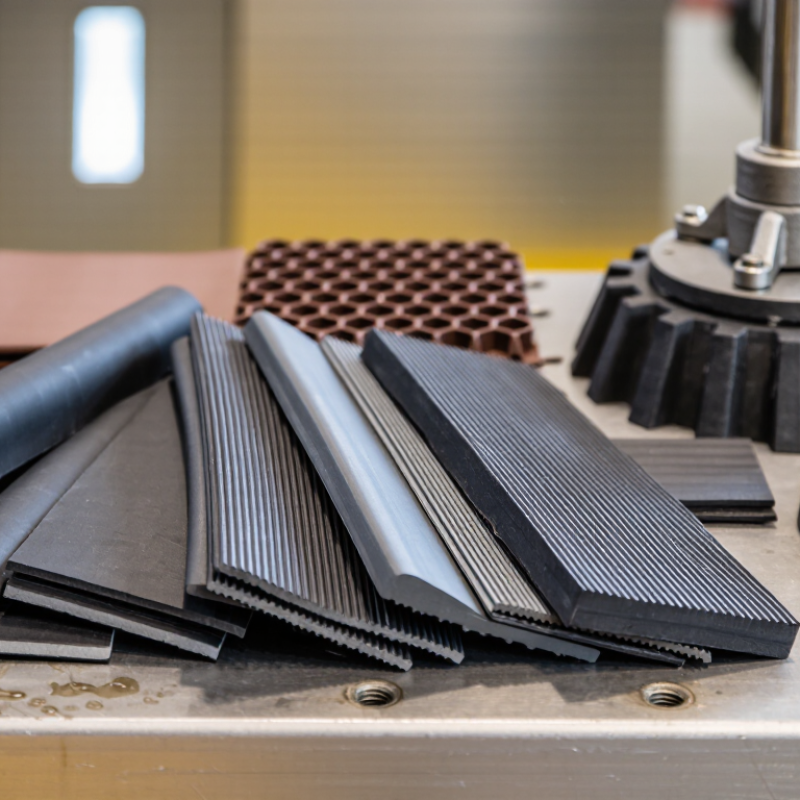
A rubber pad is a shaped elastomer component used to cushion impact, reduce vibration, improve grip, or seal a gap. It is classified by material, construction, and intended function—not by shape alone. Common constructions include solid sheets, cellular foam, ribbed pads, and rubber bonded to metal. ASTM D2000 classifies rubber compounds by polymer type and performance grades, including heat and oil resistance. The standard helps describe the compound; it does not rank finished pads.
For practical selection, compare hardness, thickness, load capacity, temperature range, and exposure to oils or weather. A Grand View Research report estimated the global rubber market at USD 46.75 billion in 2023, with a projected 4.8% compound annual growth rate from 2024 to 2030. That figure describes the wider market, not demand for rubber pads specifically. Still, it shows why consistent material specifications matter across applications. One detail is easy to overlook: two pads with similar appearances may compress very differently.
Tips: Match the pad to the load path. Check the supplier’s hardness scale, stated operating temperature, and compression data. A ribbed surface may improve grip, but it can also leave pressure uneven. Small, but useful.
Key Materials Used in Rubber Pad Manufacturing
Rubber pads are selected by matching the compound to heat, fluids, load, and movement. Natural rubber offers strong resilience and shock absorption, making it useful beneath vibrating equipment. The International Rubber Study Group’s Rubber Statistical Bulletin puts global natural-rubber production at roughly 14.8 million tonnes in 2023. This scale matters: natural rubber remains widely available, but its properties can vary with formulation and processing. It is not automatically the best choice for every pad.
Styrene-butadiene rubber (SBR) is often chosen for economical, general-purpose cushioning, though prolonged outdoor exposure can age it. EPDM handles weather, ozone, and hot water well; it is a practical option for outdoor mounts. Nitrile rubber (NBR) resists many oils and fuels, but may perform poorly in some weather conditions. Silicone tolerates a broad temperature range, yet can cost more and may tear more easily under rough handling. Small details matter. Shore hardness, pad thickness, and surface texture can change grip and vibration transfer.
Tips: Confirm the actual temperature and fluid exposure before choosing a compound. Ask for a datasheet showing hardness and operating limits, then test a sample under real load. Material selection is rarely perfect; a pad that works on a clean bench may behave differently once dust, compression, and uneven floors enter the picture.
| Pad Material | Typical Characteristics | Indicative Hardness | Typical Temperature Range | Common Pad Uses | Key Limitation |
|---|---|---|---|---|---|
| Natural Rubber (NR) | High elasticity, resilience, and resistance to repeated flexing; good vibration and impact absorption. | About 40–80 Shore A | Approximately −50°C to +80°C | Anti-vibration mounts, impact pads, general-purpose machine feet. | Poor resistance to oils, ozone, and prolonged outdoor weathering. |
| SBR Styrene-Butadiene Rubber | Good abrasion resistance and mechanical strength; often used for economical general-purpose pads. | About 40–80 Shore A | Approximately −40°C to +100°C | Floor protection, equipment pads, and general industrial cushioning. | Limited resistance to oils, ozone, and outdoor aging unless specially compounded. |
| EPDM Ethylene Propylene Diene Rubber | Strong resistance to weather, ozone, water, and many dilute acids and alkalis. | About 40–80 Shore A | Approximately −40°C to +120°C; some compounds are rated higher. | Outdoor equipment pads, sealing pads, and water-exposed applications. | Generally unsuitable for petroleum oils and many hydrocarbon fuels. |
| NBR Nitrile Rubber | Good resistance to many oils, greases, and fuels; properties vary with acrylonitrile content. | About 40–90 Shore A | Approximately −30°C to +100°C | Oil-resistant machine pads, workshop equipment, and sealing or support pads. | Less suitable for ozone, sunlight, and high-temperature exposure than EPDM or silicone. |
| CR Chloroprene Rubber (Neoprene-type) | Balanced mechanical properties with moderate oil resistance and good weather and flame-retardant potential in suitable formulations. | About 40–80 Shore A | Approximately −35°C to +100°C | General industrial pads, outdoor supports, and vibration-control components. | Not as oil-resistant as many NBR compounds or as weather-resistant as EPDM. |
| Silicone Rubber | Retains flexibility across a wide temperature range; good resistance to heat, ozone, and aging. | About 30–80 Shore A | Approximately −60°C to +200°C; grades may vary. | Heat-exposed supports, appliance pads, and applications requiring low-temperature flexibility. | Often has lower tear and abrasion resistance than general-purpose rubber compounds. |
| Polyurethane Elastomer (PU) | High abrasion, tear, and load-bearing resistance; available in a broad range of hardnesses. | About 60 Shore A to 70 Shore D | Often approximately −30°C to +80°C; formulation-dependent. | Heavy-duty wear pads, rollers, bumpers, and high-load support pads. | Some grades can be affected by hot water, humidity, or prolonged high-temperature service. |
| Notes: Hardness and temperature figures are indicative ranges for common compounds, not universal specifications. Actual performance depends on formulation, manufacturing process, load, exposure, and test method. Confirm requirements against the material supplier’s technical data and applicable standards. | |||||
Leading Rubber Pad Types in 2026 and Their Uses
Natural rubber pads are often used beneath pumps, compressors, and workshop equipment. Their springy feel helps reduce vibration, while their grip can limit movement on smooth concrete. They also handle repeated flexing well. Ozone and sunlight can age them, though, so exposed outdoor use needs careful consideration. Fit matters.
Neoprene pads suit general-purpose support where moisture and moderate weather exposure are expected. Nitrile rubber is a better candidate around oil-prone machinery, such as hydraulic equipment, because it resists many oils more effectively. It is not a universal chemical barrier; the specific fluid and temperature still matter. For outdoor steps, rooftop equipment, or water-contact areas, EPDM is commonly chosen for its weather and water resistance. Keep it away from petroleum oils when possible.
Silicone pads are useful near warm equipment or in applications needing a clean, stable surface. They can cost more and may not tolerate rough edges or heavy abrasion as well as tougher compounds. In practice, material alone does not determine performance. Pad thickness, hardness, load, and floor condition all affect how well it cushions or stays in place. A pad that feels firm by hand may compress too much under a loaded machine. Check the equipment weight and mounting surface, then test a sample under real conditions. The small details matter.
How to Compare Rubber Pads by Performance and Application
A rubber pad’s best type depends on what it must absorb, support, or resist. Solid rubber pads suit general cushioning and load distribution on machinery or workbenches. Neoprene often handles outdoor exposure and moderate contact with oils. Nitrile is a stronger candidate around petroleum-based oils, while EPDM is commonly selected for weather and ozone resistance. Silicone can tolerate a broad temperature range, but it may cost more and tear more easily in some designs. No material wins every test.
Compare pads by hardness, thickness, load capacity, temperature range, and exposure to water, oils, or sunlight. A softer pad may reduce vibration, yet compress too much under a heavy machine. A harder pad can support the load but transmit more noise. Check dimensions and load ratings against the actual equipment, not just a product description. Fit matters. A few millimeters can change stability.
Application details matter too. A washer-sized pad beneath a pump needs different support from a wide mat under a standing workstation. For vibration control, note the machine’s weight and operating speed; for floor protection, consider surface grip and compression set. Ask for test data when the consequences of failure are serious. Still, specifications do not perfectly predict real conditions. Dust, uneven floors, and installation errors can change results, so a small trial under representative conditions is often worthwhile.
What Are the Top Rubber Pad Types in 2026?
Compare common rubber pad materials by typical continuous service temperature range.
Temperature ranges are indicative and vary with compound, load, exposure, and test method. Natural rubber is commonly used for resilient vibration isolation; nitrile for oil exposure; neoprene for weathering and general-purpose sealing; EPDM for outdoor and water service; silicone for wider temperature extremes; and polyurethane for wear-resistant, load-bearing pads. Check the compound’s specifications for your operating conditions.
FAQS
It is a shaped elastomer part that cushions impact, reduces vibration, improves grip, or seals a gap. Its function matters more than its shape.
They are classified by material, construction, and intended use. Common forms include solid sheets, foam, ribbed pads, and rubber bonded to metal.
Compare hardness, thickness, load capacity, temperature range, and exposure to oils or weather. Check the product’s compression data, too.
Natural rubber pads are often placed beneath pumps, compressors, and workshop equipment. They flex repeatedly and can grip smooth concrete. Fit matters.
Nitrile may suit oil-prone equipment, while EPDM is often used outdoors or near water. Check the exact fluid and conditions before choosing.
Silicone can suit warm equipment or applications needing a clean, stable surface. It may cost more and can wear faster against rough edges.
Not necessarily. A pad that feels firm by hand may compress too much under a loaded machine. Test it first.
It may help prevent slipping, but pressure can become uneven across the pad. I would check the floor and load path, not just the ribs.