
Blog

What Are the Top Grinding Ball Types in 2026?

Grinding media are small components with a large job: inside a rotating mill, they strike and abrade ore until it reaches the required size. The right Grinding Ball can support steady throughput, control wear, and limit unwanted metal contamination. The wrong choice can mean more frequent shutdowns and higher replacement costs. No ball wins everywhere.

The scale of mineral processing helps explain why selection matters. The U.S. Geological Survey’s Mineral Commodity Summaries 2025 estimated global copper mine production at about 23 million metric tons in 2024. That figure does not measure grinding-ball demand, but it shows the volume of ore-processing activity behind a major market. CEEC International’s comminution research also highlights grinding efficiency as an important energy and operating-cost concern. These reports offer useful context, not a universal purchasing formula.

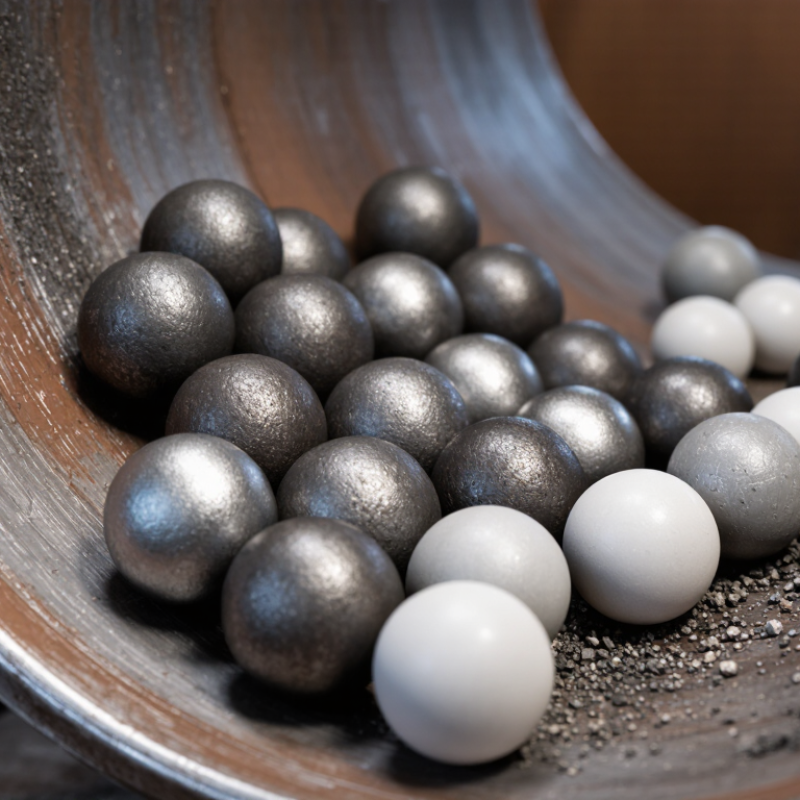
This guide compares the leading options expected to matter in 2026: forged steel, high-chrome cast iron, other alloyed cast balls, and ceramic media for selected fine-grinding duties. Each behaves differently. A forged ball may suit impact-heavy mills; high-chrome media can help where corrosion and wear are key concerns. Ceramic media may reduce iron contamination, but it is not automatically the economical choice. Ore hardness, mill speed, pulp chemistry, ball size, and replacement logistics all change the result. I would treat any single “top types” ranking with caution. Mill trials and wear records matter more than a neat chart.
What Are the Top Grinding Ball Types in 2026?

What Grinding Balls Are and How They Work

Grinding balls are spherical grinding media used inside tumbling mills. As the mill rotates, its liners lift the balls and ore. The charge then tumbles: heavier impacts break larger pieces, while rubbing and smaller collisions wear particles down. The result is finer material for later processing. Simple in principle, but mill behavior can be uneven.

Ball size, material, hardness, and wear rate affect how the mill works. Larger balls can deliver stronger impacts; smaller balls create more contact points. The right balance depends on the ore, mill design, and target particle size—not a universal “best” ball. The U.S. Department of Energy’s Mining Industry Energy Bandwidth Study (2007) estimated U.S. mining energy use at 1.064 quadrillion Btu in 2002. That sector-wide figure is not a measure of grinding-ball performance, but it shows why efficient comminution matters. Details matter.

Tip: Check ball wear and product size together. A shiny worn ball, uneven fines, or rising mill power can signal a process change. Record operating conditions before changing ball size; one adjustment may solve one problem and create another.

Which Materials Define the Main Grinding Ball Types

What Are the Top Grinding Ball Types in 2026?
Which Materials Define the Main Grinding Ball Types

Grinding balls are mainly defined by their material: forged or cast steel, high-chromium cast iron, and ceramic. Steel is dense and tough, making it a common choice for large mills and heavy-impact conditions. Typical steel density is about 7.8 g/cm³; high-chromium cast iron is similar, around 7.7 g/cm³. ASTM A532/A532M classifies abrasion-resistant white cast irons, including high-chromium grades. The ASM Handbook provides property data for ferrous alloys. These figures are typical, not guarantees: heat treatment, chemistry, and casting quality all affect performance.

Ceramic balls, especially alumina and zirconia, are lighter and resist corrosion in many processing environments. Alumina typically measures about 3.8–3.9 g/cm³, while zirconia is near 6.0 g/cm³, according to standard technical-ceramic property data. Lower density can reduce impact energy, which may help limit contamination or protect delicate material. But “ceramic” is not one performance level. Purity, grain size, and binder content matter, and the best choice still needs testing with the actual slurry.

Tips: Match ball material to ore hardness, mill speed, and contamination limits. Compare wear loss over a controlled trial, not just purchase price. I would be cautious about universal rankings; operating data can overturn a neat material comparison.

What Are the Top Grinding Ball Types in 2026?

Material density helps distinguish common grinding ball types. The chart compares representative densities; actual values vary by alloy, composition, and manufacturing process.

At a glance: Steel and high-chromium cast iron balls are denser than alumina ceramic balls. Zirconia ceramic balls fall between them, while offering a distinct ceramic alternative.

How Steel, Cast, Ceramic, and Forged Balls Differ

Steel, cast, ceramic, and forged grinding balls differ in hardness, toughness, weight, and wear behavior. “Steel” is a broad category, so check the alloy and heat treatment rather than relying on the label alone. Forged balls are shaped under pressure and commonly suit mills with repeated heavy impacts. Their toughness can help limit breakage, though performance still depends on ball size, mill conditions, and material quality. Impact changes everything.

Cast balls are formed in molds, often with alloying elements selected for wear resistance. They can work well in abrasive applications, but some compositions may be more prone to cracking under severe impact. Inspecting worn balls and reviewing mill operating data gives a better basis for selection than hardness figures alone. That distinction is easy to overlook.

Ceramic balls are lighter and may reduce metallic contamination in processes where product purity matters. Their lower mass can also change grinding action, so they are not a direct substitute for steel in every mill. A practical choice weighs ore hardness, feed size, mill speed, and replacement cost together. I would not call any type universally best; test results from the actual process should guide the decision.

Where Each Grinding Ball Type Performs Best

Forged high-Carbon Steel Balls suit large SAG and primary ball mills, where repeated impacts can punish brittle media. Their toughness helps when feed size varies or coarse rock strikes exposed liners. Cast high-chromium balls often perform well in fine, abrasive grinding. ASTM A532 classifies abrasion-resistant white irons by composition and hardness, though chemistry alone cannot predict wear in a working mill. Low-chromium cast balls can suit less abrasive circuits. A lower purchase price may vanish if breakage rises.

Ceramic balls are useful in stirred mills and circuits where iron contamination matters, including some mineral-processing tests. Their lower density changes impact energy, so filling and operating speed may need adjustment.

Not a drop-in swap.

The USGS Mineral Commodity Summaries 2025 estimated world copper mine production at about 23 million metric tons in 2024. That scale makes site-specific media trials worthwhile, but the figure does not identify a best ball type. Compare ball consumption per tonne, product size, power use, and liner wear over steady operating periods. Short trials can mislead when ore hardness changes. A type may appear superior for a month, then lose its edge.

How to Choose Grinding Balls for 2026 Operations

Choosing grinding balls for 2026 operations starts with the mill, the ore, and the cost of downtime. Forged steel balls suit many demanding mills where impact resistance matters. High-chrome cast balls can offer strong wear resistance in abrasive conditions, while lower-chrome options may fit less aggressive duties. Ceramic media can work in selected applications where metal contamination is a concern. There is no universal winner.

Match ball diameter to feed size, mill speed, and the grinding stage. Larger balls deliver stronger impacts on coarse feed; smaller balls provide more contact points for finer grinding. Check the mill’s operating records, not just supplier charts. Track wear rate, power draw, product size, and breakage over several weeks. Small differences matter.

Ask for verified material and hardness data, then trial a controlled batch before changing the full charge. Review how media wear affects the final product and downstream equipment. A cheaper ball may increase replacement labor or unplanned stops. That calculation can be wrong, too. Ore changes, and operating data can lag behind. Recheck the choice when feed conditions shift.