China Top 10 Paver Tools Suppliers for Global Buyers?
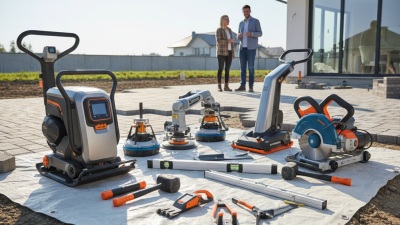
China has become a major sourcing base for Paver Tools used in landscaping, roadwork, patios, and commercial paving projects. Its supplier market includes manufacturers, trading companies, and specialized factories. This variety creates opportunity, but it also makes supplier comparison more difficult.
This guide reviews ten Chinese Paver Tools suppliers for global buyers. It focuses on product range, manufacturing experience, export capability, customization, quality control, and communication. Typical products may include paver lifters, slab cutters, vacuum suction tools, leveling systems, rubber mallets, and jointing equipment. Small details matter. A comfortable handle, accurate cutting guide, or durable rubber pad can affect daily productivity.
No ranking is perfect.
Supplier information can change quickly. Some companies present impressive catalogs but provide limited technical evidence. Buyers should request current product specifications, material details, factory photos, inspection records, samples, and clear warranty terms. Independent testing may also be useful for demanding projects. Check packaging, spare parts, lead times, and after-sales support before placing a large order.
Reliable sourcing requires more than comparing prices. Buyers should confirm payment conditions, shipping documents, labeling requirements, and applicable safety standards in the destination market. These checks reduce misunderstandings and support lawful international trade. The selected suppliers should be evaluated against the same criteria, not judged by marketing language alone. This introduction provides a practical starting point for contractors, distributors, wholesalers, and project procurement teams seeking dependable Chinese partners. However, direct verification remains essential before any final purchasing decision.
What Are Paver Tools and Why Do Global Buyers Source Them from China?
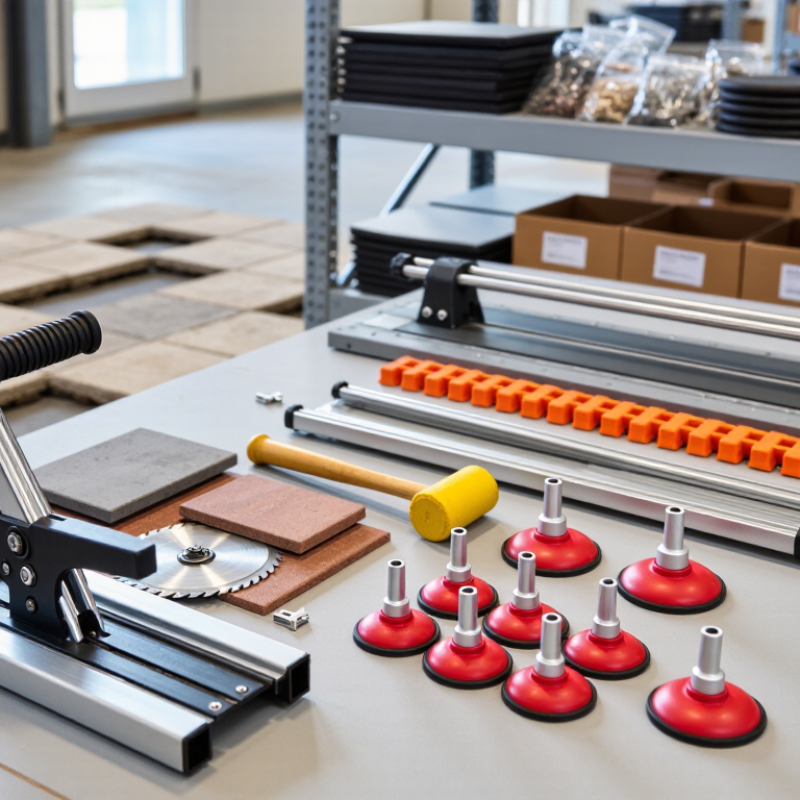
Paver tools are equipment and hand tools used to install, adjust, cut, and maintain paving blocks. They include rubber mallets, screeding bars, jointing tools, lifting clamps, block splitters, and compacting machines. On a real site, a small alignment error can spread across several meters. Accurate tools reduce rework and protect the finished surface.
Global buyers often source these tools from China because the country offers a broad manufacturing network. Metal forming, machining, plastics, packaging, and assembly can be coordinated within one supply chain. This may support competitive pricing, flexible order quantities, and customized handles, sizes, or packaging. Buyers can also compare several technical options quickly. That convenience is valuable, but it can hide weak quality control.
Experienced purchasing teams usually request material specifications, load tests, surface treatments, and sample inspections before placing larger orders. Check the tool’s grip, welds, edges, moving parts, and resistance to repeated jobsite use. Packaging matters too; damaged clamps or bent bars create immediate delays.
One field lesson is uncomfortable: the lowest quotation is rarely the lowest total cost.
I have seen apparently minor tolerances cause uneven joints and extra labor. Supplier audits, production photos, traceable inspection records, and clear replacement terms make sourcing more reliable. Still, no document replaces testing the actual tool in dust, heat, and daily handling.
How to Evaluate China’s Top 10 Paver Tools Suppliers
China Top 10 Paver Tools Suppliers for Global Buyers?
How to Evaluate China’s Top 10 Paver Tools Suppliers
Choosing among China’s top paver tools suppliers requires evidence, not attractive catalogs. Start with production experience, technical drawings, and inspection records. Ask for material grades, cutting tolerances, heat-treatment details, and batch traceability. A reliable supplier should explain how each tool performs on concrete, stone, or asphalt surfaces. Request samples before placing a large order. My first shortlist was wrong. I trusted low prices too quickly.
Industry data supports a strict evaluation process. The Associated General Contractors of America reported that 94% of construction firms struggled to fill craft positions in 2024. Tools must therefore reduce training time and rework. Check handle ergonomics, blade life, vibration control, and replacement-part availability. McKinsey’s Reinventing Construction report found construction productivity growth remained near 1% annually for two decades. Small efficiency gains matter.
Use a scoring sheet for the ten suppliers. Rate quality control, delivery consistency, export documentation, warranty response, and customization capacity. Factory audits should verify calibration equipment and final inspection procedures. Request recent test reports, not recycled certificates. Compare total cost, including packaging, freight, spare parts, and rejected units. Also examine payment terms and communication speed. A polished video proves little. An imperfect sample can reveal more. Recheck every claim against independent inspection results and actual field performance.
Product Ranges and Specialties of the Leading Suppliers
The leading ten paver-tool suppliers usually divide their ranges into five practical groups: cutting, compacting, leveling, jointing, and handling. Their catalogues may include diamond blades, wet saws, plate compactors, screed rails, rubber mallets, vacuum lifters, and polymeric sand tools. This matters because installation quality depends on the complete workflow, not one impressive machine.
Grand View Research valued the global construction equipment market at about USD 250.4 billion in 2023. Its forecast also indicates continued growth through 2030, driven by infrastructure renewal and urban development.
Within this expanding market, stronger suppliers offer both light-duty hand tools and powered equipment for commercial paving.
Specialists in cutting focus on blade hardness, dust control, and water delivery. Compaction specialists emphasize vibration frequency, operating weight, and surface protection.
Handling-focused suppliers develop adjustable clamps and lifting devices that reduce edge damage during placement.
Field buyers should compare working widths, replacement-part availability, warranty terms, and operator training. ASTM C936 and EN 1338 provide useful references for concrete paving products, although tool performance still depends on site conditions.
A supplier claiming universal compatibility deserves careful testing. A catalogue is not proof.
In my experience, uneven bedding often exposes tool limitations faster than laboratory demonstrations.
Quiet machines are also not always safer; visibility, guarding, and maintenance access require equal attention.
Some product ranges look complete but lack reliable wear parts, which can delay a project by several days.
Quality Standards, Pricing, Customization, and Export Capabilities
China Top 10 Paver Tools Suppliers for Global Buyers?
Quality, pricing, customization, and export reliability should guide supplier selection. Grand View Research valued the global construction equipment market at about USD 191.5 billion in 2023. It also forecasts steady growth through 2030. This expansion increases demand for durable paving tools and dependable replacement parts. In field purchasing, ISO 9001 certification is useful, but it cannot replace sample testing. Check cutting edges, handle strength, coating adhesion, and dimensional tolerance. Small defects become expensive on large paving projects.
Pricing needs a landed-cost comparison. Include tooling, packaging, freight, duties, spare parts, and warranty service. A low quotation may hide inconsistent steel hardness or short working life. It happens. Ask for material certificates and inspection records. ASTM C936 and EN 1338 are relevant references for concrete paving products, while tool suppliers should explain how their equipment supports these production requirements. The 2024 Deloitte Engineering and Construction Industry Outlook also highlights continuing cost pressure from materials, labor, and logistics.
Customization can include blade geometry, mold dimensions, grip design, logo-free packaging, and corrosion protection. Suppliers should provide CAD drawings, trial samples, and measurable acceptance criteria. Export capability matters just as much. Confirm HS codes, Incoterms, pallet treatment, carton strength, and document accuracy. A supplier serving distant markets should show shipment records and clear after-sales procedures. I would still inspect a pre-production sample. Certificates look reassuring, but performance is the real test.
How Global Buyers Can Compare and Select the Right Supplier
A top-ten list is only a starting filter. Global buyers should compare suppliers against the same specification, not attractive photographs. Global Infrastructure Outlook estimates that $94 trillion in global infrastructure investment will be needed by 2040. That scale increases demand for dependable paving tools, but it also rewards careful purchasing. Ask for tool material, hardness range, dimensional tolerance, expected service life, and test records. A supplier that answers with clear numbers earns more trust than one promising “premium quality.” Small details matter. A cutting edge should arrive protected, while a trowel handle should feel balanced after repeated use.
Use a weighted scorecard. I would assign quality 30%, total landed cost 25%, delivery reliability 20%, technical support 15%, and documentation 10%. The World Bank’s 2023 Logistics Performance Index evaluates customs, infrastructure, shipment tracking, and timeliness. These factors should shape supplier comparisons. Request two samples, inspect the finish under workshop lighting, and record wear after a controlled trial. One sample can mislead. I once treated a low quotation as efficiency; freight, replacement parts, and delayed replies changed that judgment.
Check ISO 9001-based procedures, material certificates, warranty terms, and spare-parts availability. Certification helps, but it does not replace physical testing. The 2023 Global Status Report for Buildings and Construction links the sector to 37% of global energy and process-related CO2 emissions. Buyers should ask about recycled packaging, repairability, and product life. Keep payment milestones tied to inspection. A supplier may be polite and fast, yet still lack stable production control.
China Top 10 Paver Tools Suppliers for Global Buyers
How Global Buyers Can Compare and Select the Right Supplier
The chart presents a normalized 100-point purchasing framework for comparing paver tool suppliers. Technical fit and cutting performance usually receive the highest priority, while safety compliance, availability, total cost, and after-sales support help buyers assess long-term value. The weighting is supplier-neutral and does not represent any individual company or brand.