7 Tips for Choosing a Battery Powered Pruning Saw
A Battery Powered Pruning Saw can make routine garden work feel lighter, but the right choice depends on more than cutting speed. A saw that is too heavy may tire your wrist before the job is done. One with a short bar may struggle with thicker branches. Battery life, chain tensioning, safety features, and replacement-part availability matter, too.
Arborist Mark Chisholm is known for his professional tree-care work. I could not verify a verbatim statement from him about choosing battery-powered pruning saws, so I won’t put invented words in his mouth. A practical buying principle is: “Choose control and suitability over extra power.” It is a plain rule, but an easy one to overlook when comparing impressive specifications.
This guide breaks the decision into seven useful checks. Consider the branches you actually prune, the saw’s weight in your hand, and whether its battery fits tools you already own. Check how easily the chain can be adjusted, and look for clear safety instructions. A small orchard, a few backyard shrubs, and regular heavy pruning call for different tools. Feel the balance before buying, if possible. Your hand notices. The best saw is not automatically the fastest or most powerful; it is the one you can handle steadily and maintain properly. One caution: published cutting capacity does not guarantee comfortable real-world use. Branch shape, wood condition, and your technique all change the result.
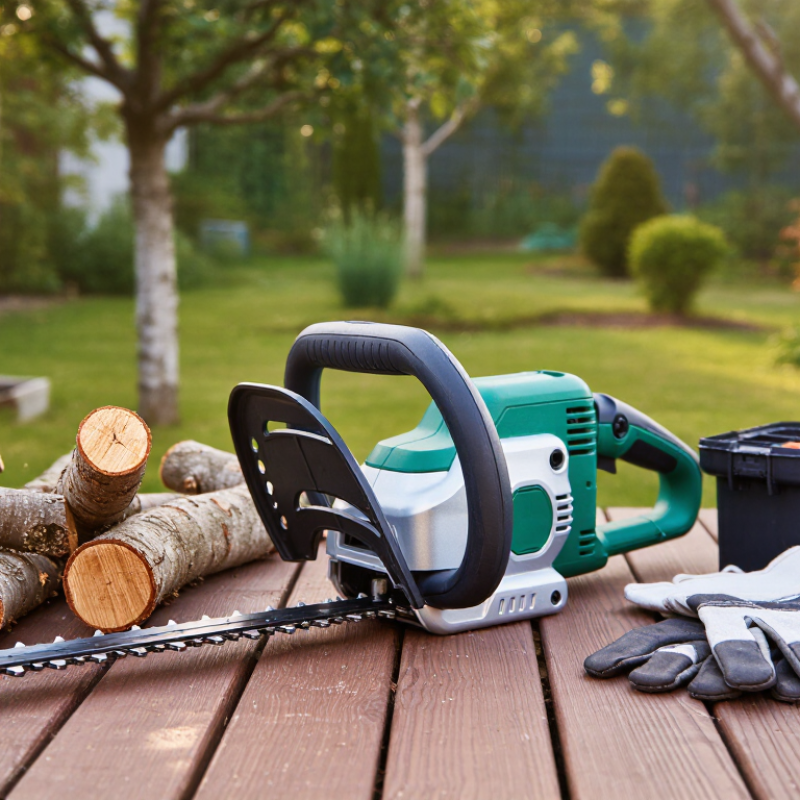
Identify Your Pruning Needs and Typical Branch Sizes
Start by listing the jobs you actually expect to do: removing storm-damaged limbs, thinning fruit trees, or trimming shrubs. The right saw depends on the work, not the size printed on a product label. Measure several typical branches, including the largest ones you plan to cut. Measure twice. A branch’s diameter can change near a fork, and knots may make cutting slower.
Compare those measurements with the saw’s stated cutting capacity and instructions. A model suited to thin, frequent cuts may struggle with thick, dry hardwood. Conversely, a large saw can feel tiring when you are making many small cuts among close branches. Note how often you prune, how long each session lasts, and whether branches are within comfortable reach. That matters. Battery runtime and tool weight become more noticeable after repeated cuts.
Try measuring a few branches in the garden before shopping; a tape measure is more useful than a guess. Also consider branch position. A clean, reachable limb is different from one tangled among stems or above shoulder height. Do not choose a saw that encourages awkward overhead cutting. Use the manual’s limits, and leave uncertain or hazardous limbs to a qualified tree professional. Even careful estimates can be wrong, so allow some margin rather than buying only for the biggest branch you can imagine.
Compare Battery Voltage, Capacity, and Runtime
When comparing battery-powered pruning saws, look at voltage, capacity, and runtime together. Voltage indicates the battery’s electrical potential, but higher voltage alone does not guarantee faster cutting. Blade design, chain sharpness, and branch thickness also affect performance. For occasional trimming of small branches, a compact battery may be easier to handle. For repeated cuts through thicker limbs, a higher-voltage system may maintain cutting power better.
Tips: Check amp-hours (Ah) to compare battery capacity within the same voltage range. A 4 Ah battery generally stores more energy than a 2 Ah battery at the same voltage. For a fairer comparison across different voltages, look at watt-hours (Wh), calculated by multiplying volts by amp-hours. Specs help, but they are not a stopwatch.
Runtime changes with the job. Cutting dry, thick wood can drain a battery much faster than trimming fresh, narrow shoots. Cold weather, an aging battery, and a dull chain can reduce useful run time too. If possible, compare manufacturer runtime tests using similar wood and cutting conditions. A spare battery can help during longer sessions, though it adds weight and cost. The estimate may still feel optimistic in your yard, so leave some charge in reserve.
Assess Cutting Power, Bar Length, and Chain Speed
A battery powered pruning saw should cut cleanly without forcing the chain through the wood. Cutting power depends on the motor, battery, chain condition, and the wood itself. A high voltage rating alone does not guarantee strong cuts. Compare the saw’s stated cutting capacity with the branches you actually prune, and consider whether it can handle dense, freshly cut wood. Test cuts matter. If the motor slows or the chain stalls, pause rather than pushing harder.
Bar length should suit your usual branch size. A compact bar is lighter and easier to guide between crowded limbs, while a longer bar can reach across thicker wood. Longer is not automatically better: it adds weight and may demand more from the motor and battery. Keep the bar comfortably within reach, and never stretch from a ladder to gain extra cutting distance. That trade-off is easy to underestimate.
Chain speed affects how quickly the saw moves through a cut, but speed is only useful when paired with a sharp, properly tensioned chain. Check the manufacturer’s specifications, then consider how the saw feels during a steady cut. A faster chain may reduce cutting time, yet it can feel less controlled in tight spaces. Wear suitable eye and hand protection, and let the chain stop before moving between branches. I would not judge performance from one cut alone; wood hardness and battery charge can change the result.
Check Safety Features, Weight, and Ease of Handling
When choosing a battery-powered pruning saw, inspect its safety features before comparing cutting speed. Look for a hand guard, a clear trigger lock, and a chain brake or other stopping mechanism. Check the manual to understand how each feature works; names and designs vary. Small details matter. Make sure the controls are easy to reach without shifting your grip, and that the chain stops promptly when you release the trigger.
Weight is more than a number on a product label. Hold the saw with its battery installed, switched off, and pointed away from you. Notice whether the nose dips or the handle twists in your hand. A tool that feels light in a shop can become tiring after several minutes, especially when trimming above shoulder height. That difference is easy to underestimate.
Handling should feel steady, not forced. A textured grip can help when your gloves are damp, while a well-placed battery may improve balance. Try the controls before buying, if possible. Can you keep both hands positioned securely? Can you set the saw down without reaching across the chain? Awkward fit is a real drawback, even when the saw cuts well. Recheck the chain tension and guard condition before use, following the manufacturer’s instructions.
Evaluate Maintenance Needs, Compatibility, and Overall Value
A battery-powered pruning saw can seem low-maintenance, but its chain still needs regular attention. After cutting damp branches, sap and fine chips can collect around the bar and cover. Clear debris, check chain tension, and inspect the lubrication system before storage. Follow the manual, since adjustment methods vary. Small checks matter.
Compatibility can affect both convenience and cost. Confirm whether the saw includes a battery and charger, and check that its battery works with your existing tools. Similar voltage does not guarantee compatibility. Look for replacement chains and bars that are easy to find. A spare battery may help with longer sessions, though cold weather and thicker wood can reduce runtime. It is easy to assume one battery will last all afternoon. That may be optimistic.
Compare the full cost, not just the shelf price. Include batteries, a charger, replacement parts, and suitable protective equipment. For occasional pruning, a lighter saw may be easier to handle around a crowded garden. Frequent cuts through thicker branches may call for more capacity, but a larger tool can feel tiring overhead. Maximum cutting size is only one detail; weight, upkeep, and parts availability matter too. The trade-off is not always obvious.