
Blog

How to Choose the Right Diamond Hole Saw?

Choosing the right Diamond Hole Saw is less about buying the hardest tool. It is about matching the tool to the material, machine, and cutting conditions.

Market reports show why this decision matters. Grand View Research estimates continued growth in the global diamond tools market through 2030. Mordor Intelligence also forecasts steady expansion, driven by construction, renovation, and engineered stone applications. However, these reports classify products differently. Their figures should guide planning, not replace workshop testing.

Professor Hans Kurt Tönshoff, a recognized researcher in diamond machining, emphasized this practical principle: “Tool performance depends on the interaction between tool and workpiece.” That idea applies directly to hole saw selection. A thin porcelain tile needs different diamond exposure from reinforced concrete. A slow hand drill also behaves differently from a rigid core-drilling machine.

Look closely at the workpiece. Is it granite, glass, ceramic, concrete, or sintered stone? Check its thickness, reinforcement, and cooling requirements. Then inspect the saw’s diameter, bond type, segment design, and recommended speed. A small mismatch can produce wandering cuts, chipped edges, overheating, or rapid diamond loss.

Water cooling often improves cutting life. Yet water is unsuitable for every location or material. Dry-cut options may work, but they demand stricter speed control and dust management. The neat answer is not always right. I have seen users blame the Diamond Hole Saw when excessive pressure caused the real failure.

This guide compares the details that are easy to overlook. It also questions common buying habits, because the cheapest saw is rarely the lowest-cost choice.
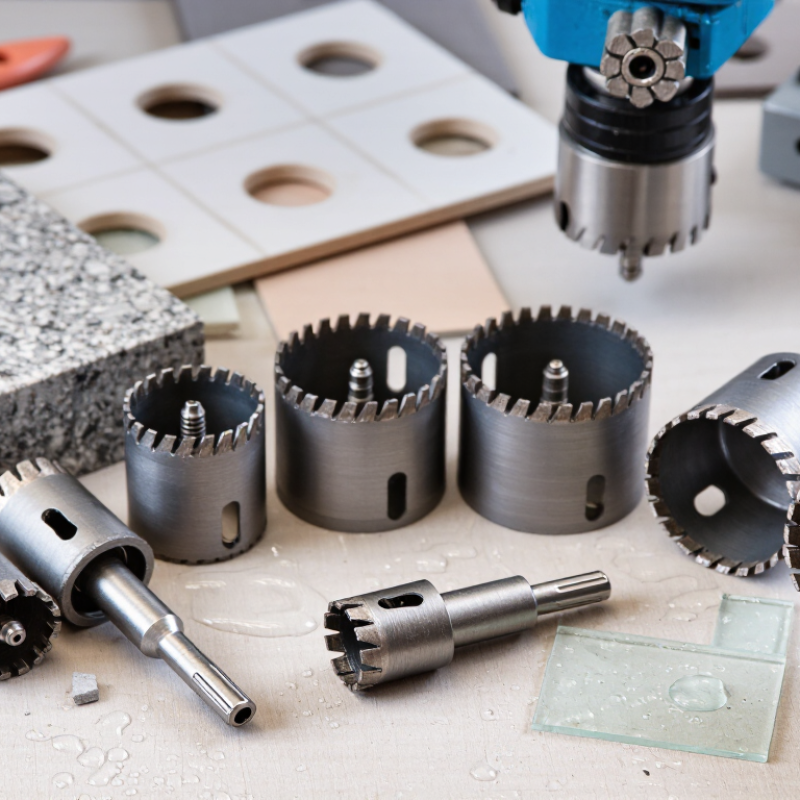
How to Choose the Right Diamond Hole Saw?

Define the Material and Drilling Requirements

How to Choose the Right Diamond Hole Saw?

Define the Material and Drilling Requirements

Start by identifying the material, not the hole size. Ceramic tile, porcelain, granite, concrete, and glass create different cutting conditions. Porcelain is dense and can glaze a poorly matched diamond rim. Concrete may contain sand, aggregate, or hidden reinforcement. Each detail affects tool life and cutting speed.

Check the material’s thickness and surface condition. A thin bathroom tile needs a different approach from a thick stone countertop. For brittle surfaces, choose a hole saw designed for controlled, low-impact cutting. For masonry, a more wear-resistant diamond segment may be necessary. I usually inspect an offcut first. It reveals hardness, dust, and possible chipping.

Then define the drilling requirements. Measure the exact hole diameter, required depth, and available working space. Decide whether the job allows water cooling. Wet drilling can control heat and dust, but it needs careful electrical safety and cleanup. Dry drilling is more convenient, yet overheating can damage the rim quickly. Keep the drill steady and avoid excessive pressure. Let the diamonds cut.

Speed settings also matter. A handheld drill may work for occasional holes, while repeated or deep drilling benefits from a guide or drilling stand. I once selected a tool by diameter alone and ignored the tile thickness. The hole was usable, but the edge chipped badly. That mistake still influences my checks. Test on scrap whenever possible. Small tests prevent expensive repairs.

Match the Diamond Grit to the Surface Hardness

How to Choose the Right Diamond Hole Saw?

Match the Diamond Grit to the Surface Hardness

Diamond grit should match the surface, not merely the hole diameter. The U.S. Geological Survey’s mineral data places quartz at Mohs 7 and diamond at Mohs 10. Porcelain, granite, and engineered stone often contain quartz or similarly hard phases. They usually need finer diamond grit. Fine particles create more cutting points and reduce edge chipping.

Softer brick, limestone, and some concrete respond better to coarser grit. Larger diamonds expose fresh cutting edges faster. They also remove material more aggressively. I have found that excessive pressure creates heat, glazing, and a surprisingly slow cut. Light pressure works better. Water cooling can extend segment life on dense surfaces.

Hardness alone can mislead. The U.S. Geological Survey’s Mineral Commodity Summaries identifies industrial diamond as a critical abrasive material, but abrasive behavior still depends on structure. Concrete may contain hard aggregate, steel, and loose sand. A surface that feels soft may damage a hole saw quickly. Start with a small test hole. Check dust, edge quality, and cutting speed after ten seconds. That test is not perfect, but it prevents expensive guessing. A finer grit may last longer on porcelain, while a coarser grit may finish softer masonry sooner. The correct choice sometimes needs adjustment.

How to Choose the Right Diamond Hole Saw? - Match the Diamond Grit to the Surface Hardness

Surface Material Typical Mohs Hardness Recommended Diamond Grit Why This Grit Fits Recommended Cutting Conditions Important Precautions
Marble and limestone 3–5 Coarse: 30/40–50/60 mesh Softer stone generally allows a coarser diamond grit for faster material removal. Wet drilling; moderate pressure; low to medium speed. Use a guide or template to reduce wandering and edge breakout.
Glass 5.5–6 Fine: 80/100–120/140 mesh Fine grit helps control chipping and limits aggressive cutting in a brittle surface. Continuous water cooling; light, steady pressure; low speed. Do not use hammer action. Support the workpiece fully and wear eye protection.
Glazed ceramic tile 5–7 Medium–fine: 50/60–80/100 mesh Balances cutting speed with control through the hard glaze and softer tile body. Wet drilling; low to medium speed; reduce pressure as the hole breaks through. Apply masking tape or use a guide to prevent initial slipping.
Porcelain tile 6–7 Fine: 80/100–120/140 mesh Its dense, low-porosity structure benefits from a finer grit and consistent cooling. Continuous water cooling; steady feed; avoid excessive downward force. Keep the saw moving or periodically clear slurry to prevent heat buildup.
Granite 6–7 Medium–fine: 50/60–80/100 mesh A medium or fine grit provides controlled cutting across hard mineral grains. Wet drilling; stable machine setup; moderate feed pressure. Granite composition varies; test on a scrap piece when appearance is critical.
Quartz or engineered quartz 6–7 Fine: 80/100–120/140 mesh Fine diamond particles help manage the hard quartz content and reduce edge damage. Continuous water cooling; light pressure; controlled feed rate. Avoid dry cutting because heat can damage the surface and tooling.
Concrete with natural aggregate 5–8, depending on aggregate Coarse–medium: 30/40–50/60 mesh Coarser grit helps remove cement paste and expose variable aggregate efficiently. Wet or approved dry drilling; use a rigid, high-torque setup. Check for reinforcement, embedded utilities, and dust-control requirements.
Reinforced concrete Variable; steel is much harder than cement Medium: 40/50–60/80 mesh A balanced grit handles concrete while maintaining cutting action when reinforcement is encountered. Use a suitable wet-core-drilling setup; maintain steady water flow and alignment. Locate rebar and services before drilling; follow applicable site safety procedures.

Selection rule: Coarser diamond grit usually cuts softer or highly abrasive materials faster, while finer grit generally provides better control on harder, denser, or more brittle surfaces. The recommended ranges are starting points; actual performance also depends on diamond concentration, bond type, hole diameter, drilling speed, cooling, and machine stability.

Select the Correct Hole Saw Size and Type

How to Choose the Right Diamond Hole Saw?

Choosing the correct diamond hole saw starts with the finished hole size, not the pipe label. Measure the pipe, fitting, or anchor, then add only the clearance needed for installation. A hole that is too tight can crack porcelain during assembly. A hole that is too large may leave a weak, unattractive edge. Check the material thickness as well. A short hole saw may cut through tile but fail on a thick stone countertop.

The hole saw type must match the surface and cutting method. Electroplated diamond tools often suit ceramic tile, glass, and other relatively thin materials. Sintered or segmented diamond tools are generally better for dense stone and masonry. Confirm whether the tool supports wet cutting. Water reduces heat and helps control dust, but it can be unsafe near powered equipment without proper protection. I once chose a size from memory and ignored the trim plate. The opening worked, but the visible gap looked careless. That mistake still influences my measuring routine.

Tips: Mark the center with a guide or template. Start at a slight angle, then level the tool gradually. Use light pressure and steady speed. Do not force a dull hole saw. Inspect the diamond edge after every few holes, because heat can damage it before wear becomes obvious. When uncertain, test on a spare tile from the same batch. Surface variations can be surprisingly significant.

Check Compatibility with Your Drilling Equipment

How to Choose the Right Diamond Hole Saw?

Check Compatibility with Your Drilling Equipment

A diamond hole saw must match your drilling equipment, not only the material. Check the arbor, thread, shank diameter, and chuck type before buying. A loose connection can create wobble, chipped segments, and uneven holes. Measure the tool’s maximum speed against your drill’s lowest suitable setting. Never exceed the lower rating.

Torque matters too. Large diameters demand more power, while compact drills may stall under pressure. For masonry, concrete, or tile, confirm that the drill supports wet cutting when the saw requires cooling. OSHA’s Respirable Crystalline Silica Standard limits worker exposure to 50 micrograms per cubic meter over eight hours. Wet drilling can reduce airborne dust, but it does not replace ventilation or suitable respiratory protection. NIOSH also advises using engineering controls before relying on personal protection. These details are easy to overlook. Even experienced users sometimes check the diameter and forget the arbor.

Tips: Clamp the workpiece firmly. Test the fit without power. Start slowly, then increase speed only if the saw remains stable. Keep water away from electrical connections. Check the drill’s manual for continuous-duty limits. A short trial hole can reveal vibration, poor alignment, or insufficient torque before the full cut. It may feel inefficient, but replacing a damaged chuck costs more. Source: U.S. OSHA, 29 CFR 1926.1153; CDC/NIOSH, “Control of Silica Dust in Construction.”

Compare Durability, Cooling Needs, and Overall Value

How to Choose the Right Diamond Hole Saw?

Choosing the right diamond hole saw depends on durability, cooling needs, and total cost. In practical work, durability is not simply about the thickest cutting edge. A well-bonded diamond layer should resist early shedding when drilling tile, masonry, or dense stone. However, excessive pressure can damage even a premium tool. I have found that steady pressure and a controlled speed often extend cutting life more than force. Inspect the rim after each hole. Heat is the warning.

Cooling requirements vary with the material, hole diameter, and drilling speed. Wet cutting usually reduces dust and keeps the diamond segments cooler. It also helps prevent glazing, where the cutting surface becomes smooth and slow. Dry cutting may suit quick work, but it demands pauses and careful airflow. The tool must match the method. Never assume water is always better; unsuitable equipment or poor control can create safety problems.

Overall value means more than the purchase price. Count the hidden costs: replacement frequency, drilling time, cleanup, and damaged surfaces. A cheaper saw may cost more if it cuts slowly or loses its edge after several holes. I once judged value by price alone, and that was a poor assumption. Now I compare cost per usable hole and the project’s cooling limitations. No choice is perfect. A slightly slower saw may deliver better results when precision matters more than speed.