
Blog
How to Choose the Right Commercial Lifts for Your Business?
Choosing the right Commercial Lifts starts with how your building works each day, not with a model name. A hotel moving guests and luggage has different needs from a warehouse shifting pallets between floors. Consider who or what will use the lift, how often it will run, and where people may queue. Small details matter. A narrow loading bay, a low ceiling, or a busy reception area can affect installation and daily use.
Capacity and speed are important, but they are only part of the decision. Your assessment should also cover travel distance, door layout, accessibility, energy use, safety features, and expected maintenance. Ask a qualified lift professional to inspect the site and explain how each option fits your traffic patterns and building constraints. Request clear information about installation, servicing, parts availability, and likely downtime. A lift that looks efficient on paper may be awkward in practice. That is worth questioning.
This guide outlines the main factors businesses should compare before investing, from passenger and goods lifts to service and specialist applications. It also considers how future growth may change demand. No single specification suits every property. The best choice balances reliable operation, user needs, available space, and long-term costs. Even a careful estimate can miss something; revisit your assumptions before committing. A practical decision begins with evidence from your site, not guesswork.
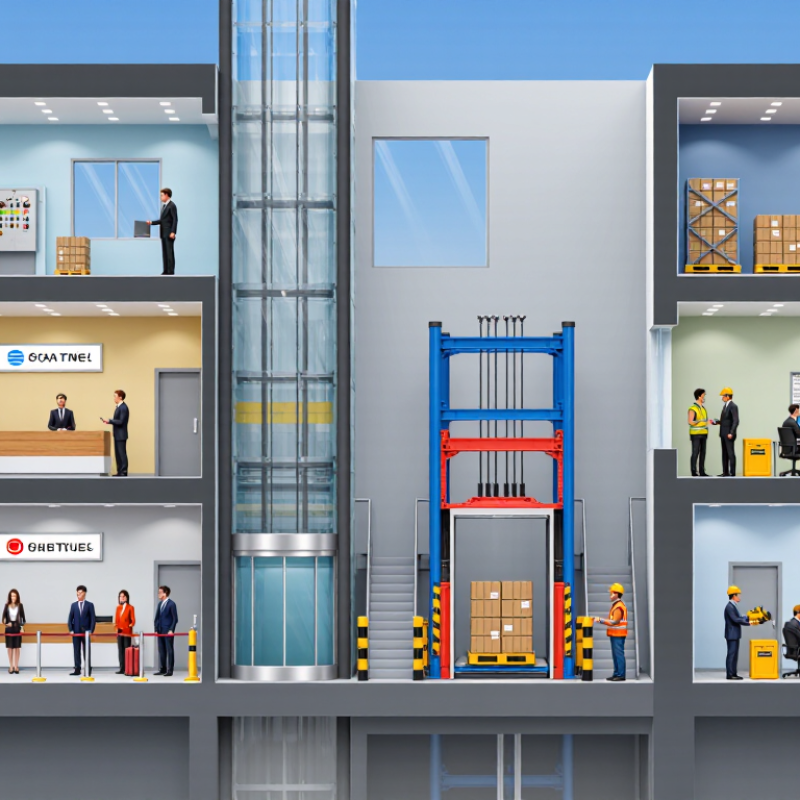
Identify Your Business’s Load, Capacity, and Usage Requirements
Choosing a commercial lift starts with the real load, not an average estimate. Weigh the heaviest pallet, trolley, packaging, and contents together. Check the largest item’s dimensions, too; a machine rated for the weight may still have a narrow doorway. A useful question: what must fit on the busiest day? The awkward item may matter more than the typical carton.
Capacity also depends on how often loads move. Record trips per hour, peak periods, travel distance, and the number of floors served. A lift making occasional deliveries has different demands from one cycling every few minutes. Liberty Mutual’s 2024 Workplace Safety Index estimated that overexertion involving outside sources cost employers about $12.7 billion in direct workers’ compensation costs. That figure does not predict a lift’s performance, but it shows why repeated manual handling deserves attention.
Match the lift’s rated capacity and platform size to the heaviest planned load, then allow a practical margin for changing stock or equipment. Confirm clear door width, floor loading, stopping accuracy, and whether people will travel with goods. Those details can be missed. Usage estimates can be wrong, too; check them against actual shift patterns and delivery records before finalizing specifications.
How to Choose the Right Commercial Lifts for Your Business? — Identify Your Business’s Load, Capacity, and Usage Requirements
| Business Need | Typical Load and Traffic | Lift Type to Consider | Indicative Capacity Range | Usage and Selection Checks |
|---|---|---|---|---|
| Moving employees or visitors between floors | People, mobility aids, and occasional hand-carried items; traffic may peak at opening, lunch, or shift changes. | Passenger elevator | About 2,500–5,000 lb (1,134–2,268 kg) for many commercial installations | Estimate peak passenger demand, number of floors, travel distance, door and car dimensions, accessibility needs, and expected trips per hour. |
| Moving palletized stock, equipment, or heavy deliveries | Loads may include pallets, carts, or powered equipment. Base the estimate on the heaviest loaded unit, not the average shipment. | Freight elevator | About 5,000–20,000 lb (2,268–9,072 kg) for common freight applications; specialized installations may differ | Check loaded pallet and vehicle weights, platform and doorway dimensions, loading method, floor openings, stopping accuracy, and the required duty cycle. |
| Transporting small goods between a kitchen, counter, or storage area | Food, dishes, documents, or small supplies moved in batches without passengers. | Service lift or dumbwaiter | Often about 100–750 lb (45–340 kg), depending on the model and application | Confirm the largest item’s dimensions, total batch weight, serving frequency, landing locations, and whether the lift is designed for the intended goods. |
| Providing step-free access across a short rise | One wheelchair user, sometimes accompanied by an attendant, traveling between nearby levels. | Vertical platform lift | Commonly around 500–750 lb (227–340 kg); verify the specific rated load | Check platform size, rise, approach and exit space, weather exposure, safeguarding, accessibility requirements, and local building rules. |
| Serving a warehouse or production area with frequent goods movement | Repeated movement of heavy or bulky loads, potentially across multiple shifts. | Industrial goods or freight lift | Set from the heaviest planned load and equipment; capacities vary substantially by design | Document peak load, trips per hour, shift pattern, load distribution, floor conditions, and whether a pallet truck or forklift will enter the lift. |
| Handling a mix of passengers and deliveries in a small commercial building | Moderate passenger traffic plus occasional carts or boxed goods. | Passenger or service elevator selected for the permitted use | Determine from the rated capacity and car dimensions required for the actual load mix | Do not assume a passenger lift is suitable for freight. Confirm permitted use, traffic separation, car protection, and loading procedures with a qualified lift professional. |
Planning note: Capacity ranges are indicative examples, not design specifications. Confirm the rated load, dimensions, duty rating, accessibility provisions, and applicable local codes with a qualified lift professional. Never exceed the lift’s posted rated capacity.