Why Choose Stainless Steel Coiled Tube for Your Next Project?
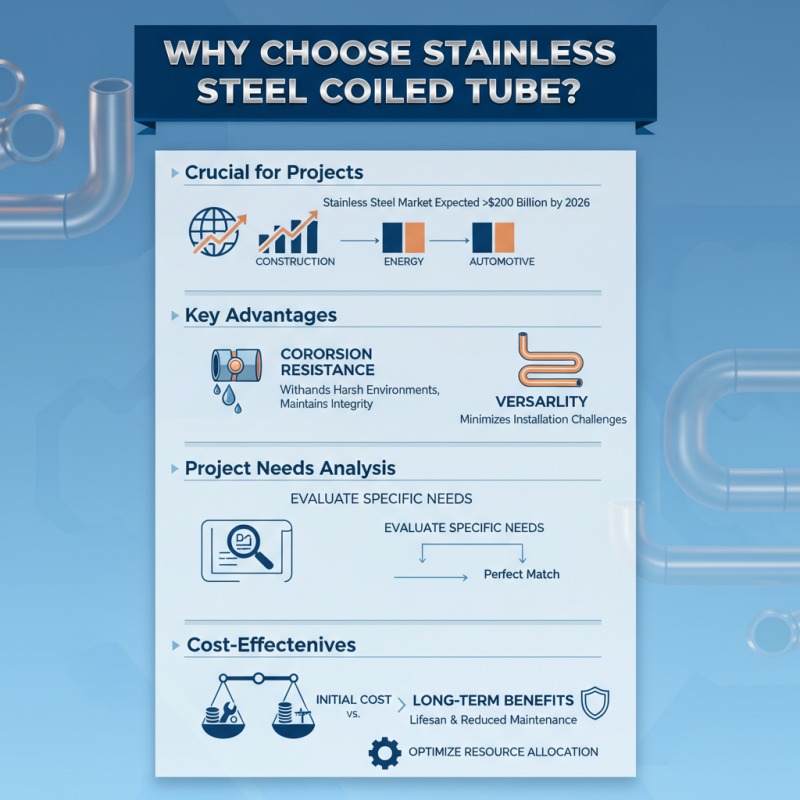
Choosing the right materials for your project is crucial. Among various options, the Stainless Steel Coiled Tube stands out. Research shows that the global stainless steel market is expected to reach over $200 billion by 2026. This growth indicates its vast applications across industries. The use of Stainless Steel Coiled Tubes is particularly pronounced in sectors like construction, energy, and automotive.
One key advantage of Stainless Steel Coiled Tubes is their resistance to corrosion. According to industry reports, they can withstand harsh environments while maintaining structural integrity. Notably, they are more versatile compared to traditional tubes. This adaptability can minimize installation challenges, which is a significant concern for many engineers. However, it's essential to evaluate each project’s specific needs to ensure a perfect match.
While the benefits are numerous, some might question the cost-effectiveness of Stainless Steel Coiled Tubes compared to alternative materials. Cost considerations should not overshadow the long-term advantages. Failing to account for factors like lifespan and maintenance can lead to higher costs down the line. Thus, careful consideration is necessary for optimizing resource allocation in your upcoming projects.
Advantages of Stainless Steel Coiled Tubes in Various Applications
Stainless steel coiled tubes have become a popular choice in many industries. Their resistance to corrosion is a significant advantage. Frequent exposure to harsh environments often leads to failures in other materials. However, stainless steel maintains its integrity, making it reliable for projects requiring durability. The shiny surface also enhances the aesthetic quality of products.
Another vital benefit is flexibility. Coiled tubes can easily bend and shape for various applications without compromising strength. This adaptability is essential in industries like HVAC, where space is limited. Moreover, stainless steel coiled tubes are lightweight. A lighter option can reduce transportation costs and ease installation challenges.
Despite the numerous advantages, some challenges exist. The cost of stainless steel is typically higher than other materials. This might limit its use in certain budget-sensitive projects. Additionally, improper handling can lead to surface scratches. Care must be taken during installation to avoid blemishes. Addressing these issues early in the planning process is crucial for successful integration.
Material Properties of Stainless Steel for Coiled Tubes
Stainless steel coiled tubes have gained popularity in various industries due to their remarkable properties. They possess excellent corrosion resistance, making them suitable for environments exposed to moisture or chemicals. This resistance extends the lifespan of the tubes, reducing replacement costs over time. Furthermore, stainless steel has high tensile strength, contributing to the durability of coiled tubes under pressure. This strength allows for thinner walls, which can save material and reduce weight.
Another crucial aspect is the versatility of stainless steel. It can withstand high temperatures and maintain structural integrity in extreme conditions. These attributes are essential in applications such as heat exchangers and automotive systems. However, it's important to consider the specific alloy used, as not all stainless steel types offer the same level of performance. For instance, some grades may be more prone to pitting in aggressive environments.
While the benefits are evident, there are drawbacks to consider. The initial cost of stainless steel can be higher compared to other materials. Additionally, fabrication can be challenging and may require specialized tools. These factors necessitate careful project planning. Evaluating the application and environmental conditions helps ensure the right choice of material.
Comparative Analysis: Stainless Steel vs. Other Coiled Tube Materials
When comparing stainless steel coiled tubes with other materials, specific characteristics stand out. Stainless steel boasts excellent corrosion resistance. It can withstand harsh environments better than copper or plastic tubes. A report from the International Stainless Steel Forum highlights that stainless steel has a lifespan of over 30 years when properly maintained. In contrast, plastic tubes tend to degrade sooner, especially under UV exposure.
Another important factor is strength. Stainless steel has superior tensile strength compared to aluminum. This allows for safer operation under high pressure. According to the American Society of Mechanical Engineers, stainless steel coiled tubes can handle pressures up to 3,000 psi, far exceeding the capabilities of other materials like copper. However, one must consider that stainless steel can be heavier and less flexible, which could complicate installation.
Tips: Always evaluate the specific requirements of your project. Consider factors such as pressure, temperature, and environmental conditions. Conducting a thorough analysis can lead to better material selection. It’s also beneficial to seek expert opinions when evaluating systems requiring coiled tubes. Balancing performance and cost is key.
Cost-Effectiveness and Longevity of Stainless Steel Coiled Tubes
When considering materials for your next project, stainless steel coiled tubes stand out for their cost-effectiveness and longevity. These tubes are durable and resistant to corrosion. This means they require less maintenance over time, which can lead to significant savings. The initial investment may be higher than other materials, but the long-term benefits are hard to ignore.
For many applications, including heat exchangers and plumbing systems, stainless steel coiled tubes prove reliable. Their ability to withstand high pressures and temperatures makes them ideal in demanding environments. However, it's crucial to ensure proper selection and installation. Some projects may not require the strength that stainless steel provides. This can lead to overspending on materials that exceed actual needs.
While stainless steel coiled tubes have many positive attributes, they are not without downsides. They can be harder to find in some regions, leading to delays. Additionally, the need for specialized tools during installation can increase labor costs. Reflecting on your project's specific requirements is essential. It ensures you make the most informed decisions regarding materials, balancing cost and performance effectively.
Why Choose Stainless Steel Coiled Tube for Your Next Project? - Cost-Effectiveness and Longevity of Stainless Steel Coiled Tubes
| Property | Stainless Steel Coiled Tube | Traditional Metal Tube |
| Corrosion Resistance | Excellent | Moderate |
| Longevity | Up to 50 years | 10-20 years |
| Weight | Lightweight | Heavier |
| Cost | Higher Initial Cost | Lower Initial Cost |
| Maintenance | Minimal | Frequent |
Environmental Benefits of Using Stainless Steel in Projects
Stainless steel coiled tubes offer significant environmental benefits for various projects. One of the main advantages is their recyclability. Unlike other materials, stainless steel can be recycled without losing its properties. This means less waste in landfills and a reduced need for new raw materials.
Using stainless steel in construction and manufacturing also minimizes the carbon footprint. The energy required to produce stainless steel has decreased over time due to better technology. This results in lower emissions. Furthermore, stainless steel resists corrosion, leading to longer-lasting structures. This durability means fewer replacements over time, which is better for the environment.
However, it’s not all perfect. The extraction of raw materials for stainless steel production can still have environmental impacts. Mining operations may disrupt local ecosystems. Additionally, the production process requires energy, which can contribute to greenhouse gas emissions. It's essential to weigh these factors when choosing materials for projects.