
Blog

China Best Cargo Tie Down Straps Supplier for Global Buyers

Global cargo movement depends on small details. A strap’s webbing, stitching, buckle, and label can determine whether a load stays stable through a long journey. UNCTAD’s Review of Maritime Transport 2024 reported that maritime trade grew by 2.4% in 2023, underscoring the scale of goods moving across supply chains. Yet higher movement alone does not guarantee safer transport. Buyers need clear product specifications and reliable quality checks.

For U.S.-bound shipments, FMCSA rules provide a practical reference: the aggregate working load limit of tiedowns must generally equal at least half the cargo’s weight. That requirement highlights why buyers should verify working load limits, material performance, hardware strength, and test documentation—not rely on appearance. The detail matters.

When comparing a China supplier, request traceable test reports, consistent production records, and samples that match the final order. Check whether labels remain readable after handling, and whether buckles can be operated with gloved hands. These details are easy to overlook. They are not trivial. I cannot verify a named individual expert’s quotation from the material provided, so I have not invented one. Instead, this introduction relies on published trade data and published securement requirements. “Cargo Tie Down Straps” should be evaluated as safety-related equipment, not as a generic commodity. A careful supplier comparison can reduce uncertainty, though no checklist replaces real-world inspection.
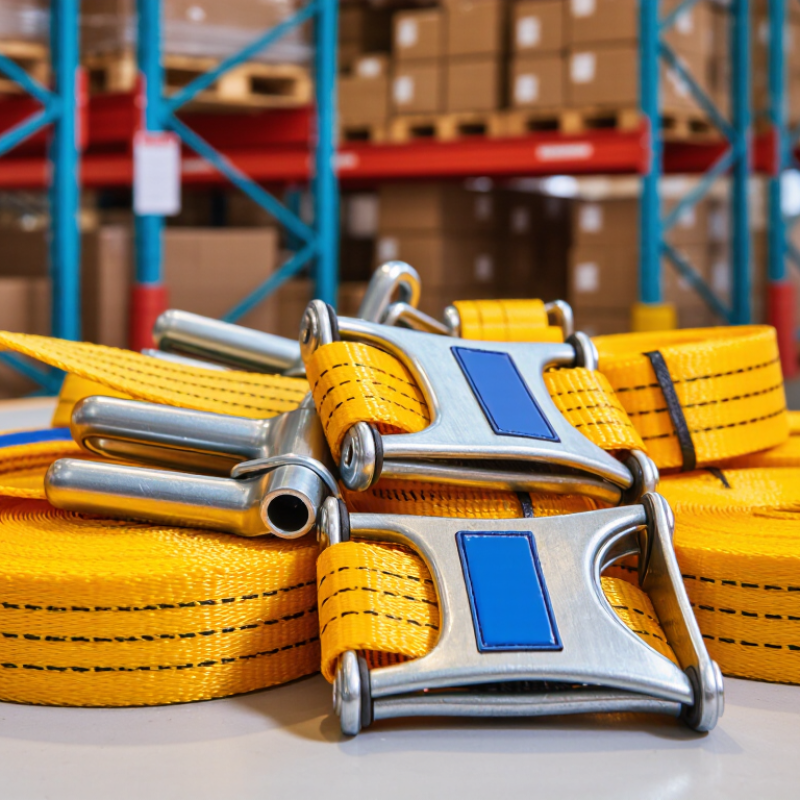
China Best Cargo Tie Down Straps Supplier for Global Buyers

Cargo Tie-Down Straps: Types, Components, and Common Uses

Cargo tie-down straps come in several forms, each suited to different loads and anchor points. Ratchet straps provide strong tension for heavier cargo on trailers and flatbeds. Cam-buckle straps are easier to adjust by hand and often suit lighter items. Winch straps work with trailer-mounted winches to secure broad, heavy loads. The right choice depends on the cargo, anchor points, and rated working load limit.

A typical strap includes woven webbing, a tensioning device, and end fittings such as hooks or flat hooks. Polyester webbing resists stretching and handles outdoor use well, but sharp edges can still cut it. Sewn loops can connect to compatible anchors, while edge protectors help prevent abrasion. Details matter. Check the tag for capacity, and never judge strength by strap width alone.

These straps commonly hold pallets, machinery, furniture, and building materials during road transport. On a flatbed, position straps over stable parts of the load and connect them to rated anchor points. In a delivery van, cam-buckle straps can limit shifting without excessive tension. Inspect webbing, stitching, hooks, and ratchets before use; replace straps with cuts, fraying, or deformation. A clean surface can feel reassuring, but it is not an inspection. It is easy to miss wear near a seam.

How to Evaluate Cargo Tie-Down Strap Suppliers in China

China Best Cargo Tie Down Straps Supplier for Global Buyers
How to Evaluate Cargo Tie-Down Strap Suppliers in China

Choosing a cargo tie-down strap supplier in China takes more than comparing unit prices. Ask how the working load limit is established, and request test records for the exact strap construction. Check webbing width, fiber type, stitching pattern, and hardware finish. A useful test report identifies what was tested and under which conditions. Vague certificates deserve follow-up.

Request samples from production, not just a showroom set. Inspect the bar tacks for even stitching, feel the webbing for consistent thickness, and operate the ratchet several times. Ask whether the supplier can keep material and inspection records for each order. Communication matters, too. A slow or unclear reply during sampling may become a bigger issue when specifications change. I would not rely on a polished catalog alone; it can leave important details unanswered.

Tips: Ask for a written specification sheet and a sample approval process. Check the supplier’s production capacity and quality checks with specific questions. Small details matter. Keep your own inspection notes, even when the sample looks good.

How to Evaluate Cargo Tie-Down Strap Suppliers in China

Suggested evaluation weighting for comparing suppliers. These percentages are a procurement framework, not survey results or ratings of specific companies.

How to use it: Verify load-rating claims with test reports, check applicable standards and product traceability, and assess quality controls, delivery capability, customization, and communication. Adjust the weights to match your cargo risks and purchasing needs.

Materials, Manufacturing Processes, and Quality Standards

Reliable cargo tie-down straps begin with suitable webbing and clearly rated hardware. Polyester is widely used because it absorbs little moisture and stretches relatively little under load. Nylon is more elastic, which may suit some applications but can change how a secured load behaves. Material choice should match the cargo, environment, and intended use. Small details matter.

In manufacturing, yarn is woven into webbing, then inspected for width, thickness, and visible defects. Cut ends need effective finishing to limit fraying. Reinforced stitching joins the webbing to fittings; consistent stitch patterns help distribute stress. Metal hooks and buckles should be checked for finish, fit, and deformation. A polished surface alone proves little.

Quality checks should cover dimensions, stitching, hardware, and load performance. Buyers should distinguish working load limits from breaking strength, and request clear test records and batch traceability. Confirm that product labels and instructions match the intended market’s applicable requirements. No test removes every risk. Even sound straps can be damaged by sharp edges, abrasion, or poor storage, so inspection before use remains important. A supplier’s process is credible when records are available and weaknesses are discussed openly.

Customization, Ordering, and International Shipping

For global buyers, a cargo tie-down order should begin with the load, not a catalog photo. Specify strap width, length, material, end fittings, and the working load limit required for your application. Keep working load limit distinct from breaking strength; they are not interchangeable. Share a clear drawing or sample when dimensions matter. Small details matter. A hook that fits one anchor point may not fit another.

Before confirming production, request a written specification, sample, and inspection plan. Check stitching, ratchet operation, labels, and packaging against the agreed requirements. For repeat orders, keep an approved sample and record any changes. Minimum quantities and lead times vary by construction and customization. I would not assume a low sample price predicts the final unit cost; tooling and packaging can change it.

Shipping plans deserve the same care. UNCTAD’s Review of Maritime Transport 2024 reported that global maritime trade grew by 2.4% in 2023, while disruptions made routes and schedules less predictable. Ask for carton dimensions, gross weight, packing lists, and the expected dispatch window before booking freight. Confirm who handles export documents and how delays will be communicated. Build in a buffer. It may feel overly cautious, but a missed vessel can disrupt a delivery plan. Check destination-specific requirements with your customs broker, since import procedures differ by market.

China Best Cargo Tie Down Straps Supplier for Global Buyers - Customization, Ordering, and International Shipping
Category Item Typical Details Buyer Checks
Product range Ratchet tie-down straps Common webbing widths include 25 mm, 35 mm, and 50 mm; assemblies may use ratchets, end fittings, and protective sleeves. Match strap width, length, hardware, and labeled capacity to the cargo and securing method.
Product range Cam buckle straps Often selected for lighter-duty bundling and securing; available in several webbing widths and lengths. Confirm the buckle’s rated capacity and intended application; do not assume it is equivalent to a ratchet assembly.
Materials Webbing and hardware Polyester webbing is commonly used. Hardware options can include hooks, flat hooks, wire hooks, and D-rings, depending on the assembly. Specify material, finish, hook type, and any corrosion-resistance requirements for the operating environment.
Capacity and compliance Rated capacity and marking Working Load Limit (WLL) and Lashing Capacity (LC) are different rating terms. European road-lashing straps may be specified to EN 12195-2. Request the applicable test documents and product label details. Verify ratings for the complete assembly, not just the webbing.
Customization Length, color, and accessories Possible options include strap length, webbing color, protective sleeves, and selected end fittings, subject to production capability. Provide a written specification or drawing and approve a production sample where fit or appearance is critical.
Customization Private-label packaging Packaging and printed inserts can sometimes be customized; available options depend on the order and destination-market requirements. Confirm artwork, language, barcode requirements, packaging quantities, and any required warnings before production.
Ordering Purchase specification A clear inquiry can state strap type, width, length, capacity, hardware, quantity, packaging, destination, and requested compliance documentation. Ask for a written quotation that identifies the exact configuration, currency, Incoterms® rule, and quotation validity.
Ordering Samples and production schedule Sample availability and production lead time vary with customization, order quantity, material availability, and factory schedule. Confirm sample charges, approval steps, production timing, and inspection arrangements in writing before placing an order.
International shipping Transport mode Sea freight is commonly considered for larger shipments; air freight may suit time-sensitive or smaller shipments. Availability and cost depend on the route and shipment details. Compare transit time, freight charges, local handling, insurance, and customs responsibilities for the selected Incoterms® rule.
International shipping Export and import documents Common shipment documents may include a commercial invoice, packing list, and bill of lading or air waybill. A certificate of origin may be needed depending on the destination and transaction. Check destination-country customs, tariff classification, labeling, and document requirements with the importer or customs broker.
Quality checks Inspection and traceability Inspection can cover dimensions, stitching, hardware function, labels, packaging, and agreed test records. Agree on acceptance criteria and any pre-shipment inspection before production begins.
Specifications and shipping arrangements vary by product, supplier, route, and destination. Confirm final ratings, compliance, lead time, costs, and documentation in the written quotation and order documents.

Comparing Suppliers and Choosing the Right Partner

Comparing cargo tie down strap suppliers starts with the details behind the quoted price. Ask for webbing width, material, stitching pattern, hardware type, and clearly stated load ratings. Do not confuse breaking strength with working load limit; they describe different things. Check whether product labels match the specification sheet and sample. Small inconsistencies matter. A neat catalogue is not enough.

Request samples and inspect the stitching, ratchet movement, hooks, and edge finish. If possible, test straps under conditions similar to your intended use, while following a qualified testing process. Ask how the supplier checks incoming materials and finished goods, and whether production records can be traced by batch. Compare lead times, minimum order quantities, packaging, and how defects are handled. A low price can become costly if shipments arrive late or specifications change without notice. It happens.

The right partner should answer technical questions directly and flag limits rather than promise every requirement. Share your load types, transport conditions, and expected order volume before comparing final offers. For example, straps used outdoors may need different hardware considerations than those stored inside a dry warehouse. Communication is part of quality control. I would still review the first production order carefully; a good sample does not guarantee every shipment will match.