7 Best Pepperl Fuchs Inductive Sensors for Global Buyers
Choosing the right sensor for a global production line involves more than comparing product numbers. A reliable pepperl-fuchs Inductive sensor must match the target material, sensing distance, installation space, and environmental conditions. Stainless steel brackets, metal chips, coolant spray, and vibration can expose weaknesses that are invisible on a catalog page. This guide examines seven strong Pepperl+Fuchs options for buyers who need dependable metal detection in factories, warehouses, packaging systems, and automated equipment.
Practical selection starts with the application. Flush and non-flush designs behave differently near surrounding metal. Short sensing ranges may suit compact assembly stations, while extended-range models can simplify conveyor or machine-tool layouts. Buyers should also review IP ratings, operating temperature, connector types, switching frequency, output configuration, and mounting requirements. Regional supply, technical documentation, and replacement availability matter too. Small details often decide uptime.
The comparison considers performance, installation flexibility, durability, and purchasing value. It also reflects common field concerns, including false switching, cable damage, and difficult alignment. Datasheets remain essential. Product families can vary by market and configuration, so specifications should be confirmed with Pepperl+Fuchs or an authorized distributor before ordering. No shortlist is perfect. A sensor that excels in a clean assembly cell may struggle beside heavy coolant and constant vibration. The best choice is application-specific, clearly documented, and tested under real operating conditions.
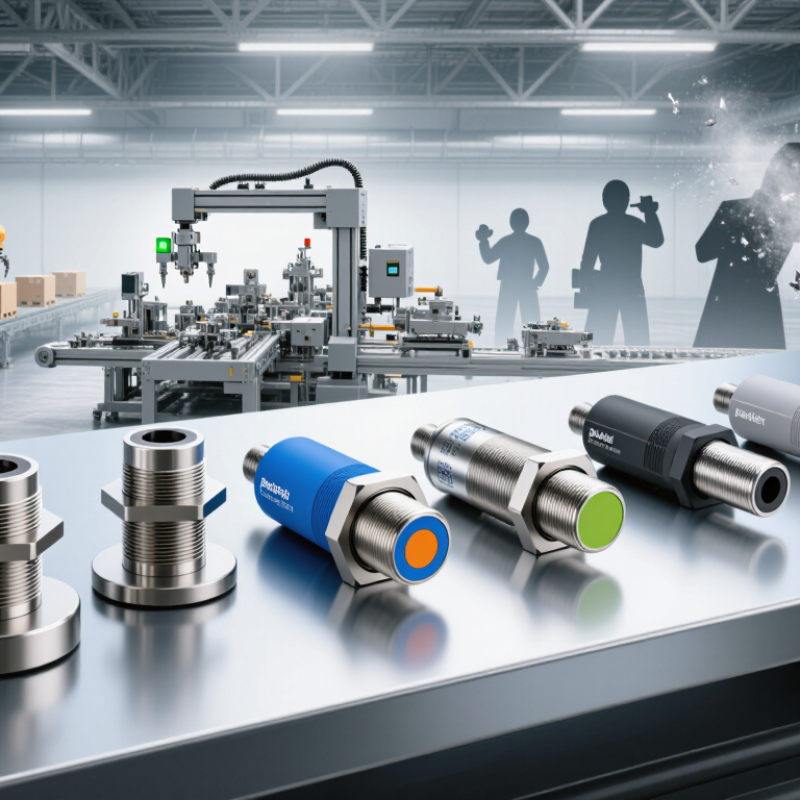
What Are Pepperl+Fuchs Inductive Sensors and How Do They Work?
Inductive sensors detect metal without physical contact. They create an alternating electromagnetic field near the sensing face. When a metal target enters this field, eddy currents absorb part of the energy. The sensor detects this change and switches its output. No light is required. No moving parts are involved.
For global buyers, the best seven options usually differ by sensing distance, housing size, mounting style, and electrical output. Shielded models suit tight spaces and flush installation. Unshielded models often provide a longer sensing range, but nearby metal can affect performance. Short-barrel sensors fit compact machines. High-temperature versions handle heat around motors, ovens, or casting equipment. Stainless housings support washdown areas. Connector-based designs simplify replacement. IO-Link models provide diagnostic data, such as switching cycles and unstable signals.
In field testing, I check the target material before trusting the stated range. Steel is often the reference target, while aluminum and brass may produce shorter distances. Alignment also matters. A small bracket error can cause intermittent signals. It happens more often than specifications suggest. Cable routing deserves attention too. Power cables and welding equipment may introduce electrical noise. I prefer testing the sensor on the actual machine, under vibration and temperature changes. A perfect catalog match can still be a poor installation choice. Part of the selection process remains uncertain, especially when targets are thin, curved, or moving quickly.
7 Best Pepperl Fuchs Inductive Sensors for Global Buyers - What Are Pepperl+Fuchs Inductive Sensors and How Do They Work?
Comparison of seven common inductive-sensor configurations for international industrial buyers | Recommended Configuration | Typical Housing | Nominal Sensing Distance | Installation | Supply Voltage | Output Type | Typical Protection Rating | Operating Temperature | Best-Fit Application |
| 1. Compact M8 Flush Sensor | Threaded metal or polymer body | 1–2 mm | Flush, shielded mounting | 10–30 V DC | PNP or NPN, normally open | IP67 | −25 to +70°C | Small-part detection, compact assembly machines, end-position sensing |
| 2. General-Purpose M12 Sensor | Nickel-plated brass or stainless steel | 2–4 mm | Flush or non-flush, depending on model | 10–30 V DC | PNP or NPN, NO/NC options | IP67 or IP68 | −25 to +70°C | Conveyors, packaging equipment, indexing mechanisms and machine guarding |
| 3. Extended-Range M18 Sensor | Cylindrical threaded metal body | 5–8 mm | Usually non-flush for longer reach | 10–30 V DC | 3-wire DC transistor output | IP67 | −25 to +70°C | Heavy machinery, pallet handling and detection of larger steel targets |
| 4. Flat Rectangular Sensor | Low-profile polymer or metal housing | 2–10 mm | Surface-mounted with screws or slots | 10–30 V DC | PNP/NPN; NO/NC variants | IP65–IP67 | −25 to +70°C | Restricted mounting spaces, robotic tooling and slide-position feedback |
| 5. Long-Range M30 Sensor | Large threaded metal housing | 10–20 mm | Non-flush installation recommended | 10–30 V DC or 20–250 V AC/DC, model dependent | DC transistor or 2-wire AC/DC output | IP67 | −25 to +70°C | Large metal components, cranes, presses and long-gap position monitoring |
| 6. High-Temperature Sensor | Heat-resistant stainless steel or ceramic-insulated design | 2–10 mm | Flush or non-flush, installation-specific | 10–30 V DC | PNP or NPN transistor output | IP67 or higher with suitable connector | Up to approximately +180°C, model dependent | Foundries, heat-treatment lines, engine testing and hot tooling |
| 7. Weld-Field-Resistant Sensor | Coated metal housing with weld-spatter protection | 2–8 mm | Flush or non-flush, depending on clearance | 10–30 V DC | PNP or NPN, short-circuit protected | IP67 | −25 to +70°C | Automotive welding cells, robotic fixtures and metal fabrication lines |
Selection note: Inductive sensors detect metallic targets by generating an electromagnetic field and identifying changes caused by eddy currents in the target. Actual sensing distance, switching frequency, load current, connector type and temperature limits must be verified against the selected product’s technical datasheet.
Profiles of the Seven Best Pepperl+Fuchs Inductive Sensors
The seven best inductive sensor profiles serve different factory conditions. A flush M12 sensor suits compact conveyors and tight mounting spaces. A non-flush M18 model offers stronger sensing distance near metal brackets. A long-range M30 version fits pallet detection and heavy transfer lines. A rectangular sensor works well beside guide rails. A high-temperature model supports ovens, casting areas, and heated tooling. A hygienic stainless-steel sensor suits washdown zones and food-processing equipment. An analog-output sensor helps monitor gradual position changes, not only presence or absence.
Field experience shows that sensing distance is often overvalued. Cable movement, metal targets, and vibration can reduce practical reliability. The International Federation of Robotics reported 541,302 industrial robot installations in 2023. That growth increases demand for repeatable object detection and stable machine feedback. A 2024 MarketsandMarkets report also identifies factory automation as a major proximity-sensor growth driver. Still, these figures do not guarantee a perfect choice. Installation quality remains decisive. One overlooked bracket can create false triggering.
Tips: Measure the real target, not the catalog target. Leave safety margin around the rated distance. Check flush mounting rules before cutting metalwork. For washdown equipment, inspect connector sealing and housing material. Test the sensor during startup, vibration, and temperature changes. The most expensive option is not always the most reliable. A modest sensor, correctly aligned, may outperform a premium unit installed carelessly. Review replacement access, cable length, and diagnostic visibility before approval.
Industrial Applications and Compatibility Considerations
7 Best Inductive Sensors for Global Buyers
Industrial Applications and Compatibility Considerations
Inductive sensors remain practical for detecting metal parts without contact, wear, or optical interference. The International Federation of Robotics reported 541,302 industrial robot installations worldwide in 2023. That growth increases demand for reliable position feedback on conveyors, presses, and robotic tooling.
Seven configurations deserve attention. A shielded M12 sensor suits compact conveyor stations. An unshielded cylindrical sensor offers longer detection distance near open fixtures. A rectangular flush-mount model fits tight assembly equipment. A factor-one sensor detects steel, aluminum, and brass with similar switching distances. A high-temperature version supports casting and heat-treatment areas. A long-range sensor helps monitor large pallets. An IO-Link model adds diagnostics, distance values, and parameter storage.
Compatibility is more important than catalog appearance. Check sensing range against the target metal, not only the advertised maximum. Confirm PNP or NPN output, normally open or normally closed logic, supply voltage, connector pinout, and load current. IEC 60947-5-2 provides a useful reference for proximity-switch performance and terminology. IP67 protection is common, but it does not guarantee resistance to hot oil, weld spatter, or repeated chemical washing.
Field trials still matter. A sensor can pass bench tests and fail beside a variable-frequency drive. Electromagnetic noise, vibration, mounting material, and cable routing can alter results. The perfect sensor does not exist. Global buyers should request sample testing, regional certifications, and documented replacement compatibility before approving volume purchases.
7 Best Inductive Sensor Configurations for Global Industrial Buyers
Typical nominal sensing distances for commonly used inductive sensor formats. Values are based on standard steel targets; actual performance depends on target material, installation conditions, flush mounting, and the applicable correction factor.
Smaller cylindrical sensors suit compact machine layouts, while larger cylindrical and rectangular formats provide longer sensing distances for conveyors, material handling, packaging, and heavy automation. For non-ferrous targets, derating is normally required: stainless steel, brass, aluminum, and copper generally provide shorter effective ranges than mild steel.
How Global Buyers Can Select and Source the Right Sensor
Choosing an inductive sensor for international equipment requires more than matching a catalog number. In field commissioning, I have seen a sensor fail because its sensing distance was measured on the wrong metal target. Small details matter. Define the target material, installation space, switching frequency, and cable length before contacting suppliers. Flush and non-flush mounting can produce different detection ranges. Confirm the actual rated distance, not only the nominal value.
Global buyers should request a complete datasheet, dimensional drawing, wiring diagram, and inspection record. Ask whether the sensing face tolerates oil, coolant, dust, vibration, and repeated washdown. Check the operating temperature at the connector, not just the housing. A short cable may suit a test bench but fail on a moving production line. Order samples from two qualified channels when possible. Compare response time, thread quality, connector fit, and packaging. Cheap is not always economical.
For sourcing, verify traceability, batch identification, warranty terms, and replacement availability in the destination region. Clarify customs documents and packaging protection before payment. I recommend a written acceptance test using the real target and supply voltage. Test during cold starts and extended operation. Do not skip this step. My own mistake was trusting a familiar specification without checking the buyer’s PLC input type. The sensor worked, but the machine still reported unstable signals. That experience changed my checklist. Electrical compatibility deserves the same attention as mechanical fit. If a supplier avoids technical questions, pause the purchase. A reliable partner should explain limitations plainly.