7 Best Mirror Finish Stainless Steel Sheet Manufacturers
Mirror Finish Stainless Steel Sheet can bring crisp reflections to elevator panels, kitchen backsplashes, retail displays, and architectural details. Yet appearance is only part of the decision. A clear, even reflection depends on polishing consistency, surface protection, and careful handling from production through delivery. Small scratches show quickly. That matters. This guide introduces seven manufacturers for buyers comparing finish quality, available grades, sheet dimensions, and customization options. Rather than treating any ranking as universal, it highlights practical questions that help narrow the field. Buyers should confirm the specified grade, thickness tolerance, protective film, and inspection process before placing an order. Product names and finish descriptions can vary between suppliers.
The comparison also considers service details that affect real projects: sample availability, packaging, communication, and expected lead times. These points may seem routine, but a beautifully polished sheet is less useful if it arrives marked or misses a fabrication schedule. Ask for current technical data and clear photographs under consistent lighting; reflections can make surface defects difficult to judge in a single image. Where appearance is critical, request a sample and assess it under the lighting conditions of the finished space. No manufacturer is the right fit for every application. Budget, order size, processing needs, and delivery location all matter, and the best choice may involve trade-offs. This overview offers a starting point, not a substitute for checking specifications directly with each supplier.
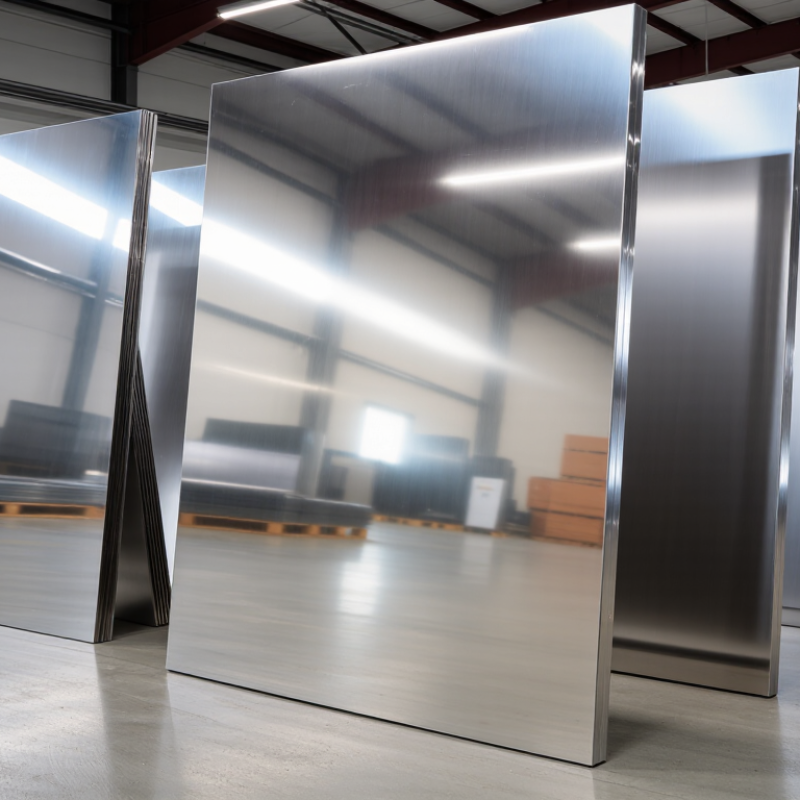
Understanding Mirror Finish Stainless Steel Sheets
A mirror finish stainless steel sheet is polished until its surface reflects clear shapes and light. The finish is commonly called No. 8, though suppliers’ descriptions can vary. Polishing removes surface irregularities, but it does not make the sheet immune to scratches or fingerprints. Its appearance also depends on flatness, thickness, lighting, and viewing angle. A bright sheet may still show distortion under strong overhead lights.
The scale of stainless production offers useful context, not a guarantee of finish quality. The International Stainless Steel Forum reported 58.4 million tonnes of global stainless steel melt shop production in 2023, up 4.6% from 2022. This broad industry figure says nothing about an individual sheet’s polishing consistency. Buyers should request a finish sample and confirm the grade, thickness tolerance, protective film, and inspection method. Reflective surfaces reveal small handling marks quickly. That detail is easy to underestimate.
Tips: View samples under the lighting used at the installation site. Check the reflection from several angles, and inspect edges for scratches. Ask whether the stated finish is measured by a defined specification; appearance alone can be subjective. A protective film helps during handling, but careless removal can still leave marks.
Key Manufacturing Processes and Quality Standards
Mirror-finish stainless steel begins with consistent feedstock, often 304 or 316 grade, and careful surface preparation. Rolling, annealing, and pickling establish the sheet’s base condition before progressively finer abrasives remove scratches. Final buffing creates the reflective surface, but excessive pressure can cause heat tint or distortion. Inspect under angled light. Small defects stand out.
The World Stainless Association reported 58.4 million tonnes of global stainless-steel melt-shop production in 2023. That scale makes repeatable process control essential. Buyers should ask how mills control thickness, flatness, surface waviness, and batch-to-batch appearance. ASTM A480/A480M covers general requirements for flat-rolled stainless products; ASTM A240/A240M specifies relevant grades and properties. These standards do not define every mirror finish, so suppliers and buyers should agree on a physical sample and measurable acceptance criteria. A gloss reading can help, but it may not reveal haze or polishing lines. Check the sheet from several angles. A practical inspection also records protective-film condition, edge quality, and visible defects before shipment. Even a good inspection can miss subtle distortion, so independent review may be worthwhile for critical panels.
7 Best Mirror Finish Stainless Steel Sheet Manufacturers — Key Manufacturing Processes and Quality Standards
Chromium content is one material-composition check used when verifying stainless steel sheet against its specified grade. The chart shows the minimum chromium content by weight for common grades under ASTM A240/A240M; it does not rate mirror finish quality, which must be assessed separately against the purchase specification.
Criteria for Evaluating Stainless Steel Sheet Manufacturers
A reliable mirror-finish stainless steel sheet manufacturer should prove consistency, not just show a bright sample. Request mill test certificates for each batch, confirming the grade and chemical composition. Check thickness tolerance, flatness, edge quality, and surface finish against the purchase specification. ASTM A480/A480M describes flat-rolled stainless steel requirements, including finish designations; use it to define acceptance criteria clearly. A polished sheet can look flawless under soft showroom lights, then reveal scratches under direct inspection.
The World Stainless Association reported global stainless-steel melt shop production of 58.4 million tonnes in 2023, up 4.6% from 2022. This industry data indicates broad production capacity, but scale alone says little about mirror quality. Ask manufacturers for inspection records, traceability, protective-film details, and samples from regular production. Compare samples under consistent lighting, and inspect both the center and edges. Small differences matter.
Tips: Specify the required finish, grade, thickness, and inspection method in writing. Ask how defects are recorded and handled. Then verify the answers against a real batch. Paperwork helps, but it is not the whole story.
Profiles of Seven Mirror Finish Stainless Steel Sheet Manufacturers
A large integrated mill suits buyers who need steady volume and traceable production. Its strength is process control, from steel selection to polishing. Ask how it checks surface consistency across a full coil, not just a sample. A precision cold-rolling specialist may offer tighter thickness control and flatter sheets. Its mirror finish can look excellent under showroom lights, yet reveal waviness beside a window. Inspect a full-size sample.
A decorative finishing workshop is often flexible with patterns, protective films, and small orders. It may be a practical fit for interior panels. A coil-processing manufacturer can cut sheets to specified lengths and widths, reducing handling at the next production stage. Confirm edge condition and film adhesion. Small details matter. A custom-batch producer can accommodate unusual dimensions, though setup costs may rise on short runs.
An architectural sheet supplier should understand fabrication risks, including fingerprints, scratches, and visible weld marks. Request guidance on cleaning and handling before installation. An export-focused manufacturer may provide detailed inspection records and consistent packing, but shipping protection still deserves scrutiny. These profiles are not rankings. Compare steel grade, thickness tolerance, flatness, finish uniformity, and sample quality against your application. One polished sample is useful, but it cannot prove every sheet will match.
Comparing Product Ranges and Industry Applications
Mirror-finish stainless steel sheet manufacturers differ in more than surface shine. Some offer standard sheets in common grades and thicknesses, while others provide custom cutting, protective film, or tighter flatness control. Compare finish consistency, available dimensions, and documentation alongside price. A bright sample is useful, but it may not represent every sheet in a large order.
Applications help narrow the choice. Interior panels, elevator doors, and decorative displays often prioritize clear reflections and scratch-free handling. Food-service equipment may need a suitable stainless grade, smooth welds, and cleaning-friendly fabrication. Outdoor architectural panels require careful consideration of exposure, drainage, and maintenance; a mirror finish alone does not guarantee corrosion resistance.
Even experienced buyers can overlook handling marks, so inspect edges and film condition before fabrication.
Tips: Request a sample and confirm its grade, thickness, finish, and protective-film details in writing. Check the sheet under realistic lighting. Small reflections can reveal waviness that a product photo misses.