
Blog

10 Best Cargo Straps for Global Shipping in 2026?

Global shipping puts ordinary cargo straps to an unforgiving test: salt air, long vibration, sharp pallet edges, and repeated handling. UNCTAD’s Review of Maritime Transport 2024 reports that more than 80% of world trade by volume moves by sea. That scale makes secure, well-documented load restraint essential—not a minor purchasing detail. A strap that looks sturdy on a warehouse floor may behave differently after hours of movement inside a container.

The 10 Best Cargo Straps for Global Shipping in 2026 compares practical features shippers can verify: rated capacity, working load limit, webbing width, end fittings, buckle design, and resistance to wear. The U.S. Federal Motor Carrier Safety Administration’s cargo-securement rules also show why restraint must be matched to the load, rather than judged by appearance alone. Check labels and manufacturer instructions. Replace webbing with cuts, fraying, or damaged stitching. Small defects matter.

As cargo-securement expert Steve Voss puts it, “A strap is only as dependable as its rating, its condition, and the way it is applied.” Treat that as a working principle, not a substitute for product-specific instructions. There is no single best strap for every shipment; load shape, surface, and handling conditions change the choice. This guide aims to make comparisons clearer, though product specifications still deserve a careful second look before purchase.
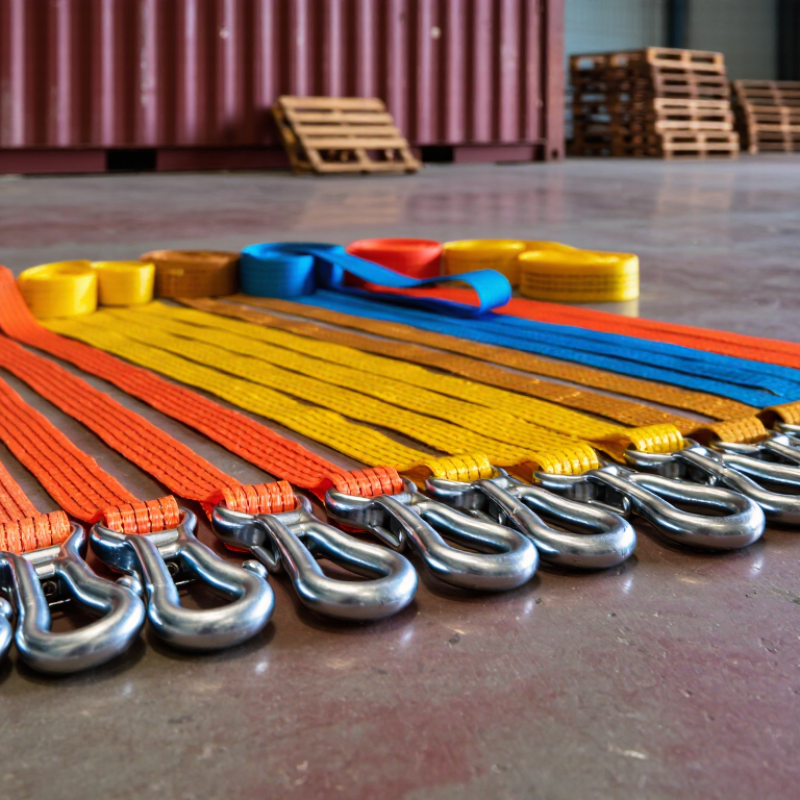
10 Best Cargo Straps for Global Shipping in 2026?

What Cargo Straps Are and How They Secure International Shipments

Cargo straps are tensioned webbing assemblies that hold freight against a truck, container, or pallet. They limit shifting during braking, cornering, vibration, and transfers between road, rail, and sea. A typical setup includes a ratchet, end fittings, and webbing; the working load limit (WLL) indicates its rated capacity. Straps do not make cargo immovable. They work with suitable blocking, bracing, and balanced loading.

For U.S. road transport, Federal Motor Carrier Safety Administration rules require the aggregate WLL of tiedowns to equal at least half the cargo’s weight. The FMCSA Cargo Securement Handbook also explains how tiedowns contribute to securement. For international container packing, the IMO/ILO/UNECE CTU Code offers guidance on distributing and restraining cargo.

A strap’s label, condition, angle, and contact with sharp edges all matter. I have seen a neat-looking load loosen after settling; inspection still feels easy to overlook.

Tips

Check each strap’s WLL and label before use. Protect webbing from sharp corners, keep ratchets accessible, and retighten after the load settles when safe. Never knot damaged webbing or rely on one strap alone. A small detail. Still, it can change the whole shipment.

Which Types of Cargo Straps Suit Different Freight and Shipping Methods

For palletized freight moving by road, choose polyester webbing straps with rated ratchets. They offer controlled tension without the sharp edges of chains. Place corner protectors over cardboard boxes or painted machinery. A strap can still crush a soft load if tightened too far. For heavy equipment, use chains only when the cargo and approved anchor points can handle their forces. Check working load limits, not just breaking strength.

Shipping method matters. In containers, webbing straps can restrain cartons and machinery against movement, while dunnage fills gaps that straps cannot safely bridge. The UNCTAD Review of Maritime Transport 2024 reports that shipping carries over 80% of world merchandise trade by volume. That scale makes consistent loading practices important, but it does not make one strap suitable for every cargo. For air freight, use lightweight, low-profile straps compatible with the unit load device and its handling limits. On rail, select securement designed for vibration and longer transit. Inspect buckles, stitching, and anchor points before departure and after handling. Small frays matter. I would not assume a tight strap is a safe strap; load shape, friction, and restraint angles all deserve a second look.

How to Evaluate Cargo Straps for Strength, Durability, and Compliance

A cargo strap should be judged by its working load limit, not its breaking strength alone. The working load limit indicates the load permitted under specified conditions; breaking strength describes failure in a test.

Check that the rating is clearly marked and supported by product documentation. If a label is missing or unreadable, the strap is difficult to verify. Better not to guess.

Durability depends on more than webbing thickness. Look for secure stitching, intact hooks or fittings, and materials suited to expected moisture, sunlight, and handling.

Before loading, check for cuts, fraying, corrosion, or damaged ratchets. A strap can look sturdy and still have hidden wear. That is easy to overlook.

For compliance, compare markings and documentation with the shipment’s route, cargo requirements, and applicable transport rules; requirements can differ by mode and destination.

Keep inspection records, and replace questionable straps rather than relying on appearance. Even careful checks are imperfect, so allow for uneven loads and movement during transit. A little extra care matters.

10 Best Cargo Straps for Global Shipping in 2026: Key Features and Uses

10 Best Cargo Straps for Global Shipping in 2026: Key Features and Uses

Choosing cargo straps starts with the load, not the label. A flatbed carrying timber needs different restraint than a palletized machine inside a container. Ratchet straps provide controlled tension for heavy, stable loads, while cam-buckle straps suit lighter items that could be crushed by excessive force. Endless loop straps can secure bundles without metal fittings pressing directly against cargo.

Check the working load limit, strap width, stitching, and hardware before use. The limit must suit the complete restraint system, including its anchor points; a strong strap cannot compensate for a weak attachment. Polyester webbing is commonly chosen for its low stretch and resistance to moisture, but cuts, fraying, and damaged stitching can still make it unsafe. For sharp-edged cargo, add corner protectors. They help prevent abrasion. Inspect straps before every trip and replace damaged ones rather than trusting a quick repair. It is easy to focus on strength alone; I would also check whether workers can tension and release the ratchet safely.

Tips: Match strap capacity to the cargo and securement plan. Keep webbing flat, avoid knots, and protect it from sharp edges. After loading, recheck tension when practical, since cargo can settle during handling or transit. Store clean, dry straps out of direct sunlight.

Cargo Tie-Downs for Global Shipping in 2026

Example minimum tie-down counts by cargo length under the U.S. FMCSA general rule for articles that are not blocked or immobilized.

For articles longer than 10 feet, the general rule requires two tie-downs for the first 10 feet and one additional tie-down for each additional 10 feet or fraction thereof. Requirements vary by cargo and jurisdiction; check applicable regulations and securement details. Source: U.S. FMCSA, 49 CFR § 393.110.

How to Select, Inspect, and Maintain Cargo Straps for Safe Transport

Selecting cargo straps for global shipping starts with the load, not the color or width of the webbing. Check the strap’s working load limit against the cargo weight and the restraint plan. A strap’s breaking strength is not its safe working capacity. Use enough straps to control movement in every direction, and follow the equipment maker’s instructions. Small details matter: a pallet corner can cut webbing during a long, rough journey. Add suitable edge protection where straps touch sharp surfaces. Keep straps flat, with no twists or knots.

Inspect every strap before use. Look for frayed fibers, cuts, melted spots, damaged stitching, bent hooks, and unreadable capacity labels. Even a small defect can worsen under repeated vibration. If anything looks questionable, remove the strap from service; guessing is not inspection. Tension the load evenly, then check that the ratchet or buckle is fully engaged. After the vehicle has traveled a short distance, stop safely and recheck tension. Cargo can settle, and straps can loosen.

After unloading, let wet straps dry fully before storage. Brush away grit, and keep them out of direct sunlight and away from chemicals or sharp tools. Store them loosely, not crushed beneath heavy gear. A written inspection log can help teams spot recurring wear, though busy crews may forget to complete it. That gap is worth addressing. A simple check before each trip is better than relying on memory.

10 Best Cargo Strap Types for Global Shipping in 2026 — How to Select, Inspect, and Maintain Them
No. Strap Type Typical Construction Best-Suited Cargo and Use Selection Guidance Inspection and Maintenance
1 Ratchet tie-down with flat hooks Polyester webbing, ratchet tensioner, and flat hooks General palletized freight and machinery with suitable anchor points Choose by the marked working load limit (WLL), webbing width, strap length, and hook compatibility. Use the load restraint plan to determine the required number and arrangement. Check webbing, stitching, ratchet, and hooks before use. Remove from service if damaged, distorted, corroded, or illegibly labeled. Release tension before storage.
2 Ratchet tie-down with wire hooks Polyester webbing with a ratchet and wire-style hooks Loads secured to compatible rings or narrow anchor points Verify that hooks seat fully and cannot slip off the anchor. Do not use a hook on an anchor that is too large, incompatible, or damaged. Inspect hook openings and welds, if present, for deformation or cracks. Check the ratchet for smooth operation and the webbing for cuts or abrasion.
3 Cam-buckle tie-down Webbing tightened by a spring-loaded cam buckle Light-duty loads where controlled, moderate hand tension is appropriate Use only within the WLL shown on the strap label. A cam buckle does not provide the mechanical advantage of a ratchet and is not a substitute when higher tension is required. Confirm the buckle grips the webbing securely and releases correctly. Retire straps with worn teeth, a weak spring, damaged stitching, or webbing that slips under tension.
4 Endless ratchet strap Continuous webbing loop tightened with an integrated ratchet Bundling or securing items where a closed loop is practical Check that the loop fits the load without bearing on sharp edges. Use edge protection where contact could cut or abrade the webbing. Inspect the full loop, including portions that may be hidden around the load. Look for cuts, chemical damage, glazing, pulled stitching, and ratchet faults.
5 Long ratchet lashing Long polyester webbing with a ratchet and end fittings Large items or loads requiring a longer route to approved anchor points Select a length that allows secure attachment and proper ratchet engagement without excessive loose webbing. Avoid routing over sharp corners without protection. Check the entire length for knots, twists, fraying, cuts, and heat damage. Keep dry and clean; do not use a strap with an unreadable capacity label.
6 Heavy-duty ratchet lashing Higher-capacity webbing and ratchet assembly, with capacity specified on its label Heavy cargo when the restraint plan calls for higher-capacity lashing Do not infer capacity from strap width or appearance. Verify the labeled WLL and ensure every hook, anchor, and other component is suitable for the system. Follow the manufacturer’s inspection criteria. Remove any assembly with damaged load-bearing parts, permanent deformation, severe corrosion, or unknown history after a shock load.
7 Protective-sleeve cargo strap Webbing fitted with a replaceable or integrated abrasion sleeve Cargo with edges or surfaces that could abrade the webbing A sleeve helps reduce wear but does not make an unprotected sharp edge safe. Add suitable edge protection and confirm the sleeve does not conceal strap damage. Move or remove the sleeve as permitted to inspect the webbing beneath it. Replace damaged sleeves and retire webbing that has been cut or significantly abraded.
8 Corner-protector-compatible strap Webbing used with separate rigid or flexible edge protectors Crated goods, cartons, and loads with corners that may concentrate strap pressure Choose protectors that fit the cargo shape and keep the strap from contacting vulnerable edges. Ensure protectors stay in place during transport. Inspect both the strap and protectors for cracks, sharp burrs, displacement, or trapped debris. Replace any protector that no longer shields the contact area.
9 Short ratchet strap Short-length webbing with a ratchet and compatible end fittings Compact loads and short tie-down paths with close anchor points Confirm the strap can be tensioned while leaving enough webbing correctly engaged in the ratchet. Do not add knots or improvised extensions. Check for incomplete engagement, frayed ends, and damage near the fittings, where wear can be concentrated. Store with the ratchet closed but not under tension.
10 EN 12195-2-compliant webbing lashing Webbing lashing designed and marked in accordance with EN 12195-2 Road-transport securing where the applicable operating rules accept this equipment Read the permanent label for information such as lashing capacity (LC), standard pretension force (STF) where applicable, material, and traceability. LC and WLL are not interchangeable terms. Inspect before each use and follow the applicable standard and manufacturer instructions. Remove from service if the label is missing or unreadable, or if any component is damaged.
Selection and safety note: “Best” depends on the cargo, restraint method, anchor points, transport mode, and applicable regulations. Use only identifiable, correctly rated equipment; never exceed its marked capacity. Polyester webbing is widely used for cargo lashings, but its suitability can be affected by chemicals, heat, abrasion, and sharp edges. Securement requirements differ by jurisdiction and shipment, so verify the applicable rules and follow the lashing manufacturer’s instructions. This table is a general comparison, not a load-specific engineering plan.