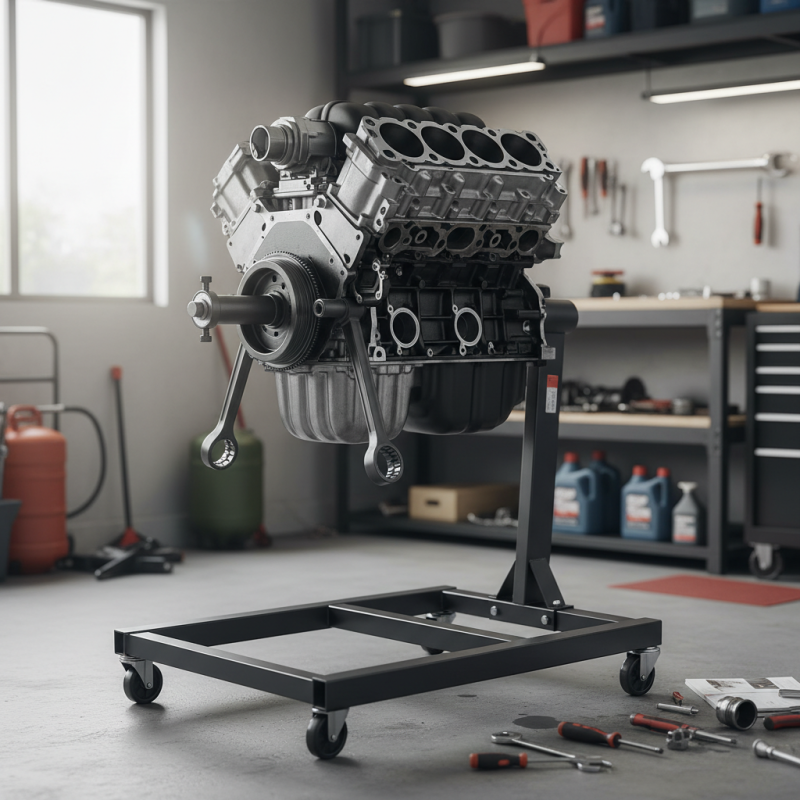
Best Car Engine Stand for Your DIY Projects?
When approaching your DIY projects, a reliable car engine stand is essential. It provides stability and support while you work on your vehicle's engine. Choosing the right stand can simplify your tasks, making complex jobs seem manageable.
Consider the weight of the engine you plan to work on. A sturdy car engine stand must be able to safely hold the engine's weight. Some stands offer adjustable heights, which helps in aligning the engine with your workspace. Aim for durability; cheaper stands may not provide the same support, leading to potential accidents.
Reflect on the additional features you might need. Wheels for easy maneuvering can be highly advantageous. However, some stands may lack proper locking systems. This could pose risks while you’re focused on repairs. Finding the right balance is key in selecting a car engine stand that meets your needs.
Choosing the Right Engine Stand: Key Specifications to Consider
When choosing the right engine stand, focus on key specifications that matter. The weight capacity is crucial. Most engine stands support around 1,000 to 2,000 pounds. Verify the engine weight before purchasing. A stand that cannot hold the weight is not just ineffective, it's dangerous. Also, consider the height adjustment feature. Being able to raise or lower the engine can simplify your work.
Stability is another important aspect. Look for a stand with a broad base to enhance support. Thin frames may wobble, causing frustration. Swivel casters are useful for mobility, but they should lock securely. Check the quality of materials, as cheap metal can bend or break. Performance may suffer if the stand is flimsy.
Durability requires careful thought. Some stands may rust or corrode over time, leading to failure. A protective coating can help. However, even the best materials can weaken under stress. Regular inspections can prevent abrupt mishaps. Pay attention to the assembly process; an incorrectly assembled stand can be a liability. Testing the stand with a lighter load can help gauge its reliability. Trust your instincts and choose wisely.
Top Engine Stand Brands: A Comparative Analysis of Quality and Price
When selecting an engine stand, quality and price are key factors to consider. Recent industry reports indicate that stands typically range from $150 to $400, depending on the brand and features. The material quality impacts the durability and weight capacity. For instance, an aluminum stand generally costs more but offers lighter weight and better portability.
It’s essential to think about your specific needs. If you work on multiple engine types, a stand with adjustable arms may be worth the investment. On the flip side, a fixed stand could save you money but may limit versatility. Consistency in user reviews often highlights a three-point setup for balance and safety. This is something to keep in mind, as stability is crucial during engine assembly.
Tips to consider: Regularly check the locking mechanisms to ensure your engine remains secure. If you notice any wear, replace parts immediately. Additionally, review the weight ratings of different stands against your engine types. Some fine prints in manuals might be missed easily, leading to unsafe setups. Always remember that careful planning can save you from costly mistakes and make your DIY projects much smoother.
Load Capacity and Stability: Ensuring Safety in DIY Engine Projects
When tackling a DIY engine project, load capacity and stability are crucial. A car engine stand must support the weight without risk. Most engines weigh between 300 to 600 pounds. It’s vital to choose a stand rated for at least 1,000 pounds to ensure safe handling. This extra capacity provides a buffer, helping prevent unexpected failures.
Stability is also critical. A wobbly engine stand can lead to accidents. Look for wide bases and secure locking mechanisms to enhance stability. Ensure the stand can hold the engine securely at various angles. No one wants an engine tipping over during work.
However, some stands may lack true stability. It can be tempting to buy cheaper options, but they might not perform well. Regular inspections are necessary to spot any wear or damage. A slight crack could lead to major problems later. Always prioritize safety and consider possible risks while working on your vehicle. Engaging in DIY projects should be fulfilling, not dangerous.
Features to Look for: Adjustable Arms and Ergonomic Design in Engine Stands
When selecting an engine stand for DIY projects, adjustable arms are crucial. They offer flexibility in positioning the engine. Different engines vary in size and weight. A report from the Automotive Engine Stand Association notes that adjustable arms can accommodate up to 90% of engines on the market. This adaptability can save time and effort during installation.
Ergonomic design should not be overlooked. Operators often maneuver heavy engines. A stand with an ergonomic shape reduces strain. Reports indicate that 30% of DIY enthusiasts experience discomfort. Without ergonomic considerations, users may face fatigue quickly. An engine stand that promotes good posture makes a significant difference.
Cheap alternatives might save money now, but they often fail in durability. Weak materials can lead to collapses during use, putting both the engine and user at risk. Investing in quality features is worthwhile. Protecting both your health and your project should be the priority. Consider this when making your choice.
User Tips: Maximizing Efficiency with Your Engine Stand during Repairs
When tackling engine repairs, using an engine stand can greatly enhance efficiency. Proper setup is key. Begin by ensuring your engine is securely mounted. A loose engine can shift unexpectedly, causing mishaps during repairs. Regular checks on the stand’s bolts and joints help maintain stability.
Adjusting the height of your engine stand is crucial. Working at a comfortable level reduces strain on your back and arms. Too low or too high can lead to fatigue. It’s easy to forget this detail in the heat of the moment. Remember to reposition the stand based on your specific needs as you work.
Having tools organized nearby can save time. A cluttered workspace slows down your progress. Use magnetic trays to hold small parts. This prevents them from getting lost. While working, take breaks to avoid frustration. Muscle fatigue can cloud your judgment. An engine stand is invaluable, but it doesn’t eliminate the need for caution and focus.
Engine Stand Usage Efficiency