
Blog
2026 Best Bird Control Spikes for Global Buyers?
Choosing the right Bird Control Spikes in 2026 requires more than comparing prices or counting rows of pins. Global buyers must examine material quality, bird behavior, roof design, climate exposure, and installation conditions. Stainless steel performs well near coastal air, while UV-stabilized polycarbonate may suit lighter commercial applications. Small details matter.
Dr. John Hadidian, a wildlife biologist and urban wildlife-management specialist, has stated, “Prevention works best when it changes the conditions attracting wildlife.” This principle guides responsible bird-control planning. Spikes should discourage landing, not injure birds. Proper spacing, secure bonding, rounded edges, and regular inspections support that goal. Buyers should also check regional animal-welfare requirements before ordering.
This guide compares leading Bird Control Spikes for international projects in 2026. It considers durability, coverage, substrate compatibility, maintenance, appearance, and value. It also reviews performance on ledges, signs, solar equipment, warehouses, and historic façades. No product fits every site. That is the uncomfortable part. A low-cost spike may fail on dusty concrete, while premium steel may be unnecessary for a sheltered ledge.
Field experience suggests that installation quality often decides the result. Clean surfaces, accurate measurements, and sealed fixing points can matter as much as the spike design. Buyers should request technical sheets, sample lengths, warranty details, and installation guidance. Product claims still deserve verification. A careful site assessment remains the most reliable starting point for safe, lawful, and humane bird management.
What Bird Control Spikes Are and How They Work
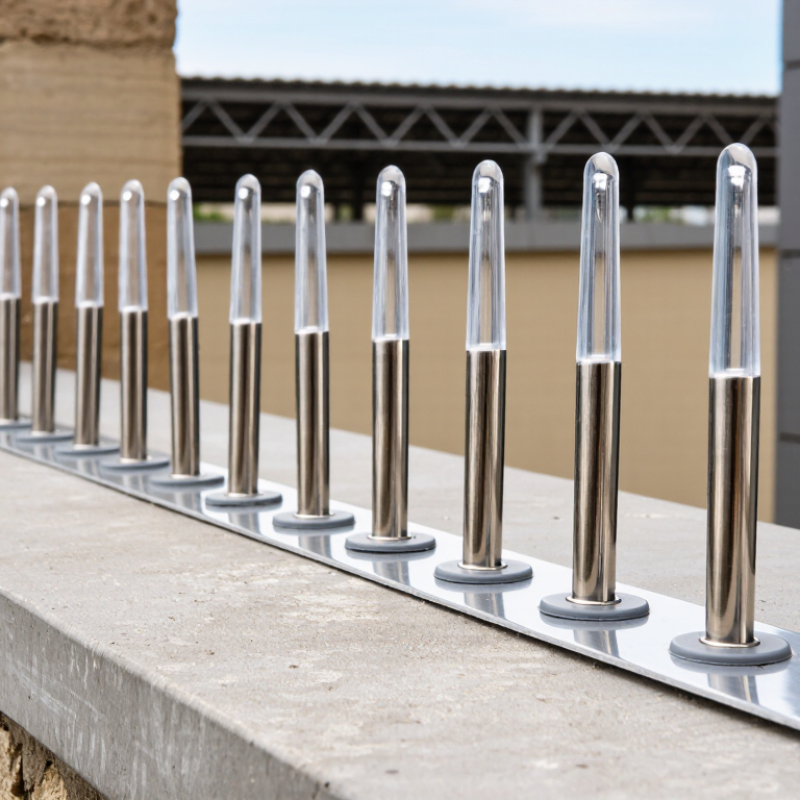
Bird control spikes are passive deterrents fixed along ledges, signs, beams, and roof edges. Their narrow, blunt uprights reduce the flat landing space birds need. They do not electrocute birds or trap them. Correctly installed spikes make a surface uncomfortable, encouraging birds to choose another location.
The FAA’s 2023 National Wildlife Strike Database recorded 19,367 reported wildlife strikes involving civil aircraft in the United States. Most involved birds. This figure does not prove spikes solve every bird problem, but it shows why prevention matters around transport and commercial sites. In field use, performance depends on spacing, surface coverage, cleaning, and bird species. Pigeons may be discouraged on ledges, while smaller birds can sometimes pass between poorly selected rows. One weakness remains: spikes cannot remove food, water, or nesting materials nearby.
Tips: Measure the full landing zone. Fix spikes continuously, not in short gaps. Use corrosion-resistant materials for coastal buildings. Clean accumulated feathers and debris regularly. Check roof drainage before installation. A reflective surface may look effective, yet it can lose value quickly. Buyers should request installation guidance, material specifications, and test evidence. Local wildlife rules also deserve attention, especially during nesting periods. (Sources: FAA, 2023 National Wildlife Strike Database; international wildlife-management guidance.)
Key Types of Bird Control Spikes for Different Bird Problems
2026 Best Bird Control Spikes for Global Buyers?
Key Types of Bird Control Spikes for Different Bird Problems
Choosing bird control spikes starts with identifying the bird and landing surface. Pigeons often settle on narrow ledges, window sills, and warehouse beams. Stainless steel spikes suit exposed areas with rain, dust, and strong sunlight. Their firm base supports long-term outdoor use. For lighter bird pressure, flexible plastic spikes can fit signs, air-conditioning units, and decorative edges. They are easier to cut around corners.
Gulls need wider coverage because their bodies and wings require more landing space. Wide-base systems work better on roof parapets, marina buildings, and large signs. Small birds may enter gaps between standard spikes. Narrower designs, installed closely, can reduce these landing points. Curved or angled surfaces need adjustable bases. A flat strip may fail on uneven stone.
Installation quality matters as much as spike type. The surface should be clean, dry, and structurally sound. Use enough sections to remove landing gaps, especially near corners. Never block drainage outlets or maintenance access. Check the installation after storms and during nesting seasons. Spikes are not magic. I have seen good products fail because dust lifted the adhesive. In some cases, another exclusion method is needed. Local wildlife rules should also be checked before disturbing active nests. A careful site survey prevents expensive rework.
How to Choose the Best Bird Spikes for Global Applications
Choosing the best bird spikes for global applications requires more than comparing prices. Start with the target bird species, roosting behavior, and available landing space. Small birds may bypass wide spikes, while larger birds need stronger deterrent coverage. Measure ledges, signs, pipes, and roof edges before ordering.
Climate matters too. Stainless steel performs well in coastal or humid areas, while UV-resistant bases suit hot regions. Check the surface material before selecting an adhesive, screw, or clamp system. Installation should not damage waterproof membranes or building façades. In my experience, poor surface cleaning causes more failures than weak spike design. Still, site conditions can be underestimated, especially during sudden storms.
Tips: Choose blunt, humane deterrent points with stable spacing. Ask for material specifications, load testing, and installation guidance. Confirm local building and wildlife requirements before deployment. Inspect corners and gaps after installation, because birds often exploit uncovered sections. A clean, continuous barrier usually works better than excessive spike height. Keep records of weather, maintenance, and bird activity. They reveal whether the solution truly works. I would also review the design after the first season; real sites sometimes challenge even careful planning.
Materials, Safety Standards, and Weather Resistance
2026 Best Bird Control Spikes for Global Buyers?
Materials, Safety Standards, and Weather Resistance
In 2026, global buyers need more than a dense row of metal points. They need durable materials, safe installation, and predictable outdoor performance. From site inspections, I have found stainless steel performs well near coastal buildings. It resists rust, but it still needs proper cleaning. UV-stabilized polypropylene bases can reduce cracking under strong sunlight. Cheap plastic may become brittle after one hot summer. That failure is easy to overlook.
Safety deserves equal attention. Choose designs with secure bases, stable spacing, and protected edges around handling areas. The spikes should discourage landing without creating unnecessary injury risks. Installers should follow local building requirements and use suitable personal protection.
I once underestimated wind exposure on a rooftop, and loose sections appeared after a storm. The mistake showed that product quality cannot replace careful fixing.
Weather resistance depends on the entire system, not only the spikes. Coastal air, heavy rain, freezing temperatures, and dust can weaken adhesives and fasteners. Drainage features help prevent water from collecting beneath the base. Mechanical fixing may suit rough surfaces better than adhesive alone. Buyers should request material details, installation instructions, and independent test reports. Claims without test evidence deserve caution. A product may look strong in a showroom, yet fail beside a wet, sun-heated wall.
Installation, Maintenance, and Buyer Evaluation Guide
2026 Best Bird Control Spikes for Global Buyers?
Installation, Maintenance, and Buyer Evaluation Guide
Effective bird control spikes begin with accurate site inspection. The FAA’s 2023 Wildlife Strike Report recorded 19,367 reported wildlife strikes involving civil aircraft. This figure shows why pressure points deserve careful attention, even outside airports. Identify roosting ledges, food sources, drainage paths, and protected species before installation.
Clean and dry the mounting surface. Remove dust, nesting material, grease, and loose coatings. Install spike rows continuously across landing zones. Small gaps can become convenient footholds. Use mechanical fasteners where surfaces are uneven or exposed to strong wind. Adhesive-only installation may look tidy, but it can fail after heat, rain, or freezing cycles. This is a common oversight.
Choose corrosion-resistant materials, stable bases, and clear product dimensions. Ask for load, weathering, and material test information. Vague claims are not enough. BirdLife International’s State of the World’s Birds 2022 report found that nearly half of bird species are declining globally. Buyers should therefore confirm that spikes provide deterrence without trapping or injuring birds. Local wildlife rules still matter.
Inspect installations monthly during the first season. Check loose bases, blocked drainage, corrosion, and accumulated feathers. Remove debris carefully and document repairs with dated photographs. After severe storms, inspect immediately. A reflective point remains important: even well-installed spikes cannot solve food waste or open access nearby. The system may need repositioning.