
Blog
2026 Top Tubular Lanyard Types for Global Buyers
For global buyers, choosing the right Tubular Lanyard in 2026 requires more than comparing prices or webbing colors. A reliable selection begins with the work environment, connection method, load requirements, and inspection routine. Polyamide tubular webbing can offer flexibility and comfortable handling. Polyester options may provide stronger resistance to moisture, chemicals, and ultraviolet exposure. Elastic designs can reduce slack around platforms, while shock-absorbing models help manage arrest forces during a fall. Each type serves a different purpose.
Fall-protection engineer David E. Oakes once noted, “A lanyard is only one part of a complete protection system.” That principle remains practical. A 1.8-meter lanyard may suit a restricted platform, but it could create excessive fall distance near a low roof edge. Stitching quality matters too. Inspectors should examine bartacks, energy absorbers, hooks, labels, and abrasion marks under real workplace lighting. Small cuts near a connector can matter more than a clean-looking surface. Buyers should also confirm testing records, traceability, user instructions, and compatibility with harnesses and anchor points. Regional standards and procurement requirements differ, so supplier documents must be checked carefully.
Some purchasing teams still treat tubular webbing as a simple textile product. That assumption fails. The best choice depends on movement, exposure, storage, training, and rescue planning. Even experienced buyers can overlook one detail. This guide compares the leading Tubular Lanyard types for global purchasing decisions, while recognizing an uncomfortable truth: no product is safe when selected without a complete system review.
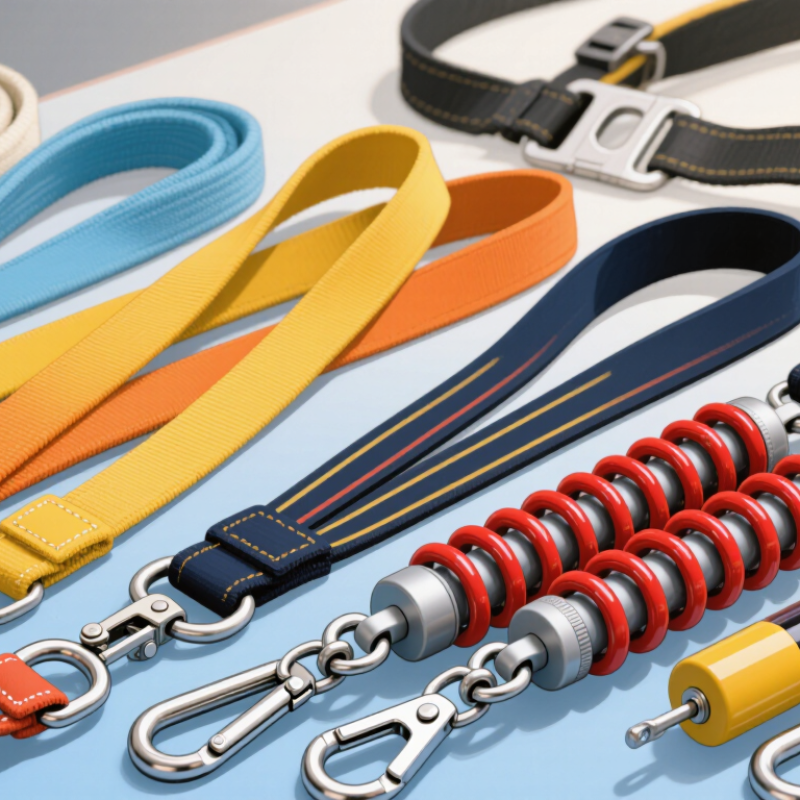
Tubular Lanyard Basics and Key Design Features
Tubular Lanyards use a woven sleeve to protect an inner webbing structure. The sleeve spreads contact pressure across rounded edges, reducing local abrasion during climbing or positioning work. Common materials include polyester and nylon, selected for strength, flexibility, and resistance to sunlight. However, a soft feel does not prove safety.
Design begins with the intended function. A restraint lanyard limits movement and should not be used for arresting a fall. A fall-arrest model normally includes an energy absorber, compatible connectors, and clear length markings. EN 354 addresses connecting lanyards, while EN 355 covers energy absorbers. In the United States, applicable systems also require evaluation under relevant workplace fall-protection rules. Check every component together.
The market is growing. Grand View Research reported that the global fall protection equipment market was valued at approximately USD 3.1 billion in 2023, with continued growth forecast through 2030. That expansion increases buyer attention, but demand can encourage rushed specifications. I have seen product comparisons focus on breaking strength alone. That is incomplete. Inspect stitching density, sleeve damage, connector gates, label readability, and deployment clearance. Small details matter. ASTM and ISO test references can support verification, yet field conditions remain difficult to reproduce. A lanyard may pass laboratory testing and still fail after contamination, sharp-edge contact, or poor storage. Buyers should request current test records, traceability details, inspection guidance, and measured energy-absorber performance before approving a tubular design.
| Tubular Lanyard Type | Typical Construction | Common Material Options | Typical Width | Typical Length | Key Design Features | Common Applications | Buyer Considerations |
|---|---|---|---|---|---|---|---|
| Standard Flat Tubular Lanyard General-purpose | A woven tubular sleeve with a smooth, rounded profile; normally supplied as a continuous neck loop with an end fitting. | Polyester is common for color stability and economical production. Nylon may be selected for a softer hand feel and higher abrasion resistance. | 10–20 mm | 35–50 cm per side | Smooth edges, comfortable neck contact, printed or dyed surface, optional safety breakaway, and replaceable attachment. | ID cards, access badges, event credentials, visitor passes, office identification, and promotional programs. | Confirm the finished length, color fastness, print durability, attachment style, and whether the breakaway force is suitable for the intended use. |
| Custom Printed Tubular Lanyard Branding surface | Tubular webbing printed with repeated text, symbols, logos, or high-contrast graphics along one or both sides. | Usually polyester or nylon; polyester is widely used where sharp print definition and consistent color reproduction are priorities. | 10–25 mm | 35–50 cm per side | Full-length repeat artwork, woven or printed decoration, custom color matching, optional reflective thread, and multiple hardware choices. | Conferences, trade shows, employee identification, membership programs, security passes, and public events. | Request a pre-production artwork proof. Check repeat length, minimum line thickness, color limits, print registration, and wash or rub resistance. |
| Double-Ended Tubular Lanyard Two attachment points | A neck loop or short strap fitted with attachment hardware at both ends, often using split rings, clips, or swivel hooks. | Polyester, nylon, or recycled polyester, depending on the required appearance, hand feel, and environmental specification. | 10–20 mm | 40–50 cm per side | Two-point attachment, balanced load distribution for lightweight items, detachable fittings, and improved accessory organization. | Dual ID cards, badge plus whistle, small tools, access cards, exhibition passes, and lightweight work accessories. | Verify the compatibility of both fittings with the attached items. It is not automatically suitable for heavy tools or fall-protection use. |
| Breakaway Safety Tubular Lanyard Quick-release | A tubular neck lanyard incorporating a breakaway connector that separates when a specified pulling force is reached. | Polyester or nylon webbing with a plastic breakaway buckle; metal or plastic end fittings may be selected separately. | 10–20 mm | 35–50 cm per side | Reduced snag risk, replaceable breakaway component, smooth tubular surface, and optional detachable buckle or swivel hook. | Schools, hospitals, factories, public venues, visitor management, and workplaces where snagging is a foreseeable hazard. | The breakaway force must be validated for the specific design. Do not use a badge-style breakaway lanyard as fall protection or load-bearing equipment. |
| Elastic Tubular Lanyard Stretch comfort | Tubular textile webbing containing an elastic core or elastic construction that permits controlled extension during movement. | Polyester or nylon outer covering with elastomeric components such as rubber or synthetic elastic yarns. | 10–20 mm | 35–50 cm per side | Reduced pull on the neck, improved flexibility, compact storage, and better comfort during frequent movement. | Visitor badges, sports events, active workplaces, mobile staff identification, and applications requiring moderate flexibility. | Ask for extension percentage, recovery performance, cycle testing, and dimensional stability because stretch can change the effective length. |
| Reflective Tubular Lanyard Visibility feature | Tubular webbing incorporating reflective yarn, reflective tape, or a reflective printed element. | Polyester or nylon base with glass-bead or prismatic reflective material, depending on the required visibility effect. | 15–25 mm | 35–50 cm per side | Improved visibility under direct light, high-contrast color options, optional breakaway connector, and customizable attachment hardware. | Outdoor events, night operations, warehouse identification, transport facilities, and staff or visitor visibility programs. | Reflective decoration does not by itself make the product compliant with a high-visibility garment standard. Confirm the required visibility test separately. |
| Heavy-Duty Tubular Utility Lanyard Reinforced design | Wider or reinforced tubular webbing designed for improved abrasion resistance and stronger attachment points. | High-tenacity polyester or nylon; reinforced stitching and metal fittings may be used for utility applications. | 20–25 mm | 30–50 cm per side | Wider contact area, reinforced end stitching, stronger clips or rings, optional tool loops, and enhanced resistance to everyday wear. | Facility keys, radio accessories, lightweight tools, industrial ID systems, and equipment organization. | Specify the working load, attachment hardware, stitching pattern, and test method. A utility lanyard is not equivalent to certified fall-arrest equipment. |
| Recycled-Fiber Tubular Lanyard Sustainability option | Tubular webbing manufactured partly or fully from recycled textile or plastic feedstock, subject to the supplier’s traceability system. | Recycled polyester is common; recycled nylon is also available where the required supply chain and performance specification can be met. | 10–20 mm | 35–50 cm per side | Recycled-content options, custom dyeing or printing, standard hardware compatibility, and potential reduction in virgin material use. | Sustainable events, corporate programs, retail access cards, educational institutions, and environmentally focused procurement. | Request recycled-content documentation, chain-of-custody information, color consistency data, and confirmation that performance matches the specified construction. |
| Wrist Tubular Lanyard Compact format | A short tubular loop designed to be worn around the wrist or attached to a small device, key, tag, or ticket. | Polyester, nylon, or polyester-cotton blends; elastic versions may be used where additional flexibility is required. | 10–20 mm | 15–25 cm loop circumference | Compact size, lightweight hardware, optional detachable buckle, smooth tubular finish, and adjustable or fixed loop formats. | Tickets, keys, small electronic devices, visitor tokens, promotional items, and event access accessories. | Confirm the internal loop size, edge comfort, attachment strength, and device compatibility. Avoid sharp or oversized hardware for continuous wrist wear. |